 Madame de Staël,
Corinne; Or, Italy. Volume 1 (of 2…
Madame de Staël,
Corinne; Or, Italy. Volume 1 (of 2…
“ but frivolity, in whatever form it presents itself, deprives attention of its force, thought of its originality, and sentiment of its profundity. ”
Frivolity, often linked with levity, idleness, and superficiality, signifies a lack of seriousness or depth in thought and behavior. Authors have examined its implications in various ways: Madame de Staël criticizes its tendency to reduce attention and emotional depth, while others, such as William Whewell, consider friction—a physical phenomenon—as a metaphor for resistance and power in nature.
Although some passages emphasize friction’s mechanical function, the theme’s wider significance lies in its duality, connecting human caprice with the unseen forces that govern motion, as illustrated by the interaction of philosophical and scientific discourses.
Madame de Staël,
Corinne; Or, Italy. Volume 1 (of 2…
“ but frivolity, in whatever form it presents itself, deprives attention of its force, thought of its originality, and sentiment of its profundity. ”
James Cutbush, A System of Pyrotechny
“ Friction is, therefore, one means of producing distributable heat, which is also exemplified very frequently in the axis of a carriage wheel; of mill work; in the rubbing of wood, when turned on its axis in a lathe, by which turners ornament their work with black [xxi] rings; rubbing a cord very swiftly backwards and forwards against a post or tree, or letting it run over a boat, &c. as in the whale fishery; the motion of two iron plates against each other, pressing them at the same time, &c. The great object in the construction of machines is to avoid, or lessen the degree of friction. ”
W. T. Lewis, Friction, Lubrication and the Lubricants in Horology
“ The forces acting in machines are distinguished into driving and resisting forces. That component of the force which does the work is called the "effort."26. Friction is usually a resisting (29) force, tending to destroy motion; but it is sometimes the means of the transmission of motion. [Pg 27] 27. Work is the result of force acting through space. When force produces motion, the result is work. Work is measured by the product of the resistance into the space through which it is overcome. ”
 William Whewell,
Astronomy and General Physics Considered with Reference to Natural Theology
William Whewell,
Astronomy and General Physics Considered with Reference to Natural Theology
“ The friction which we shall principally consider is the friction which prevents motion. So employed, friction is one of the most universal and important agents in the mechanism of our daily comforts and occupations. It is a force which is called into play to an extent incomparably greater than all the other forces with which we are concerned in the course of our daily life. We are dependent upon it at every instant and in every action ”
William Whewell,
Astronomy and General Physics Considered with Reference to Natural Theology
“ But friction is neither abolished on the earth, nor active in the heavens. It operates where it is wanted, it is absent where it would be prejudicial. And both these circumstances occasion, in a remarkable manner, the steadiness of the course of nature. ”
William Whewell,
Astronomy and General Physics Considered with Reference to Natural Theology
“ We may make suppositions as to the mode in which friction is connected with the texture of bodies; but little can be gained for philosophy, or for speculation of any kind, by such conjectures respecting unknown connexions. If, on the other hand, we consider this property of friction, and find that it prevails there, and there only, where the general functions, analogies, and relations of the universe require it, we shall probably receive a strong impression that it was introduced into the system of the world for a purpose. ”
William Whewell,
Astronomy and General Physics Considered with Reference to Natural Theology
“ We say more, for there is a considerable friction even in the case of ice, as we see by the small distance which a stone slides when thrown along the surface. It is this friction of the earth which, at every step we take, prevents the foot from sliding back; and thus allows us to push the body and the other foot forwards. And when we come to violent bodily motions, to running, leaping, pulling or pushing objects, it is easily seen how entirely we depend upon the friction of the ground for our strength and force. ”
S. A. Reilly, Our Legal Heritage: King AEthelbert - King George III, 600 A.D. - 1776
“ From his observation that an object sliding along a plane travels increasingly farther and slows down at a decreasing rate as the surfaces become smoother and more lubricated, he opined that the natural state of a body in motion is to stay in motion, and that it is slowed down by a resistant force, which he called "friction". ”
 Francis Bacon,
Novum Organum; Or, True Suggestions for the Interpretation of Nature
Francis Bacon,
Novum Organum; Or, True Suggestions for the Interpretation of Nature
“ We are of opinion that here again there is no negative; for we are not acquainted with any tangible body which does not become decidedly warm by friction, so that the ancients feigned that the gods had no other means or power of creating heat than the friction of air, by rapid and violent rotation. ”
G. E. Mitton, The Children's Book of Stars
“ That is why if you send a stone spinning along a carpet or a rough road it stops comparatively soon, whereas if you use the same amount of force and send it along a sheet of ice it goes on moving much longer. This kind of resistance, which we call friction, is one of the causes which is at work to bring things to a standstill; and another cause is the resistance of the air, which is friction in another form. ”
Wiljalba Frikell, Hanky Panky (1872)
“ Now, though the laws of nature forbid that water can by any power in itself lift itself up to the height of the reservoir originally holding it, here seems a contradiction. For a time, friction and the resistance of the air appears to be done away with. ”
A. E. Dolbear, The Machinery of the Universe: Mechanical Conceptions of Physical Phenomena
“ Whenever one surface of matter is moved in contact with another surface there is a resistance called friction, [Pg 40] the moving body loses its rate of motion, and will presently be brought to rest unless energy be continuously supplied. This is true for masses of matter of all sizes and with all kinds of motion. Friction is the condition for the transformation of all kinds of mechanical motions into heat. The test of the amount of friction is the rate of loss of motion. A top will spin some time in the air because its point is small. ”
W. T. Lewis, Friction, Lubrication and the Lubricants in Horology
“ Motion is prevented, or retarded, by the irregular variation of the distance between the center of gravity and the line of motion in the common tangent of the two bodies at the point of contact, caused by the irregularity of form, or of surface, in the one or the other body. Rolling friction is small where hard, smooth, symmetrical surfaces are in contact, and increases as the surfaces are soft, rough or irregular. ”
James White, A New Century of Inventions
“ But I may be opposed in some of my statements by the fact, that friction rollers, with centres, have been used with little advantage; and often laid aside. This I acknowledge; and go a step further. Friction is by no means of so much consequence as it was once thought to be: and is not the source of the greatest defalcations that occur in the use of power. Yet, to get rid of it, in some cases, would be of considerable importance; and the subject deserves at least the attention of every intelligent mechanician. ”
William Garnett and Joseph Larmor, 1911 Encyclopædia Britannica (1911)
“ If we have a weight capable of falling through a certain distance, we can employ the mutual forces of the system consisting of the earth and weight to do an amount of useful work which is less than the full amount of potential energy possessed by the system only in consequence of the friction of the constraints, so that the limit of availability in this case is determined only by the friction which is unavoidable. ”
William Duane, A military dictionary
“ But since we find no such thing as perfect smoothness in the surfaces of bodies, arising from their porosity and peculiar texture, it is easy to understand, that when two such surfaces come together, the prominent parts of the one will, in some measure, fall into the concave parts of the other; and therefore, when an horizontal motion is attempted in one, the fixed prominent parts of the other will give more or less resistance to the moving surface, by holding and retaining its parts; and this is what we call friction. ”
William Whewell,
History of scientific ideas
(1858)
“ This property of matter, of transmitting the action of force, is of various kinds. We have the coherence of a rope which enables us to pull, and the rigidity of a staff, which enables us to push with it in the direction of its length; and again, the same staff has a rigidity of another kind, in virtue of which we can use it as a lever; that is, a rigidity to resist flexure, and to transmit the force which turns a body round a fulcrum. There is, further, the rigidity by which a solid body resists twisting. ”
 Arnold Bennett,
The Human Machine
Arnold Bennett,
The Human Machine
“ Usually...!' Well, usually, the friction, though less intense, is still proceeding. We grow accustomed to it. We scarcely notice it, as a person in a stuffy chamber will scarcely notice the stuffiness. But the deteriorating influence due to friction goes on, even if unperceived. And one morning we perceive its ravages—and write a letter to the Telegraph to inquire whether life is worth living, or whether marriage is a failure, or whether men are more polite than women. ”
William Whewell,
Astronomy and General Physics Considered with Reference to Natural Theology
“ And as the organization of plants cannot be conceived otherwise than as having their life and [192] growth for its object, so we cannot conceive that friction should be one of the leading agencies in the world in which man is placed, without supposing that it was intended to be of use when man should walk and run, and build houses and ships, and bridges, and execute innumerable other processes, all of which would be impossible, admirably constituted as man is in other respects, if friction did not exist. ”
 Gaston Tissandier,
Popular Scientific Recreations
Gaston Tissandier,
Popular Scientific Recreations
“ Friction is derived from the Latin frico, to rub, and expresses the resistance to motion which arises from uneven surfaces. It is a passive resistance, and depends upon the force which keeps the bodies together. Thus a train running upon a smooth iron rail would never be able to proceed but for friction, which gives the necessary purchase or grip to the wheel and rail in contact.No surface is perfectly smooth, for we must push a body upon the smoothest surface we possess. ”
Various, Popular Science Monthly (1914)
“ We see clearly that in doing mechanical work the losses of work, due to friction, result in heat. In a word, friction is a means of converting work into heat, just as a steam engine is a means of converting heat into work. ”
 Thomas P. Jones,
Conversations on Natural Philosophy…
Thomas P. Jones,
Conversations on Natural Philosophy…
“ Caroline. Why not quite as high?Mrs. B. Because it meets with resistance from the air, in its ascent; and its motion is impeded by friction against the spout, where it rushes out.Emily. But if the tube through which the water rises be smooth, can there be any friction? especially with a fluid, whose particles yield to the slightest impression.Mrs. B. Friction, (as we observed in a former lesson,) may be diminished by polishing, but can never be entirely destroyed; and though fluids, are less susceptible of friction, than solid bodies, they are still affected by it. ”
 John Uri Lloyd,
Etidorhpa; or, The End of Earth
John Uri Lloyd,
Etidorhpa; or, The End of Earth
“ If, as you say, we are really passing through an attenuated atmosphere with increasing velocity, according to the law that governs falling bodies that are acted upon by gravity which continually accelerates their motion, the friction between ourselves and the air will ultimately become so intense as to wear away our bodies. ”
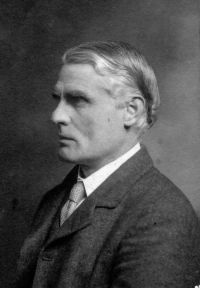 William Herrick Macaulay,
1911 Encyclopædia Britannica
(1911)
William Herrick Macaulay,
1911 Encyclopædia Britannica
(1911)
“ It has, however, been shown that, just as the compressed spring has a capacity for doing work by virtue of its configuration, so in the case of the friction there is a physical effect produced—namely, the raising of the temperature of the bodies in contact, which is the mark of a capacity for doing the same amount of work. ”
“ Friction is often caused by the minute projections of one surface sinking into the depressions of the other surface as one moves over the other. It follows, therefore, that if these projections could be made as small as possible that friction would be lessened. ”
Edward Sylvester Ellis, The Boy Patrol on Guard
“ The falling stars shooting through space are invisible till they reach our atmosphere, when the friction causes them to glow with heat.”“Well, nothing is clearer than that fire can be produced by friction, but, as I said, no man can take two pieces of the dryest wood and evolve a flame without aid. ”
William Whewell,
Astronomy and General Physics Considered with Reference to Natural Theology
“ Philosophers have not been able to deduce the laws of friction from the other known properties of matter, nor even to explain what we know experimentally of such laws, (which is not much,) without introducing new hypotheses concerning the surfaces of bodies, &c.—hypotheses which are not supplied us by any other set of phenomena. So far as our knowledge goes, friction is a separate property, and may be conceived to have been bestowed upon matter for particular purposes. How well it answers the purpose of fitting matter for the uses of the daily life of man, we have already seen. ”
 John Ruskin,
Modern Painters, Volume 5 (of 5…
John Ruskin,
Modern Painters, Volume 5 (of 5…
“ Heat and cold, gravity and the other attractions, windy pressure, or local and unhealthy restraint, must, in certain inevitable degrees, affect the whole of its life. But it is life which they affect;—a life of progress and will,—not a merely passive accumulation of substance. ”
Nicholas Wilcox Cundy, Inland Transit — Inland Transit (1834)
“ If a body were sustained by a surface perfectly level and perfectly smooth, so as to oppose no resistance whatever to motion upon it, without friction, the body once put in motion by an impulse would continue to move for a considerable time, without the application of any further impulsion or traction. ”
 John Stuart Mill,
A System of Logic, Ratiocinative and Inductive…
John Stuart Mill,
A System of Logic, Ratiocinative and Inductive…
“ Every moving body, however, encounters various obstacles, as friction, the resistance of the atmosphere, &c., which we know by daily experience to be causes capable of destroying motion. It was suggested that the whole of the retardation might be owing to these causes. ”
F. A. Griffiths, The artillerist's manual and british soldier's compendium (1856)
“ Friction arises from the irregularities of the surfaces which move upon one another. The surfaces of bodies of the same nature are moved with more facility over each other than those of a dissimilar nature. In proportion as the surfaces which are to be moved upon one another are rough, a greater force is requisite to produce motion. ”
William J. M. Rankine & William E. Dalby, 1911 Encyclopædia Britannica, Volume 17… (1911)
“ Stability of Friction in Earth.—The grains of a mass of loose earth are to be regarded as so many separate pieces abutting against each other at joints in all possible positions, and depending for their stability on friction. To determine whether a mass of earth is stable at a given point, conceive that point to be traversed by planes in all possible positions, and determine which position gives the greatest obliquity to the total pressure exerted between the portions of the mass which abut against each other at the plane. ”
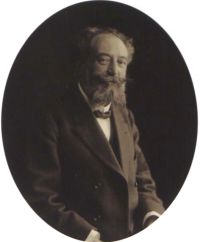 Adrien Guébhard,
Popular Science Monthly
(1882)
Adrien Guébhard,
Popular Science Monthly
(1882)
“ This power of resistance, or power of annular elasticity, is the most striking characteristic of these singular forms, real magazines of energy, in which all the living primitive force collects itself under the influence of external friction. Theoretically, the vortical movement, in a perfect fluid, can neither be created nor destroyed; eternal as matter itself, it has neither beginning nor end. ”
 Sir Oliver Lodge,
Pioneers of Science
Sir Oliver Lodge,
Pioneers of Science
“ Including friction, something nearer the equilibrium state of things occurs. With sufficient friction the motion becomes dead-beat again, i.e. follows closely the force that causes it.Returning to the elementary discussion, we see that the rotation of the earth with respect to the humps will not be performed in exactly twenty-four hours, because the humps are travelling slowly after the moon, and will complete a revolution in a month in the same direction as the earth [Pg 368] is rotating. ”
 Charles Kingsley,
Town Geology
Charles Kingsley,
Town Geology
“ Simply because in laying one thing on another you only move weight. In thrusting one thing under another, you have not only to move weight, but to overcome friction. That is why you do it, though you are hardly aware of it: simply because so you employ less force, and take less trouble. ”
“ Friction is the resistance that must be overcome when one body moves over another. It is of two kinds, sliding and rolling. If one draws a block and then a car of equal weight along a board, the force employed in each case being measured [Pg 148] by a spring balance, a large difference in the force required will be noticed, showing how much less rolling friction is than sliding friction. ”
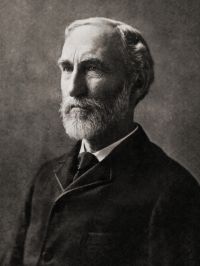 Josiah Willard Gibbs,
Scientific Papers of Josiah Willard Gibbs
(1906)
Josiah Willard Gibbs,
Scientific Papers of Josiah Willard Gibbs
(1906)
“ It may be added that the thermodynamic equilibrium which subsists between two such solid states of the same substance differs from that which subsists when one of the states is fluid, very much as in statics an equilibrium which is maintained by friction differs from that of a frictionless machine in which the active forces are so balanced, that the slightest change of force will produce motion in either direction. ”
 Jean-Henri Fabre,
More Hunting Wasps
Jean-Henri Fabre,
More Hunting Wasps
“ But the problem defies all the artifices of analysis if the oscillating body is a real body, endowed with volume and friction; if the suspensory thread is a real thread, endowed with weight and flexibility; if the point of support is a real point, endowed with resistance and capable of deflection. ”
