Good governance

Definition and stakes

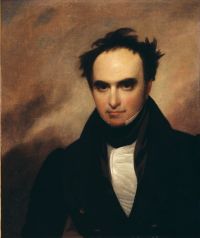
Portrait of Daniel Webster Daniel Webster,  Daniel Webster for Young Americans

“ Let us endeavor to comprehend in all its magnitude, and to feel in all its importance, the part assigned to us in the great drama of human affairs. We are placed at the head of the system of representative and popular governments. Thus far our example shows that such governments are compatible not only with respectability and power, but with repose, with peace, with security of personal rights, with good laws, and a just administration. ”
Source: Gutenberg

Jonathan Elliot,  Debates in the Several State Conventions on the Adoption of the Federal Constitution (1907)

“ Has philosophy suggested, has experience taught, that such a government ought not to be trusted with every thing necessary for the good of society? Sir, when you have divided and nicely balanced the departments of government; when you have strongly connected the virtue of your rulers with their interest; when, in short, you have rendered your system as perfect as human forms can be,—you must place confidence; you must give power. ”
Source: Wikisource

Portrait of John Stuart Mill John Stuart Mill,  Considerations on Representative Government (1861)

“ The supposition is, that absolute power, in the hands of an eminent individual, would insure a virtuous and intelligent performance of all the duties of government. Good laws would be established and enforced, bad laws would be reformed; the best men would be placed in all situations of trust; justice would be as well administered, the public burdens would be as light and as judiciously imposed, every branch of administration would be as purely and as intelligently conducted as the circumstances of the country and its degree of intellectual and moral cultivation would admit. ”
Source: Gutenberg

Get perspective with Kwize: daily news enlightened by great literature