
“ We need not debate about the mere words evolution or progress: personally I prefer to call it reform. For reform implies form. It implies that we are trying to shape the world in a particular image; to make it something that we see already in our minds. Evolution is a metaphor from mere automatic unrolling. Progress is a metaphor from merely walking along a road—very likely the wrong road. But reform is a metaphor for reasonable and determined men: it means that we see a certain thing out of shape and we mean to put it into shape. ”
Quotes about “gradualism”
 Herbert Spencer,
Illustrations of Universal Progress…
Herbert Spencer,
Illustrations of Universal Progress…
“ Whether it be in the development of the Earth, in the development of Life upon its surface, in the development of Society, of Government, of Manufactures, of Commerce, of Language, Literature, Science, Art, this same evolution of the simple into the complex, through successive differentiations, holds throughout. From the earliest traceable cosmical changes down to the latest results of civilization, we shall find that the transformation of the homogeneous into the heterogeneous, is that in which Progress essentially consists. ”
 Walter Scott,
Waverley; Or 'Tis Sixty Years Since…
Walter Scott,
Waverley; Or 'Tis Sixty Years Since…
“ But the change, though steadily and rapidly progressive, has nevertheless been gradual; and, like those who drift down the stream of a deep and smooth river, we are not aware of the progress we have made until we fix our eye on the now distant point from which we have been drifted. ”
 James Lane Allen,
Out from the heart
(1900)
James Lane Allen,
Out from the heart
(1900)
“ This law of growth, progress, evolution, unfoldment, by gradual and ever ascending stages, is absolute in every department of life, and in every human accomplishment, and where it is ignored, total failure will result. ”

“ And the transition is a process of generation and destruction, into and from being and not-being, the one and the others. For the generation of the one is the destruction of the others, and the generation of the others is the destruction of the one. There is also separation and aggregation, assimilation and dissimilation, increase, diminution, equalization, a passage from motion to rest, and from rest to motion in the one and many. ”
Georgiana Hill, Women in English Life from Mediæval to Modern Times…
“ It was the beginning of a gradual transformation which with every century, with every generation, takes some new form, and is sometimes called progress, sometimes revolution, but which moves on with the same relentless persistence as the laws that govern the earth. ”
Mrs. S. A. Barnett, Practicable Socialism, New Series
“ Progress through the ages is marked by the gradual evolution of the individual, and the strongest society is that where there are the most vigorous individualities. If this be admitted, it must be admitted also that the growth of vigorous denominations, and not uniformity, is also the mark of progress. ”
 H. G. Wells,
The Discovery of the Future
H. G. Wells,
The Discovery of the Future
“ Everything seems pointing to the belief that we are entering upon a progress that will go on, with an ever-widening and ever more confident stride, forever. The reorganization of society that is going on now beneath the traditional appearance of things is a kinetic reorganization. We are getting into marching order. We have struck our camp forever and we are out upon the roads.We are in the beginning of the greatest change that humanity has ever undergone. ”
Malcolm Guthrie, On Mr. Spencer's Data of Ethics
“ Development is shown to be universally characterised by progress in three forms—namely, from a simple, indefinite, incoherent state to a complex, definite, and coherent state: [Pg 9] and the wonderful scope which the universe affords, both in time and space, for historically exhibiting these traits, overwhelms the mind with a sense of the universality of evolution, in spite of the fact that all the time the very point of the question is missed in the absence of any explanation. ”
Herbert Spencer,
First Principles
“ Progressive integration with the growing definiteness necessarily resulting from it, is of co-ordinate importance with the progressive differentiation before dwelt upon—nay, from one point of view, may be held of greater importance. For organization, in which what we call Evolution is most clearly and variously displayed, consists even more in the union of many parts into one whole, than in the formation of many parts. ”
Aleph Bey, That Eurasian (1895)
“ This is the era of another method, until in the revolution of time, the old system may again appear, as the affairs of men have their cycles and their seasons, as the spheres and all things in nature. ”

“ Ye’re all agreed that societies change—not always and everywhere—but on the whole and in the long run. Now, with all deference, I would beg t’ observe that we have got to examine the nature of changes before we have a warrant to call them progress, which word is supposed to include a bettering, though I apprehend it to be ill-chosen for that purpose, since mere motion onward may carry us to a bog or a precipice. ”
 Woodrow Wilson,
The New Freedom
(1913)
Woodrow Wilson,
The New Freedom
(1913)
“ The transition we are witnessing is no equable transition of growth and normal alteration; no silent, unconscious unfolding of one age into another, its natural heir and successor. Society is looking itself over, in our day, from top to bottom ”
 Enrico Ferri,
Socialism and Modern Science (Darwin…
Enrico Ferri,
Socialism and Modern Science (Darwin…
“ Every cycle of evolution, in the individual life as in the collective life, bears within it the germs of the corresponding cycle of dissolution; and, inversely, the latter, by the decay of the form already worn out, prepares in the eternal laboratory new evolutions and new forms of life. ”
 Joseph LeConte,
Evolution: Its nature, its evidence…
Joseph LeConte,
Evolution: Its nature, its evidence…
“ But equilibrium and stability are never perfect. Permanent social equilibrium would be social stagnation and decay. Therefore, we must study society also in its onward movement—the equilibrium ever disturbed, only to be readjusted on a higher plane with more and more complexly inter-related parts. This is dynamics—social progress. It is evolution. ”
 Henry Adams,
The Education of Henry Adams — Chapter 34…
(1918)
Henry Adams,
The Education of Henry Adams — Chapter 34…
(1918)
“ The great division of history into phases by Turgot and Comte first affirmed this law in its outlines by asserting the unity of progress, for a mere phase interrupts no growth, and nature shows innumerable such phases. ”
 John Wesley Powell,
Popular Science Monthly
(1880)
John Wesley Powell,
Popular Science Monthly
(1880)
“ It presents a multiplicity of events occurring in orderly succession in obedience to the laws of adaptation, heredity, and survival of the fittest, and, in passing from the lower to the higher state, it demonstrates the fundamental law of progress, that evolution is from the homogeneous to the heterogeneous by successive differentiations and integrations. ”
Edward Webster Bemis, Albion Woodbury Small, and William Isaac Thomas, The American Journal of Sociology (1896)
“ It will not be able, in the long run, to lean upon mere theories and maxims; it will be forced by the actual development to undergo changes, to reform and to remodel itself in correspondence with the great laws of historical progress. ”
Margaret Bertha Synge, A Short History of Social Life in England (1906)
“ Much is necessarily omitted, but those who can read between the lines will find the evolution of many things that are vital in the life of to-day. Perhaps one of the most striking points in the study of material progress is the sturdy opposition experienced in every age to inevitable advance—an inability to perceive the true nature of progress. ”
 Boris Sidis,
The Source and Aim of Human Progress…
(1919)
Boris Sidis,
The Source and Aim of Human Progress…
(1919)
“ The individual unit is more and more restricted to the narrow lines of growth of differentiation and specialization in which the individual is sacrificed to society and the state, and generally to the progressive development of the social organism,—as the phrase runs. Such societies, from the very nature of the course taken by their evolution, tend towards decay, death, and final dissolution. ”
 Julian Huxley,
Essays of a Biologist
Julian Huxley,
Essays of a Biologist
“ The general state has been one in which steady, slow progress has been achieved. Progress, like adaptation, is in pre-human evolution almost entirely the resultant of blind chance and blind necessity. ”
Cora May Williams, A Review of the Systems of Ethics Founded on the Theory of Evolution
“ Along with differentiation goes a process of integration. Great revolutions simplify. The result of greater and greater heterogeneity is to produce a new principle, which combines the warring elements. The definition of progress by increased differentiation is lacking in two ways: It tells us nothing of the forces by which progress is produced, and it gives no connected view of the actual facts of historical development. A general statement of progress in its formal sense is found in the conception of a struggle of ideals. ”
Herbert Spencer,
Popular Science Monthly
(1873)
“ But the type of each society is continually being modified by two causes—by growth, and by the actions, warlike or other, of adjacent societies. Increase in the bulk of a society inevitably leads to change of structure; as also does any alteration in the ratio of the predatory to the industrial activities. Hence continual social metamorphosis, involving continual alteration of the conditions under which the citizen lives, produces in him an adaptation of character which, tending toward completeness, is ever made incomplete by further social metamorphosis. ”
 William Quan Judge,
The Ocean of Theosophy
William Quan Judge,
The Ocean of Theosophy
“ And at the present time we are in a cycle of transition, when, as a transition period should indicate, everything in philosophy, religion, and society is changing. In a transition period the full and complete figures and rules respecting cycles are not given out to a generation which elevates money above all thoughts and scoffs at the spiritual view of man and nature. ”
Viscount James Bryce Bryce, South America: Observations and Impressions
“ In the more progressive states, conditions are changing as fast as anywhere else in this changeful age. Here, as everywhere, the Present is the child of the Past, but the features of the child change as it grows up, and all we know of the future is that it will be unlike the past. ”
Enrico Ferri,
Socialism and Modern Science (Darwin…
“ One phase of social evolution by following upon another phase eliminates, it is true, the parts that are not vital, the pathological products of preceding institutions, but it preserves and develops the parts that are healthy and vigorous while ever elevating more and more the physical and moral diapason of humanity. ”
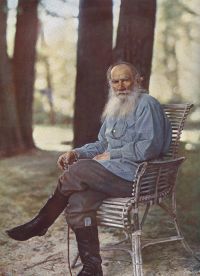 Leo Tolstoy,
The Kingdom of God Is Within You
(1894)
Leo Tolstoy,
The Kingdom of God Is Within You
(1894)
“ We, who thousands of years ago passed through the transition, from the personal, animal view of life to the socialized view, imagine that that transition was an inevitable and natural one; but this transition through which we have been passing for the last eighteen hundred years seems arbitrary, unnatural, and alarming. ”
Enrico Ferri,
Socialism and Modern Science (Darwin…
“ By evolution must be understood the transformation that takes place day by day, which is almost unnoticed, but continuous and inevitable; by revolution, the critical and decisive period, more or less prolonged, of an evolution that has reached its concluding phase; by rebellion, the partially collective violence which breaks out, upon the occasion of some particular circumstance, at a definite place and time ”
“ Throughout it was essentially one phase of human organization. When one comes to examine the final result, it is astonishing to remark the small amount of essential change, of positively final and irreparable alteration, in the conditions of the common life. ”
Herbert Spencer,
Popular Science Monthly
(1881)
“ Once more, change in the average mode of life pursued by a society, now increasingly warlike and now increasingly industrial, initiates metamorphoses: changed activities generate changes of structures. Hence, there have to be distinguished those progressive rearrangements which belong to the further development of one social type, from those caused by the commencing development of another social type. ”
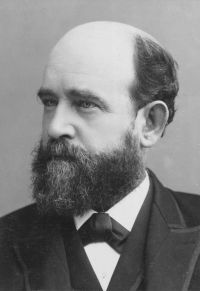 Henry George,
Progress and Poverty (George)…
(1879)
Henry George,
Progress and Poverty (George)…
(1879)
“ But the moment that those who hold this theory of progression, which seems so natural to us amid an advancing civilization, look around the world, they come against an enormous fact - the fixed, petrified civilizations. How, upon the theory that human progress is the result of general and continuous causes, shall we account for the civilizations that have progressed so far and then stopped? ”
Carl Christoph Vogt, Popular Science Monthly (1881)
“ Development does not advance with even flow, but by fits and starts—oftenest it is like that style of march in which two leaps are made backward after taking three forward. We do leap—but it is backward, away into the middle ages, which we fancied we had got rid of. ”
R. H. Tawney, The Agrarian Problem in the Sixteenth Century
“ The occurrence of rapid changes in the structure of an old and stable society implies either some radical revolution in the basis of economic life, or some great change in men’s conception of social expediency, or, what is most likely, an economic and a spiritual change occurring together. ”
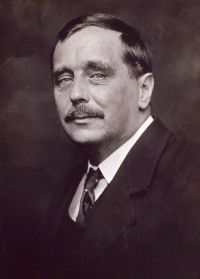 Herbert George Wells,
The World Set Free
(1914)
Herbert George Wells,
The World Set Free
(1914)
“ For two hundred years there had been no great changes in political or legal methods and pretensions, the utmost change had been a certain shifting of boundaries and slight readjustment of procedure, while in nearly every other aspect of life there had been fundamental revolutions, gigantic releases, and an enormous enlargement of scope and outlook. ”
 Charlotte Perkins Gilman,
Women and Economics
Charlotte Perkins Gilman,
Women and Economics
“ Always in social evolution, as in other evolution, the external form suited to earlier needs is but slowly outgrown; and the period of transition, while the new functions are fumbling through the old organs, and slowly forcing mechanical expression for themselves, is necessarily painful. ”
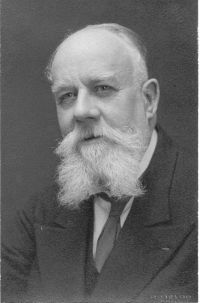 Edouard Le Roy,
A New Philosophy: Henri Bergson
Edouard Le Roy,
A New Philosophy: Henri Bergson
“ The becoming of evolution will then appear to us in its true light, as phases of gradual maturation, rounded at intervals by crises of creative discovery. Continuity and discontinuity will thus admit possibility of reconciliation, the one as an aspect of ascent towards the future, the other as an aspect of retrospection after the event. ”
 Ernst Haeckel,
The History of Creation, Vol. 1…
Ernst Haeckel,
The History of Creation, Vol. 1…
“ The varied differentiation, and the unequal degree of perfecting which comparative anatomy points out in the developmental series of the System, is chiefly determined by the ever increasing variety of conditions of existence to which the different groups adapt themselves in the struggle for life, and by the different degrees of rapidity and completeness with which this adaptation has been effected. Conservative groups which have retained their inherited peculiarities most tenaciously remain, in consequence, at the lowest and rudest stage of development. ”
H. G. Wells,
The War in the Air
“ But with the wild rush of change in the pace, scope, materials, scale, and possibilities of human life that then occurred, the old boundaries, the old seclusions and separations were violently broken down. All the old settled mental habits and traditions of men found themselves not simply confronted by new conditions, but by constantly renewed and changing new conditions. ”
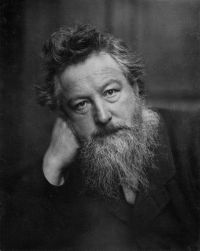 William Morris,
Signs of Change
William Morris,
Signs of Change
“ Nevertheless, when we look back on history we do distinguish periods in the lapse of time that are not merely arbitrary ones, we note the early growth of the ideas which are to form the new order of things, we note their development into the transitional period, and finally the new epoch is revealed to us bearing in its full development, unseen as yet, the seeds of the newer order still which shall transform it in its turn into something else. ”
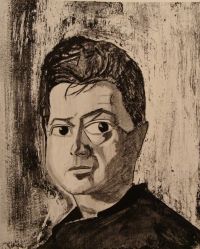 Francis Bacon,
The Works of Francis Bacon
(1884)
Francis Bacon,
The Works of Francis Bacon
(1884)
“ Of this Bacon constantly warned the community, by recommending the admission of gradual reform. "In your innovations," he said, "follow the example of time, which innovateth greatly, but quietly." The advances of nature are all gradual; scarce discernible in their motions, but only visible in their issue. The grass grows and the shadow moves upon the dial unperceived, until we reflect upon their progress. ”
 Rudolf Hermann Lotze,
Outlines of Metaphysic — Second Principal DivisionCosmology
(1883)
Rudolf Hermann Lotze,
Outlines of Metaphysic — Second Principal DivisionCosmology
(1883)
“ Every more circumscribed example of development according to a plan, this view regards as a single case in which, out of the general course of nature, and fully accounted for by it, single groups of its elements are arranged into a totality whose cohering unity consists only in the reciprocal actions of the combined elements themselves. ”
Herbert Spencer,
Illustrations of Universal Progress…
“ But that it would take us too far out of our track, we should prelude this inquiry by illustrating at some length a certain general law of progress;—the law that alike in occupations, sciences, arts, the divisions that had a common root, but by continual divergence have become distinct, and are now being separately developed, are not truly independent, but severally act and react on each other to their mutual advancement. ”
