“ Generally the actor rubs a little vaseline or cold cream over his face and wipes this off with a rag before washing, thus removing most of the paint and getting the soap to lather more easily. It does not seem to injure the skin when it is properly washed off at night, but persons who are careless may let it block up the pores of the skin or remain in the roots of the hair or eyebrows. The number of shades in which grease paint is now made is very great, and every actor who takes pride in his make up will have from a dozen to twenty kinds. ”
Quotes about “greasepaint”
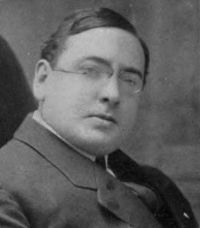 Ned Wayburn,
The Art of Stage Dancing
“ Be careful to cover all the space around the eyes, also rub in on the eyelashes, using care to keep155 it out of the eyes, for it will cause stinging. Greasing the eyelashes this way makes the removal of the makeup much easier. Now rub your face with a piece of cheesecloth until all the superfluous cold cream has disappeared. If the face shines too much, you have not removed enough of the cream. The surface should give the appearance of being well oiled, but not have a sticky, pasty or greasy surface.Second stage. Foundation Grease Paint. The quality of your makeup depends upon this. ”
Harold Acton Vivian, The Theatrical Primer
“ See; in his hurry, the Actor has left a pair of shoes in Front of that Chair. Put them behind the Trunk, Clara, and the Actor will thank you. 25This is a stick of Grease paint. The Leading lady uses it to Make herself look beautiful. In this way she can make many dates. The leading lady is very fond of Dates. Her friends say she always has dates for Supper. Hold the Grease paint in the Gas flame, Johnny, and see it Fizzle. Now rub the wet paint on the Looking Glass. Put some in the Powder box. The Leading lady always uses powder after Paint ”
Ned Wayburn,
The Art of Stage Dancing
“ Blend the paint till the face has an even tone. Watch your mirror carefully. It is better to have the grease paint a little too thin on the face than too thick, but you will soon learn to get it just right, which is what you are aiming at. ”
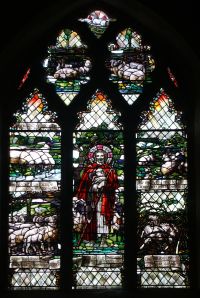 Christopher Whall,
Stained Glass Work: A text-book for students and workers in glass
“ Anyone can wash a brush clean; any one can keep the colour on his palette neat; can grind it all up each time it is used; can cover it over with a basin or saucer when his work is over; and yet these things are often neglected, though so easy to do. The painter will neglect to wash out his brush; and it will be clogged with pigment and gum, get dry, and stick to the palette, and the points of the hair will tear and break when it is removed again by the same careless hand that left it there. ”
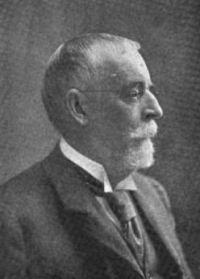 Thomas Curtis Clarke,
American Pocket Library of Useful Knowledge
(1841)
“ Clean Paint without using cloth. Remove dirt with a fine brush. If soiled, dip flannel in pearl ash or soda water, wash and dry quickly. Grease Spots are removed from cloth, silk, &c., by essence of lemon rubbed on with a rag. Balls to take out grease spots. Moisten dry fuller’s earth with lemon juice, add powdered pearl ash, and mix well, and make in little balls—dry well in the sun. Use by moistening the spots with water, rub on the ball, then dry and brush off. Moths are kept away by oil of lavender, tobacco, black pepper, or camphor. ”
Butterick Pattern Company, The New Dressmaker (1921)
“ POWDERED FRENCH CHALK OR FULLER'S EARTH may be used by placing the powder over the stain and holding over a heated iron. The heat will dissolve the grease, and the powder will absorb it. Grease can also be removed from most materials by placing the material, right side down, over a piece of brown wrapping-paper and pressing over the wrong side of the material with a hot iron. The heat of the iron drives the grease from the material into the paper, because grease has a tendency to go from a warm spot to a cooler one. ”
Estelle M. Hurll, Child-life in Art
“ The pre-eminence of Greuze was due not only to the entire novelty of his chosen range of subjects, but to the exquisite beauty of his technique. He excelled in painting those fresh carnations, [Pg 68] “mixed with lilies and roses,” as the French used to say, and diversified with blue-gray shadows and warm reflected light. Such characteristics are easily carried to extremes, and were often exaggerated by Greuze himself; but when held in true control they are a delight to the eye of the true color-lover. ”
Anonymous, Embroidery and Fancy Work (1889)
“ As they do not rub off easily, however, a little must be taken off with the palette knife, and rubbed down with a little water. With the ordinary mineral paints, it is generally better to use the paint in thin washes, thus securing delicacy of tint, but with the water colors the opposite course is necessary. As much paint should be used with each stroke as the brush will hold. Over-painting is to be avoided. The painting has to be frequently dried on the stove, to prevent removal of the underlying. color, where any strokes have to be repeated. ”
Winifred H. Mills, Marionettes masks and shadows
“ When you have finished carving both the head and hands you are ready to paint them. You will need red, yellow, blue, and white oil paints. Use a piece of smooth wood or glass for a palette. Squeeze onto your palette a small amount of each color. As you know, people do not have pure-white skins. There is a tinge of yellow-orange in the white man’s skin, deep red and orange in that of the red man, brown in that of the Negro, and yellow in that of the Oriental. Begin by squeezing out onto your palette a small quantity of white paint. ”
Daniel Burleigh Parkhurst, The Painter in Oil
“ Dirty Brushes and Palette.—Using dirty brushes causes muddy color. Don't be too economical about the number of brushes you use. Keep a good big rag at your hand, and wipe the paint out of your brush often. If the color is getting muddy, clean your palette and take a clean brush. Your palette is sure to get covered with paint of all colors when you have painted a little while. You can't mix colors with any degree of certainty if the palette is smeared with all sorts of tints. Use your palette-knife—that's what it's for. Scrape the palette clean every once in a while as it gets crowded. ”
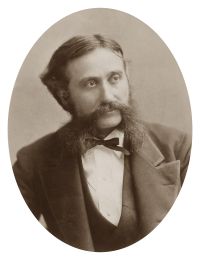 Hubert Howe Bancroft,
The Native Races [of the Pacific states…
“ In war and mourning the whole body is blackened; on feast days the head, limbs, and body are painted in fantastic figures with various colors, apparently according to individual fancy, although the chiefs monopolize the fancy figures, the 181 common people being restricted to plain colors. Solid grease is sometimes applied in a thick coating, and carved or moulded in alto-rilievo into ridges and figures afterwards decorated with red paint, while shining sand or grains of mica are sprinkled over grease and paint to impart a glittering appearance. ”
George D. Armstrong, Cyclopedia of Painting (1908)
“ To mix 1 pound of ordinary oil paint, take about 8 ounces of pigment the desired color. White lead for white, light grays, pinks, cream, etc., Venetian red or vermilion for red, and so on, according to the color desired. Add to this about 2 ounces of liquid driers, then make up to 1 pound with either linseed oil alone or oil and turpentine in equal parts. Remember, the more oil, the more driers is advisable, but never less than 1 part driers in 8 or 10 of entire bulk. If only small quantities of paint are wanted, that sold ready mixed would be cheapest and would do for ordinary inside work. ”
George D. Armstrong, Cyclopedia of Painting (1908)
“ To a certain extent the size stops the absorbent powers of the wood or plaster, but it prevents the proper adhesion of the oil paint, which soon cracks or peels off. It may, however, be used with advantage in old work, where the grease would prevent the proper drying of the oil paint, but even in such cases it is best, when possible, to scrape the wood or plaster until a new surface is reached, on which the oil paint may be successfully applied. ”
Ned Wayburn,
The Art of Stage Dancing
“ Rub the end of the grease paint stick several times on each cheek, once across the chin, once or twice on the forehead and once down the nose. Use the ends of the fingers and pat this into place rather than rub it, till it is thoroughly worked into all the surface you have just covered with the cold cream. Every pore must be filled with the grease paint. ”
Harold Armitage, Greuze (1902)
“ The derangement of the draperies, the incongruity of the lapful of flowers, the impossible way in which the pitcher is being carried, are not less characteristic of Greuze than the sweet face and the general charm and beauty of the painting. It is, indeed, one of Greuze's most winsome works, and its fascination will continue to captivate all but the most hypercritical. The original is in the Louvre, but Greuze painted the subject again with modifications, and there are a number of sketches and studies in existence. ”
Georg Fritz, Photo-Lithography
“ The ink can be obtained in a liquid form and the two others in solid state. All three materials consist principally of soap, tallow, wax, resin, and soot. Soap and tallow give the necessary grease, wax and resin give hardness and consistency, and soot the colour. The proportion of grease in the drawing materials must be so great that even the finest lines or points of a drawing can be well transferred to the stone, so that they may not be attacked by the proper etching solution, and do not break away from the stone by continuous printing. ”
John L. King, Color mixing guide (1923)
“ Make the paint just stout enough to apply with a wall brush and put it on in that consistency. When the surface has been so coated, and before the paint begins to set, use a good size stippler, and see that you do the work uniformly and evenly. You can color the white to any desired tint with finely powdered dry color or you may use color ground in oil, but if much of the latter is required, use one-third raw oil and two-thirds turpentine for thinning. When solid color is desired for wall stippling, use colors ground in oil and the finest bolted whiting, dry to make stout paste. ”
“ The nature of the medium, however, does not always lend itself to the finishing of the work straight off in one painting; this is the case especially in the flesh tints, or in any elaborate drapery modelling. The method usually adopted was to lay in the tints with a full brush and solid colour, carrying the modelling as far as possible in the first painting. Too much working over the same part is liable to bring up the wax, and to cause the work to dry unpleasantly glossy. ”
Maximilian Toch, How to paint permanent pictures (1922)
“ Then again, the pigments I have just mentioned, like Lamp Black, and which take years to harden, will crack any hard drying pigment which is placed over them, because in drying, the slow drying colors wrinkle and contract, and a hard drying color placed over them, not having sufficient elasticity will be torn asunder, and a small crack, which may widen into a fissure, will take place. The whole idea of permanent painting, then, [Pg 79] simmers itself down to one of sense and judgment. No one has ever seen a Water Color painting which is cracked. ”
George D. Armstrong, Cyclopedia of Painting (1908)
“ When the paint is cracked in small hair lines, it is usually called crazing of the paint. Generally these hair lines run crosswise of the grain the entire width of the boards to which the paint is applied. The paint is invariably very hard and this crazing is often attributed to an excess of zinc. It is usually caused from an improper reduction or combination of pigments which do not dry uniformly, one being more easily affected by heat and cold than the others, thereby leaving a paint surface which is not uniform as to contraction and expansion. ”
George Erhart Balluff, The China Painter Instruction Book
“ For purple, violet color, maroons and pinks use light oil for grounds. It is difficult to remedy a scratch or imperfection on dusted grounds. If it is done with moist color and brush, bear in mind that dry powder applications fire much darker than colors applied moist with brush, and gauge the color accordingly.For a brilliant effect, dust the unfired background with a flux or glaze. For warm colors such as browns, red and flesh tones, this is not necessary, but it will improve dark greens and blues. It is unsafe to try to paint over dry unfired grounds. ”
Anonymous, Embroidery and Fancy Work (1889)
“ Having the design well-traced, the first washes can be put on in water colors, mixed with gum and water. Then paint over with the mineral color, mixed as for over glaze painting, with either turpentine or glycerine. Colors come especially prepared for under glaze decoration. More oil can be used on under glaze painting than in over-glaze, because the absorbent nature of biscuit prevents the danger o£ blistering or crazing. The colors attainable for under-glaze painting are much more limited in number than for china painting. ”
Arthur Seymour Jennings, Paint & Colour Mixing
“ For instance, Siberian Okatka, and perhaps most important to my readers because they make the best paint brushes, having an excellent spring and being stiff. They are very costly and are rarely used by themselves, nor is it necessary, because other varieties of bristles may be mixed in, and it is this mixing or blending that constitutes so important a part in the brush manufacturer’s art. Indeed, the purchase and blending takes years of careful study to learn. ”
John William Bradley, Illuminated Manuscripts
“ We refer to what the Italians call chiaroscuro and the French grisaille; i.e. painting executed in tones of grey, in which the lights are given in white or gold and the backgrounds in rich blue. Occasionally the draperies and ornaments also are touched with gold, and the flesh tints as in life. Grisaille is not limited to Netherlandish illuminations. We find it both in French and Italian, but perhaps it is among the Netherlandish books we meet with it most frequently. ”
W. F. White, Practical House, Wagon and Automobile Painter (1919)
“ For work to be varnished, prime as above, and coat up flat. I think blistering is often caused by flowing on too much paint having too much oil in it, in proportion to the pigment, hence it does not dry solid, the oil is softened and expanded by heat, and the coating, which is more of an oil skin than a body of paint, lets go its hold on the wood and puffs out in a blister to make room for the softened and expanding oil skin. If painters will mix their paint with good body, and use more elbow grease in rubbing it out, they will have less trouble with blisters. ”
W. F. White, Practical House, Wagon and Automobile Painter (1919)
“ When paint crawls it is because there is not sufficient adhesion between the undercoat and the new coat, caused usually by too much gloss on the undercoat. To prevent crawling subdue the gloss on the undercoat by sandpapering, rubbing, or by the application of some material which will have the desired effect; or, if on the outside, wait until the gloss has been subdued by the elements. There is nothing more trying to one’s patience than to have the paint let go and crawl up in bunches after it has been carefully brushed out. ”
“ It is only the very darkest tones, or pigments used in their full strength, those that have no lime mixed with them, that dry anything near the full strength of their wet state, and then there are exceptions to this; so it follows that in buon-fresco painting the artist must paint in a much darker key than the work is intended to appear when it has dried out. ”
 W. J. Holland,
Taxidermy and Zoological Collecting
“ When the paint is beginning to dry, so that it is sticky, take some dry color of a corresponding tint, dip into it a clean, dry, square-ended bristle brush of good size, and twirl it about until it becomes filled with the dry powder, then, with light and delicate strokes, apply it directly upon the painted surface so that the dry color will fall upon the wet paint like a shower of colored dust. ”
Various, Golden Days for Boys and Girls…
“ Let the color become nearly dry, then proceed to dab it all over with the washleather, held on the end of the finger, breathing on the slide when necessary, in order to keep it sufficiently moist.This process must be continued carefully until the whole painted surface is perfectly even and shows no mark of the brush, and only sufficient paint must be left on to give a blue tint.You must always remember that if too darkly painted the pictures will be too opaque. Clouds can be put in nicely also with the bit of washleather, but extra work of this sort is hardly worth while. ”
