“ The world must reduce greenhouse gas emissions to prevent the most dangerous consequences of climate change. Even with increased efforts to curb these emissions, we must prepare for and adapt to the impacts of climate change. ”
Greenhouse gas emissions
Definition and stakes
Greenhouse gas emissions, mainly resulting from human activities, amplify the greenhouse effect, contributing to climate change by increasing concentrations of carbon dioxide, methane, and other gases. Major sources encompass the burning of fossil fuels, deforestation, and agricultural methods. Governments and global organizations, including the U.S.
Congress and China’s State Council, have tackled this issue through legislation, shifts in energy use, and goals to reduce emissions. Although discussions seek to balance economic development with environmental protection, evidence highlights the pressing necessity for international collaboration to limit emissions, as present levels surpass thresholds needed to achieve climate objectives.
Quotes about “greenhouse gas emissions”
“ Through life-cycle cost-effective energy measures, each agency shall reduce its greenhouse gas emissions attributed to facility energy use by 30 percent by 2010 compared to such emissions levels in 1990. ”
 Barack Obama,
From Peril to Progress — Barack Obama's presidential speeches
Barack Obama,
From Peril to Progress — Barack Obama's presidential speeches
“ Today, I'm announcing the first steps on our journey toward energy independence, as we develop new energy, set new fuel efficiency standards, and address greenhouse gas emissions. Each step begins to move us in a new direction, while giving us the tools that we need to change. ”
The National Security Strategy… (2002)
“ Our overall objective is to reduce America’s greenhouse gas emissions relative to the size of our economy, cutting such emissions per unit of economic activity by 18 percent over the next 10 years, by the year 2012. ”
 George W. Bush,
Clear Skies and Global Climate Change Initiatives
(2002)
George W. Bush,
Clear Skies and Global Climate Change Initiatives
(2002)
“ It would be unfair — indeed, counterproductive — to condemn developing nations to slow growth or no growth by insisting that they take on impractical and unrealistic greenhouse gas targets. Yet, developing nations such as China and India already account for a majority of the world's greenhouse gas emissions, and it would be irresponsible to absolve them from shouldering some of the shared obligations.The greenhouse gas intensity approach I put forward today gives developing countries a yardstick for progress on climate change that recognizes their right to economic development. ”
by the Congressional Budget Office, The Economics of Climate Change… (2003)
“ Ancillary Benefits of Greenhouse Gas Restrictions By reducing the use of fossil fuels, restrictions on greenhouse gas emissions would also reduce emissions of other pollutants such as sulfur dioxide from coal burning and nitrous oxide from automobiles. ”
by the Congressional Budget Office, The Economics of Climate Change… (2003)
“ Regulation and Innovation To a great extent, the cost of controlling greenhouse gas emissions and stabilizing atmospheric concentrations will ultimately depend on technological developments over the next century. Innovation that dramatically reduces the cost of producing energy from non-fossil sources or of sequestering carbon dioxide emissions will ease the process of controlling emissions; innovation that tends to reduce the cost of finding, extracting, and using fossil fuels will complicate it. ”
State Council Information Office of the People's Republic of China, Responding to Climate Change: China's Policies and Actions (2021)
“ The energy sector is a major source of greenhouse gas emissions. China has continuously intensified its efforts in energy conservation and emissions reduction and accelerated energy mix readjustment to build a clean, low-carbon, safe, and efficient energy system. ”
George W. Bush,
Clear Skies and Global Climate Change Initiatives
(2002)
“ This will set America on a path to slow the growth of our greenhouse gas emissions and, as science justifies, to stop and then reverse the growth of emissions.This is the common sense way to measure progress. Our nation must have economic growth — growth to create opportunity; growth to create a higher quality of life for our citizens. Growth is also what pays for investments in clean technologies, increased conservation, and energy efficiency. ”
United States. Congress, Energy Independence and Security Act of 2007…
“ IN GENERAL— The term 'advanced biofuel' means renewable fuel, other than ethanol derived from corn starch, that has lifecycle greenhouse gas emissions, as determined by the Administrator, after notice and opportunity for comment, that are at least 50 percent less than baseline lifecycle greenhouse gas emissions. ”
by the Congressional Budget Office, The Economics of Climate Change… (2003)
“ The populations and economies of developing countries are growing rapidly, and their total greenhouse gas emissions could surpass those of developed countries over the next generation or so—although on a per-person basis, emissions from developing countries will continue at much lower levels than emissions from developed countries for a long time to come.Even with substantial research, development, and adoption of alternative energy technologies, fossil fuels are likely to remain among the cheapest abundant energy resources for many years. ”
by the Congressional Budget Office, The Economics of Climate Change… (2003)
“ A variety of technological options are available to restrain the growth of emissions, including improvements in the efficiency of people’s use of fossil energy, alternative energy technologies such as nuclear or renewable power, methods for removing greenhouse gases from smokestacks, and approaches to sequestering gases in forests, soils, and oceans. But those alternatives are likely to be costly, and they are unlikely to be widely implemented unless measures are taken to lower their price or to raise the price of greenhouse gas emissions. ”
by the Congressional Budget Office, The Economics of Climate Change… (2003)
“ Will rising greenhouse gas concentrations increase the probability of threshold effects, which could suddenly shift the climate into a significantly different global pattern?Other sources of uncertainty are essentially economic. How rapidly will the world’s population and economies grow? How energy- and land-intensive will human activities be, and how much of the energy used for those activities will come from fossil fuels? How will policies to control emissions of greenhouse gases or to encourage technological developments affect the accumulation of gases in the atmosphere? ”
by the Congressional Budget Office, The Economics of Climate Change… (2003)
“ Several characteristics of greenhouse gases make it possible to lower the costs of regulation by allowing for a great deal of flexibility in controlling emissions. Different greenhouse gases, measured in metric tons of carbon equivalent, have essentially the same effect on climate; they mix uniformly throughout the atmosphere and will only gradually affect the climate as they accumulate over time. Consequently, which gas is controlled and where—and, to some extent, whether a given reduction in emissions occurs this year or next—are immaterial. ”
EPA final brief, ICTA Petition for Review of Final Action of the EPA (2005)
“ EPA also identified numerous initiatives that are now underway to help develop more advanced and commercially viable motor vehicle and stationary source technology that would help reduce greenhouse gas emissions. ”
United States. Congress, Energy Independence and Security Act of 2007…
“ AMOUNT OF ADJUSTMENT— In promulgating regulations under this paragraph, the specified 50 percent reduction in greenhouse gas emissions from advanced biofuel and in biomass-based diesel may not be reduced below 40 percent. The specified 20 percent reduction in greenhouse gas emissions from renewable fuel may not be reduced below 10 percent, and the specified 60 percent reduction in greenhouse gas emissions from cellulosic biofuel may not be reduced below 50 percent. ”
United States. Presidents, State of the Union Addresses (1790-2006…
“ Many people in the United States and around the world still believe we can't cut greenhouse gas pollution without slowing economic growth. In the Industrial Age that may have been true. In the digital economy, it isn't. New technologies make it possible to cut harmful emissions and provide even more growth. For example, just last week, automakers unveiled cars that get 70 to 80 miles a gallon--the fruits of a unique research partnership between government and industry. Before you know it, efficient production of biofuels will give us the equivalent of hundreds of miles from a gallon of gas. ”
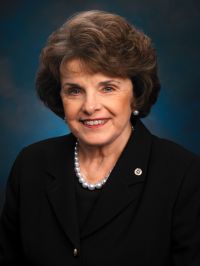 Dianne Feinstein,
Global Warming: a Time to Act
(2006)
Dianne Feinstein,
Global Warming: a Time to Act
(2006)
“ Every business, home, and industry must do its share. So what can be done?Let me begin with electricity generation. This is the single largest piece of the global warming puzzle —responsible for 33 percent of global warming gases in the United States . And the biggest culprit here is pulverized coal, which is the major source of energy in 40 of the 50 states.Coal, alone, produces 27 percent of annual carbon dioxide emissions, or 2.1 billion tons every year.Globally, coal produces 9.3 billion tons of carbon dioxide every year – or one-third of all global greenhouse gas emissions. ”
Conference of the parties to the UNFCCC, Negotiators of the Paris Agreement, Paris Agreement (2015)
“ In order to achieve the long-term temperature goal set out in Article 2, Parties aim to reach global peaking of greenhouse gas emissions as soon as possible, recognizing that peaking will take longer for developing country Parties, and to undertake rapid reductions thereafter in accordance with best available science, so as to achieve a balance between anthropogenic emissions by sources and removals by sinks of greenhouse gases in the second half of this century, on the basis of equity, and in the context of sustainable development and efforts to eradicate poverty. ”
 Alexandria Ocasio-Cortez,
Recognizing the duty of the Federal Government to create a Green New Deal
(2019)
Alexandria Ocasio-Cortez,
Recognizing the duty of the Federal Government to create a Green New Deal
(2019)
“ Whereas, because the United States has historically been responsible for a disproportionate amount of greenhouse gas emissions, having emitted 20 percent of global greenhouse gas emissions through 2014, and has a high technological capacity, the United States must take a leading role in reducing emissions through economic transformation ”
by the Congressional Budget Office, The Economics of Climate Change… (2003)
“ Although nations have found it relatively easy to agree to expand, coordinate, and report climate-related scientific and technological research, they have found it very hard to agree about whether and how much to restrict the growth of greenhouse gas emissions. ”
Jennifer Mulhern Granholm and Jennifer Rene Psaki, Press Briefing by Press Secretary Jen Psaki and Secretary of Energy Jennifer Granholm… (2021)
“ And so, to me, the fact that there is out there, globally, a $23 trillion market for clean energy products, for products that will reduce greenhouse gas emissions, is a massive opportunity for this country. And you better believe that other countries are seeing that opportunity as well, and our economic competitors are working to corner the market on those opportunities. Countries like China are pressing their foot on the pedal and revving up their electric engines, and they are thrilled to see that the United States is standing still while they are working to create jobs for their people. ”
EPA final brief, ICTA Petition for Review of Final Action of the EPA (2005)
“ As we will discuss in the next section, however, it is clear from the record that EPA has never made any formal endangerment finding regarding the effects of greenhouse gas emissions on climate change, much less an endangerment finding specific to motor vehicle greenhouse gas emissions. ”
by the Congressional Budget Office, The Economics of Climate Change… (2003)
“ The accumulation of those gases is changing the composition of the atmosphere and is probably contributing to a gradual warming of the Earth’s climate—the characteristic weather conditions that prevail in various regions of the world. Scientists generally agree that continued population growth and economic development over the next century will result in substantially more greenhouse gas emissions and further warming unless measures are taken to constrain those emissions. ”
President of the United States, Executive Order 13693 — Planning for Federal Sustainability in the Next Decade2624825
“ Federal leadership in energy, environmental water, fleet, buildings, and acquisition management will continue to drive national greenhouse gas reductions and support preparations for the impacts of climate change. Through a combination of more efficient Federal operations such as those outlined in this Executive Order (order) , we have the opportunity to reduce agency direct greenhouse gas emissions by at least 40 percent over the next decade while at the same time fostering innovation, reducing spending, and strengthening the communities in which our Federal facilities operate. ”
Heather Marie Boushey, A Return to Science: Evidence-Based Estimates of the Benefits of Reducing Climate Pollution (2021)
“ As decision-makers develop policies, they must incorporate the very real costs of climate change to current and future generations into their decisions.One specific tool — called the “social cost of greenhouse gases” — combines climate science and economics to help Federal agencies and the public understand the benefits of reducing greenhouse gas emissions. The metric is a range of estimates, in dollars, of the long-term damage done by one ton of greenhouse gas emissions. ”
by the Congressional Budget Office, The Economics of Climate Change… (2003)
“ Nevertheless, assessments of the potential costs and benefits of a warming climate typically conclude that the continued growth of emissions could ultimately cause extensive physical and economic damage. Many studies indicate significant benefits from undertaking research to better understand the processes and economic effects of climate change and to discover and develop new and better technologies to reduce or eliminate greenhouse gas emissions. ”
State Council Information Office of the People's Republic of China, Responding to Climate Change: China's Policies and Actions (2021)
“ Through structural adjustment, optimized configuration, policy synergy and innovative mechanisms, efforts to reduce pollution and carbon emissions are planned and carried out in tandem, and the performance assessment of the two is also conducted jointly. Balancing environmental, climate and economic gains, China has found a unique path to reducing greenhouse gas emissions that conforms to its actual conditions. ”
Joseph Robinette Biden, Executive Order 13990 (2021)
“ Because most greenhouse gas emissions originate beyond our borders, such engagement is more necessary and urgent than ever. The United States must be in a position to exercise vigorous climate leadership in order to achieve a significant increase in global climate action and put the world on a sustainable climate pathway. ”
by the Congressional Budget Office, The Economics of Climate Change… (2003)
“ There are roughly 1,500 billion to 1,700 billion mtc in proven coal, oil, and natural gas reserves that can be extracted using current technology, along with an estimated 7,000 billion to 16,000 billion mtc in resources that might ultimately be recovered using advanced technology—not including reservoirs of methane hydrate under the ocean. [9] Without some sort of intervention, increasing levels of emissions—mainly of carbon dioxide from the use of fossil fuels—will continue to raise atmospheric concentrations of greenhouse gases for the foreseeable future. ”
by the Congressional Budget Office, The Economics of Climate Change… (2003)
“ At the same time, such studies typically find relatively small net benefits from acting to reduce greenhouse gas emissions in the near term. In balancing alternative investments, they conclude that if modest restrictions on emissions were implemented today, they would yield net benefits in the future; however, more-extensive restrictions would crowd out other types of investment, reducing the rate of economic growth and affecting current and future generations’ material prosperity even more than the averted change would. ”
Joseph Robinette Biden, Executive Order 14037 (2021)
“ The Administrator of the EPA shall, as appropriate and consistent with applicable law, consider beginning work on a rulemaking under the Clean Air Act to establish new greenhouse gas emissions standards for heavy-duty engines and vehicles to begin as soon as model year 2030. ”
United States. Congress, American Recovery and Reinvestment Act of 2009…
“ Leading edge biofuel projects that will use technologies performing at the pilot or demonstration scale that the Secretary determines are likely to become commercial technologies and will produce transportation fuels that substantially reduce life-cycle greenhouse gas emissions compared to other transportation fuels. ”
Joseph Robinette Biden, Executive Order 14072 (2022)
“ The plan recognizes that conserving and restoring global forest and peatland ecosystems, particularly in the Amazon, Congo Basin, and Southeast Asia, can provide significant global greenhouse gas emissions mitigation, both by preventing the emissions caused by deforestation and by increasing the amount of carbon dioxide captured from the atmosphere and stored in soils and forest biomass. ”
by the Congressional Budget Office, The Economics of Climate Change… (2003)
“ One option is direct controls, which set emissions standards for equipment and processes, require households and businesses to use specific types of equipment, or prohibit them from using others. A government could also adopt more indirect, incentive-based approaches, either singly or in combination—for example, by restricting overall quantities of emissions through a system of permits or by raising the price of emissions through fees or taxes. Incentive based approaches are generally more cost-effective than direct controls as a means of regulating greenhouse gas emissions. ”
President of the United States, Executive Order 13693 — Planning for Federal Sustainability in the Next Decade2624825
“ As used in this order: (a) “absolute greenhouse gas emissions” means total greenhouse gas emissions without normalization for activity levels and includes any allowable consideration of sequestration; (b) “agency” means an executive agency as defined in section 105 of title 5, United States Code, excluding the Government Accountability Office; (c) “alternative energy” means energy generated from technologies and approaches that advance renewable heat sources, including biomass, solar thermal, geothermal, waste heat, and renewable combined heat and power processes; combined heat and power ”
Related terms
Authors who wrote about “greenhouse gas emissions”
by the Congressional Budget OfficeConference of the parties to the UNFCCC, Negotiators of the Paris Agreement Ed Whitfield
 Bhumibol AdulyadejJennifer Mulhern Granholm and Jennifer Rene PsakiDianne FeinsteinAlexandria Ocasio-CortezUnited States. CongressBarack ObamaGeorge W. BushState Council Information Office of the People's Republic of ChinaJoseph Robinette Biden
 Bill ClintonUnited Nations World Commission on Environment and DevelopmentPresident of the United StatesLi KeqiangUnited Nations
 John Paul StevensUnited States. PresidentsHeather Marie Boushey
Ed WhitfieldBhumibol AdulyadejJennifer Mulhern Granholm and Jennifer Rene PsakiDianne FeinsteinAlexandria Ocasio-CortezUnited States. CongressBarack ObamaGeorge W. BushState Council Information Office of the People's Republic of ChinaJoseph Robinette BidenBill ClintonUnited Nations World Commission on Environment and DevelopmentPresident of the United StatesLi KeqiangUnited NationsJohn Paul StevensUnited States. PresidentsHeather Marie Boushey