Gypsy moth

Definition and stakes

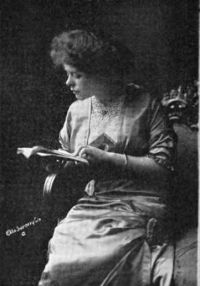
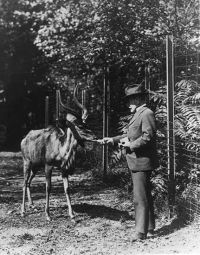
Portrait of William T. Hornaday William T. Hornaday,  Our Vanishing Wild Life: Its Extermination and Preservation

“ History records the fact that the man of science did not purposely set free the pest. He was endeavoring with live specimens to find a moth that would produce a cocoon of commercial value to America; and a sudden gust of wind blew out of his study, through an open window, his living and breeding specimens of the gypsy moth. The moth itself is not bad to look at, but its larvae is a great, overgrown brute, with an appetite like a hog. ”
Source: Gutenberg

Various,  Popular Science Monthly (1894)

“ Yet the experiment was safe and desirable because the European clerus is more active and more seemingly effective than our indigenes. The gypsy moth was evidently introduced into Massachusetts without its European natural enemies, and as in some parts of Europe it is often locally checked by such natural enemies, a great number of which are known, a proper study of them and the introduction of the most effective could result in no possible harm and might be productive of lasting good. ”
Source: Wikisource

Project Gutenberg,  The Gutenberg Webster's Unabridged Dictionary…

“ The male gypsy moth is yellowish brown, the female white, and larger than the male. In both sexes the wings are marked by dark lines and a dark lunule. The caterpillars, when full-grown, have a grayish mottled appearance, with blue tubercles on the anterior and red tubercles on the posterior part of the body, all giving rise to long yellow and black hairs. ”
Source: Gutenberg

Get perspective with Kwize: daily news enlightened by great literature