High-frequency electricity

Definition and stakes

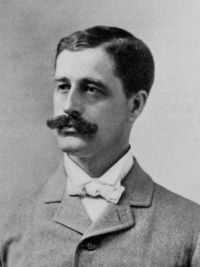
W. H. McCormick,  Electricity (1915)

“ In our chapter on wireless telegraphy we saw that the discharge of a Leyden jar takes the form of a number of rapid oscillations backwards and forwards. These oscillations take place at a rate of more than half a million per second, but by the use of an apparatus called a “high frequency transformer” the rate is increased to more than a million per second. Electricity in this state of rapid oscillation is known as high frequency electricity, and high frequency currents are very valuable for some kinds of medical work. ”
Source: Gutenberg

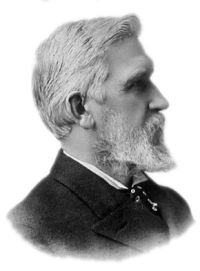
Portrait of A. Frederick Collins A. Frederick Collins,  Jack Heaton wireless operator (1919)

“ The sending apparatus was very much the same as that I saw in the cableless station at Glace Bay. This is easily explained because there is only one way to change a large amount of low pressure electricity such as is generated by an alternating current dynamo into high potential, high frequency electricity and that way is to use a transformer to step up the pressure of the alternating current; condensers are then charged with the latter current and this in turn is discharged between a pair of spark balls, or a rotary spark-gap which is used for the same purpose. ”
Source: Gutenberg

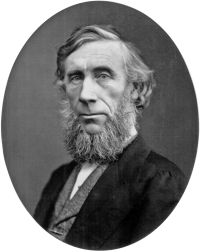
Portrait of John F. Woodhull John F. Woodhull,  The Library of Work and Play: Electricity and Its Everyday Uses

“ The alternating-current dynamo gives a surging of electricity back and forth in the wires, and this may be distinguished from the direct current by its feeling; when, however, the number of alternations per second is increased very greatly, one may receive through the body considerable quantities of electricity without feeling it. With a very high frequency current one may put himself in circuit and light a 16-candle-power lamp without any disagreeable sensation. ”
Source: Gutenberg

Get perspective with Kwize: daily news enlightened by great literature