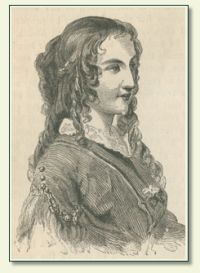
“ Thou and thy state, Armand, are not akin; And thy ambition wakes my fear - Yet why! - Why should he feel ambition to be great, whose nobler struggle, in a nobler strife, has made him good. ArmMy nature is not cast, sweet Blanche!, in mould so true and pure as thine ambition winds itself about the root of every vigorous mind. Ambition gives the startling impulse to its higher action! Ambition spurs it on - sustains - inspires! ”
Quotes about “impetuosity”
Mary Wollstonecraft Shelley, Rambles in Germany and Italy in 1840… (1844)
“ How seldom do human wishes flow smoothly towards their object; for a while they may steal imperceptibly on, unstopped, though often checked; winding round, or perseveringly surmounting impediments. Or obstacles still more mighty present themselves, and then our wishes gather power;—they swell, and dash down all impediments, and take an impetuous course. ”

“ For where from weakness and want of strength, or from fear and hesitation, the impetus gives in and abandons what is good, there reason is by to stir it up and rekindle it; and where on the other hand it goes ahead too fast and in disorder, there it represses and checks its zeal. ”
 Anthony Trollope,
The Last Chronicle of Barset
(1867)
Anthony Trollope,
The Last Chronicle of Barset
(1867)
“ How can I dare to form a scheme, when I am aware that the chance of success must be so strong against me? But if you will tell me that there can be a gleam of hope, I will obey any commands that you can put upon me in any way that you may point out. ”
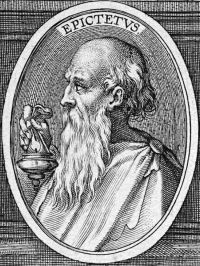 Epictetus,
The Teaching of Epictetus
Epictetus,
The Teaching of Epictetus
“ Remember at anything that shall befall thee to turn to thyself and seek what faculty thou hast for making use of it. If thou see a beautiful person, thou wilt find a faculty for that—namely, Self-mastery. If toil is laid upon thee, thou wilt find the faculty of Perseverance. If thou art reviled, thou wilt find Patience. And making this thy wont, thou shalt not be carried away by the appearances. ”
Walter Aimwell, Marcus; or, The Boy-Tamer (1857)
“ To do all this, you must rely upon principle, not impulse. You must form a fixed purpose to govern yourself, and adhere to it, through thick and thin. You must also be willing to submit to some self-denial and sacrifice. ”
William James, The Principles of Psychology, Volume 2…
“ The ideal impulse appears, in comparison with this, a still small voice which must be artificially reinforced to prevail. Effort is what reinforces it, making things seem as if, while the force of propensity were essentially a fixed quantity, the ideal force might be of various amount. But what determines the amount of the effort when, by its aid, an ideal motive becomes victorious over a great sensual resistance? The very greatness of the resistance itself. ”
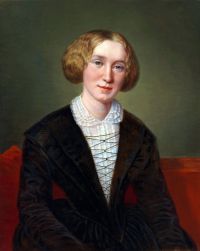 George Eliot,
The Legend of Jubal
(1869)
George Eliot,
The Legend of Jubal
(1869)
“ But strength that still on movement must be fed, Inspiring thought of change, devices bred, And urged his mind through earth and air to rove For force that he could conquer if he strove, For lurking forms that might new tasks fulfil And yield unwilling to his stronger-will. ”
 T. S. Arthur,
Danger; Or, Wounded in the House of a Friend
T. S. Arthur,
Danger; Or, Wounded in the House of a Friend
“ The influence that goes out from an individual or mass of individuals, we mean—that subtle, invisible power that acts from one upon another, and which when aggregated is almost irresistible? You have felt it in a company moved by a single impulse which carried you for a time with the rest, though all your calmer convictions were in opposition to the movement. ”
William James, Talks To Teachers On Psychology…
“ When a trotting horse is 'speeded,' a running horse must go beside him to keep him to the pace.As imitation slides into emulation, so emulation slides into Ambition; and ambition connects itself closely with Pugnacity and Pride. ”
 John Stuart Mill,
A System of Logic, Ratiocinative and Inductive
(1881)
John Stuart Mill,
A System of Logic, Ratiocinative and Inductive
(1881)
“ An act of volition, whether followed by an effect or not, is accompanied by a consciousness of effort, "of force exerted, of power in action, which is necessarily causal, or causative." This feeling of energy or force, inherent in an act of will, is knowledge a priori; assurance, prior to experience, that we have the power of causing effects. ”

“ And I will begin with courage, and once more ask, What is that common quality, which is the same in all these cases, and which is called courage? Do you now understand what I mean? LACHES: Not over well. SOCRATES: I mean this: As I might ask what is that quality which is called quickness, and which is found in running, in playing the lyre, in speaking, in learning, and in many other similar actions, or rather which we possess in nearly every action that is worth mentioning of arms, legs, mouth, voice, mind;—would you not apply the term quickness to all of them? ”
Epictetus,
Epictetus, the Discourses as reported by Arrian…
(1925)
“ For example, if you are convinced at this moment that it is night, do not change your opinion, if that seems best to you, but abide by it and say that you ought to abide by your decisions! Do you not wish to make your beginning and your foundation firm, that is, to consider whether your decision is sound or unsound, and only after you have done that proceed to rear thereon the structure of your determination and your firm resolve? ”
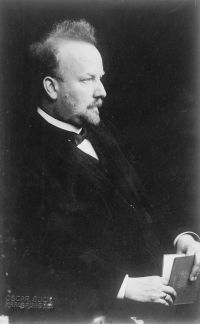 Arthur Drews,
The Witnesses to the Historicity of Jesus…
(1912)
Arthur Drews,
The Witnesses to the Historicity of Jesus…
(1912)
“ The importance and power of a movement, therefore, are by no means proportionate to the importance of the personalities in whom it takes shape, and who give the first impulse to its becoming an open force. ”
 Ernest Renan,
Recollections of My Youth
(1863)
Ernest Renan,
Recollections of My Youth
(1863)
“ Sight and sight again the aim which thou hast failed to hit throughout the ages; try to struggle through the scarcely perceptible opening which leads to another firmament. Thou hast the infinity of time and space to try the experiment. He who can commit blunders with impunity is always certain to succeed. ”
 Arthur Schopenhauer,
The World as Will and Representation
(1819)
Arthur Schopenhauer,
The World as Will and Representation
(1819)
“ For example, in speaking of passion, we may subsume it under the concept of the greatest force, the mightiest agency in the world, or under the concept of the irrational, and this again under the concept of impotency or weakness. ”
George Spring Merriam, The Chief End of Man
“ Other elements of that force are the physical needs; the push and play of passions ingrained in human nature; the inherited bias; the strength of habits formed before childhood had begun to reflect,—the thousand forces which blend with reason and choice to make up our destiny. ”
 Johann Gottlieb Fichte,
The Vocation of Man — Book One…
(1846)
Johann Gottlieb Fichte,
The Vocation of Man — Book One…
(1846)
“ A volition is the immediate consciousness of the activity of any of the powers of Nature within us. The immediate consciousness of an effort,—an aspiration of these powers which has not yet become a reality because it is hemmed in by opposing powers,—is, in consciousness, inclination or desire; ”
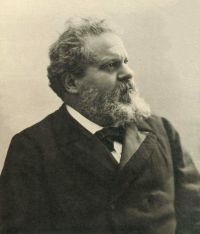 Giosuè Carducci,
Poems of Giosuè Carducci, Translated with two introductory essays
Giosuè Carducci,
Poems of Giosuè Carducci, Translated with two introductory essays
“ We have seemed to be no more satisfied with the contemplation of intangible ideals: we rest content only with what hand can touch and eye rest upon. The “power in ultimates” is the display of force characteristic of this age of the world. ”
 Maud Howe Elliott,
Julia Ward Howe, 1819-1910
Maud Howe Elliott,
Julia Ward Howe, 1819-1910
“ Independently of ambition, vanity, pride,—all of which prompt all of us, I feel that I must do what my hand finds to do, taking my dictation and my reward from sources quite above human will and approbation. ”
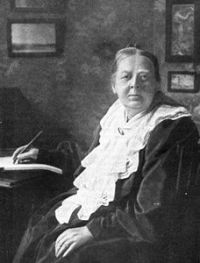 Mary Everest Boole,
Forging of Passion Into Power
(1911)
Mary Everest Boole,
Forging of Passion Into Power
(1911)
“ Now, the problem of forging Passion into Power is that of changing any position of the stick which represents a condition of the consciousness that is not commonplace and that is undesirable, into some position which represents a desirable one. ”
 David Hume,
A Treatise of Human Nature
(1738)
David Hume,
A Treatise of Human Nature
(1738)
“ I have observed in considering the nature of ambition, that the great feel a double pleasure in authority from the comparison of their own condition with that of their slaves; and that this comparison has a double influence, because it is natural, and presented by the subject. ”
 Mercy Otis Warren,
History of the Rise, Progress, and Termination of the American Revolution
(1805)
Mercy Otis Warren,
History of the Rise, Progress, and Termination of the American Revolution
(1805)
“ Thus when we look over the theater of human action, scrutinize the windings of the heart, and survey the transactions of man from the earliest to the present period, it must be acknowledged that ambition and avarice are the leading springs which generally actuate the restless mind. ”
 Thomas Henry Huxley,
Essays upon some Controverted Questions…
(1892)
Thomas Henry Huxley,
Essays upon some Controverted Questions…
(1892)
“ But when one tried to think it out, what in the world became of force considered as an objective entity? Force, even the most materialistic of philosophers will agree with the most idealistic, is nothing but a name for the cause of motion. ”
 Henry David Thoreau,
Journal 02, 1850-September 15, 1851
Henry David Thoreau,
Journal 02, 1850-September 15, 1851
“ What more glorious condition of being can we imagine than from impure to be becoming pure? It is almost desirable to be impure that we may be the subject of this improvement. That I am innocent to myself! ”
 Josiah Royce,
The Philosophical Review Volume 3 Number 5…
Josiah Royce,
The Philosophical Review Volume 3 Number 5…
“ Imitation is the primary, originality the secondary, submission is the earlier, rebellion the later, authority is the natural, reflective independence the derived element, in the social and in the cognitive life of man. ”
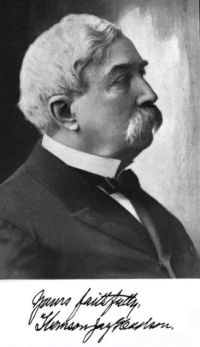 Thomson Jay Hudson,
The Law of Psychic Phenomena
Thomson Jay Hudson,
The Law of Psychic Phenomena
“ He fasted all this time, as a physical preparation necessary to the attainment of the full powers of the soul. At the end of that time, conscious of the full possession of subjective power such as no man ever before attained, contemplating the career upon which he was about to enter, realizing all its possibilities for good and all its opportunities for the attainment of personal power and aggrandizement, the temptation came. ”
Epictetus,
Epictetus, the Discourses as reported by Arrian…
“ No one can prevent you, can he?—No one.—Therefore, say no longer to me, "How is it to take place?"' Because, whatever takes place, you will turn it to good purpose, and the outcome will be a blessing for you. ”
Robert Chambers, Vestiges of the Natural History of Creation
“ There ever will, in the best disposed and most disciplined minds, be occasional discrepancies between the amount of temptation and the power summoned for regulation or resistance, or between the stimulus and the mobility of the faculty ”
George Spring Merriam, The Chief End of Man
“ Though Epictetus continually appeals to reason, his basal word is to the will. Be constant to duty—accept the order of things as good, and be true to the highest law—revere "nature," the established order; obey "nature," the ideal law. Take all for the best, and you make all for the best. ”
 Émile Faguet,
The Cult of Incompetence
Émile Faguet,
The Cult of Incompetence
“ Motive power, initiative, belongs to the man who has a plan, who makes his combination to achieve it, who perseveres and is patient and does not relinquish pursuit. If he is eliminated and reduced to impotence or to a minimum of usefulness, one does not see how the crowd, without him, can obtain its power of initiation. ”
 J. Howard Moore,
The Universal Kinship
J. Howard Moore,
The Universal Kinship
“ All will, whether human or non-human, invariably acts in the direction of the strongest motive, just as a stone or a river invariably moves, if it moves at all, in the direction of the strongest tendency or force. ”
Chautauqua Institution, The Chautauquan, Vol. 04, February 1884…
“ Now what do we find controlling the facts of our own natural life? An impulse which we may call the Will to live. We often use the word Will in a complex sense, as implying both thought and choice; but in its purest, simplest sense, as the word is used here, it means the impulse, or force, which is the cause of a phenomenon. ”
William Hazlitt, The collected works of William Hazlitt… (1902)
“ Our passions in general are to be traced more immediately to the active part of our nature, to the love of power, or to strength of will. Such are all those which arise out of the difficulty of accomplishment, which become more intense from the efforts made to attain the object, and which derive their strength from opposition. ”
 John Dewey,
Human Nature and Conduct: An introduction to social psychology
John Dewey,
Human Nature and Conduct: An introduction to social psychology
“ For the moving force may be a shadowy presentiment constructed by wishful hope rather than by study of conditions; it may be an emotional indulgence rather than a solid plan built upon the rocks of actuality discovered by accurate inquiries. There is no thought without the impeding of impulse. ”
 Bertrand Russell,
Mysticism and Logic and Other Essays
(1917)
Bertrand Russell,
Mysticism and Logic and Other Essays
(1917)
“ Each impulse has its constitutional ministry of thought and knowledge and reflection, through which possible conflicts of impulses are foreseen, and temporary impulses are controlled by the unifying impulse which may be called wisdom. ”
 Arthur Symons,
The Symbolist Movement in Literature
Arthur Symons,
The Symbolist Movement in Literature
“ Every step is taken deliberately, is weighed, approved, condemned, viewed from this side and from that, and at the same time one feels behind all this reasoning an impulsion urging a soul onward against its will. ”
 Rudolf Otto,
Naturalism and Religion
Rudolf Otto,
Naturalism and Religion
“ Let us take, for instance, a motive, m, that impels us towards a particular action, and another, n, that hinders us. If these meet in us, the result is not simply a weakening of the power of the one, and a remaining motive of the strength of m minus n. ”
St. George William Joseph Stock, A Guide to Stoicism
“ Impulse or appetition was the principle in the soul which impelled to action. In an unperverted state it was directed only to things in accordance with nature. The negative form of this principle or the avoidance of things as being contrary to nature, we shall call repulsion. ”
Johann Gottlieb Fichte,
Facts of Consciousness — Part Two…
(1817)
“ We have seen how the Ego, limited to a mere impulse and without any immediate causality, through its mere Being contemplated its power to arrive in time at an end through conditional states; calculating that power, at the same time, the resistance that was also contemplated in the image, and thus completing a plan of its causality. ”
 George Wharton James,
Living the Radiant Life: A Personal Narrative
George Wharton James,
Living the Radiant Life: A Personal Narrative
“ Yet the lives we touch may need just the impetus, the propelling force—light or vigorous—that we can give to enable the fulfillment in them of half dormant ambitions for good, the attainment of noble endeavor. ”
Joseph Haven, Mental Philosophy: Including the Intellect…
“ The ends to be accomplished by volition are as numerous as the infinite variety of human purposes and actions, and, of course, admit of no complete enumeration or classification. We confine our further attention, then, to these elements—the motive, the choice, the executive volition—and proceed to their more careful investigation as phenomena of the will. ”
William James, Essays in Radical Empiricism
“ But in this actual world of ours, as it is given, a part at least of the activity comes with definite direction; it comes with desire and sense of goal; it comes complicated with resistances which it overcomes or succumbs to, and with the efforts which the feeling of resistance so often provokes; and it is in complex experiences like these that the notions of distinct agents, and of passivity as opposed to activity arise. ”
Reginald Herbert Mason, Pictures of life in Mexico/Volume 1 (1852)
“ Great decision of character, courage and energy in action, together with unfailing perseverance, and an unscrupulousness amounting to total want of principle, which admitted of no obstacles, seem to have been his chief characteristics. ”
 Richard Francis Burton,
The Sentiment of the Sword — The Third Evening
Richard Francis Burton,
The Sentiment of the Sword — The Third Evening
“ When sufficient practice shall have made these movements familiar to you, when you feel the ease and rapidity which result from them, and when you are conscious that they have given, with the patience of assured strength, a new life to your thews and sinews, then you have a right to venture upon certain modifications. ”
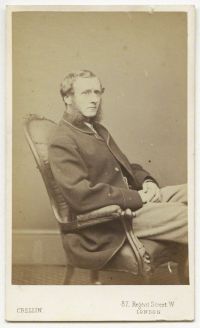 Edward Spencer Beesly,
Home Rule
(1886)
Edward Spencer Beesly,
Home Rule
(1886)
“ What a novel and inspiriting sensation of strength would he experience if he could meet every unreasonable demand or unfulfilled obligation with the threat, not of doing something, but of ceasing to do something. ”

“ After impudence comes the determination to surprise: you shall not be gradually moved to the depths, you shall be given such a start as makes you jigger all over. And from this determination issues the grateful corollary—thou shalt not be tedious. ”
 Albert Taylor Bledsoe,
A Theodicy, or, Vindication of the Divine Glory
Albert Taylor Bledsoe,
A Theodicy, or, Vindication of the Divine Glory
“ Now, when the advocates of free-agency insist that motive is not the efficient cause of volition, and that mind is the efficient cause thereof, we suppose them to employ the expression, efficient cause, in one and the same sense in both branches of the proposition. ”
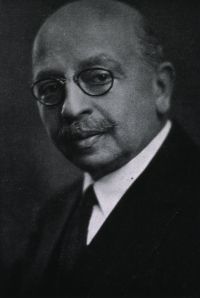 Joseph Jastrow,
Fact and Fable in Psychology
Joseph Jastrow,
Fact and Fable in Psychology
“ Movements in which the former interest dominates, contain elements that command respect even when they do not engage sympathy; and that appeal, though it may be unwisely, to worthy impulses and lofty aspirations. ”
