Dictation, the act of transcribing spoken words by a recorder under the direction of a speaker, serves both educational and symbolic functions across cultures. From the French la dictée, which tests orthographic accuracy, to the Chinese tīngxiě, which reinforces mastery of characters, the practice highlights the relationship between spoken and written communication.
In literature and politics, the term takes on metaphorical meanings: Horace Mann opposes the partisan "imposition" of principles, Edmund Burke criticizes governance guided by whim rather than reason, and Alexis de Tocqueville questions the unclear distinctions between authority and freedom. These diverse applications demonstrate dictation as a means of examining power, knowledge, and the conflict between personal autonomy and external influence.
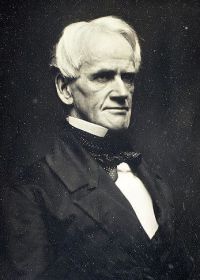 Horace Mann,
Slavery: letters and speeches
(1851)
Horace Mann,
Slavery: letters and speeches
(1851)