Irregular verb

Definition and stakes

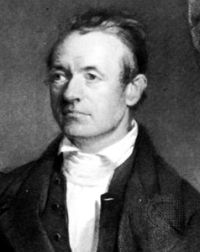
Portrait of Goold Brown Goold Brown,  The Grammar of English Grammars

“ II. An irregular verb is a verb that does not form the preterit and the perfect participle by assuming d or ed; as, see, saw, seeing, seen.
III. A redundant verb is a verb that forms the preterit or the perfect participle in two or more ways, and so as to be both regular and irregular; as, thrive, thrived or throve, thriving, thrived or thriven.
IV. A defective verb is a verb that forms no participles, and is used in but few of the moods and tenses; as, beware, ought, quoth.
”
Source: Gutenberg

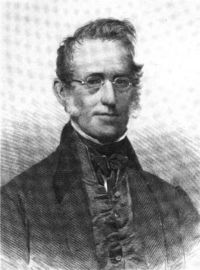
Portrait of H. L. Mencken H. L. Mencken,  The American Language

“ Moreover, a familiar verb, itself acquiring a faulty inflection, may fasten a similar inflection upon another verb of like sound. Thus het, as the preterite of to heat, no doubt owes its existence to the example of et, the vulgar preterite of to eat. So far the irregular verbs. The same combination of laziness and imitativeness works toward the regularization of certain verbs that are historically irregular. In addition, of course, there is the fact that regularization is itself intrinsically simplification—that it makes the language easier. ”
Source: Gutenberg

Conversation: Its Faults and Its Graces

“ I trust that it is an old one; for some of the new grammars sanction these vulgarisms, and in looking over their tables of irregular verbs, I have sometimes half expected to have the book dashed [6] from my hand by the indignant ghost of Lindley Murray. Great care and discretion should be employed in the use of the common abbreviations of the negative forms of the substantive and auxiliary verbs. Can't, don't, and haven't, are admissible in rapid conversation on trivial subjects. Isn't and hasn't are more harsh, yet tolerated by respectable usage. ”
Source: Gutenberg

Get perspective with Kwize: daily news enlightened by great literature