 Arthur Hugh Clough,
Amours De Voyage
Arthur Hugh Clough,
Amours De Voyage
“ Well, I know, after all, it is only juxtaposition,— Juxtaposition, in short; and what is juxtaposition? ”
Arthur Hugh Clough,
Amours De Voyage
“ Well, I know, after all, it is only juxtaposition,— Juxtaposition, in short; and what is juxtaposition? ”
 Arthur Schopenhauer,
On the Fourfold Root of the Principle of Sufficient Reason…
Arthur Schopenhauer,
On the Fourfold Root of the Principle of Sufficient Reason…
“ Thus we see, that although infinite divisibility and infinite extension are common to both Time and Space, these two forms of empirical representations differ fundamentally, inasmuch as what is essential to the one is without any meaning at all for the other: juxtaposition having no meaning in Time, succession no meaning in Space. The empirical representations which belong to the orderly complex of reality, appear notwithstanding in both forms together; nay, the intimate union of both is the condition of reality which, in a sense, grows out of them, as a product grows out of its factors. ”
 François Guizot,
Shakspeare and His Times
François Guizot,
Shakspeare and His Times
“ At a time when the mind, tormented, as it were, by its youth and inexperience, tried all forms of expression, except simplicity—and at a court in which euphuism, the fashionable language, had introduced the most whimsical travesties, both of persons and ideas, into familiar conversation—it is possible that, in order to express real feelings, the poet may sometimes have assumed, in these fugitive compositions, the tone and language of conventionality. ”
“ In the momentary clairvoyance of enthusiasm they caught a glimpse of the truth, and by one of the strange reactions of human passion they only waited for a word of appeal or explanation from her lips to throw themselves at her feet. ”
François Guizot,
A Popular History of France from the Earliest Times…
“ Anything but prepossessing in appearance, supported on long and thin shanks, vulgar in looks and often designedly ill-dressed, and undignified in his manners though haughty in mind, he was powerful by the sheer force of a mind marvellously lively, subtle, unerring, ready, and inventive, and of a character indefatigably active, and pursuing success as a passion without any scruple or embarrassment in the employment of means. ”
Henry Norman Hudson, Shakespeare: His Life, Art, And Characters…
“ And all the loathsome filth which had settled to the bottom of his nature is now shaken up to the surface, so that there appears to be nothing but meanness and malignity and essential coarseness in him. Meanwhile an instinctive shame of his passion and a dread of vulgar ridicule put him upon talking in dark riddles and enigmas: hence the confused, broken, and disjointed style, an odd jumble of dialogue and soliloquy, in which he tries to jerk out his thoughts, as if he would have them known, and yet not have them known. ”
Robert Saunders Dowst, The Technique of Fiction Writing
“ Event and personality each influence or even determine each other simultaneously. Incidentally, realization of the fact will free the writer from any misconception that the action and the characters are separable elements of a story. For instance, jealousy, a trait of character, may cause a murder, an event, and a husband's chance opening of a letter addressed to his wife, an event, may give rise to Jealousy, the trait of character. Or the husband's loyalty will be strengthened in the fiction if he refuses to credit appearances. ”
François Guizot,
Shakspeare and His Times
“ Because, such is the intensity and vivacity of his original conception, that the most revolting improbabilities, the most inconceivable absurdities, pass by unperceived; because no one is so ungracious, no one has time to notice the stratagems of the drama. ”
François Guizot,
Meditations on the Actual State of Christianity…
“ What is sensation, what perception, judgment, reasoning, reason, will, consciousness? They are the human being, feeling, perceiving, judging, reasoning, willing, and observing what is passing within him. This is no troop of actors playing, each his part, in a complex drama; but a being single and alive, actor and sole spectator in the drama of his proper life. ”
Ethel D. Puffer, Psychology of Beauty
“ The image, dimly foreshadowed, is given in the half-consciousness of each note as it appears, and in that sense of coming integration already recognized. The proof is the shock and disappointment when the wrong note is sounded; if we had not some anticipation of the right, the wrong one would not shock. ”
 Thomas Holcroft,
The Adventures of Hugh Trevor
Thomas Holcroft,
The Adventures of Hugh Trevor
“ Disjointed dialogue, no attempt at plan or fable, each scene a different story, and each story improbable and absurd, quibbles without meaning, puns without point, cant without character, sentiments as dull as they were false, and a continual outrage on manners, morals and common sense, were its leading features. ”
Augustin Filon, The English Stage: Being an Account of the Victorian Drama
“ It is in the seizure and presentation of the essential and distinguishing marks of a character, of a scene, of a passion, of a society, of a phase of life, of a movement of national thought—it is in the seizure and vivid treatment of some of these, to the exclusion or falsification of non-essentials, that the dramatist must lay his claim to sincerity and being “true to nature.” ”
Corbyn Morris, An Essay towards Fixing the True Standards of Wit…
“ It is also proper to add, that there may be Wit in a Picture, Landscape, or in any Prospect, where a gay unexpected Assemblage of similar, or opposite Objects, is presented.Judgment, is the Faculty of discerning the various Dimensions, and Differences, of Subjects.Invention is the Faculty of finding out new Assortments, and Combinations, of Ideas.Humour is any whimsical Oddity or Foible, appearing in the Temper or Conduct of a Person in real Life. ”
 William Holmes McGuffey,
McGuffey's Sixth Eclectic Reader
William Holmes McGuffey,
McGuffey's Sixth Eclectic Reader
“ Ah! poor dupe, will you never slip out of the web of the master juggler?—never learn that, as soon as the irrecoverable years have woven their blue glory between to-day and us, these passing hours shall glitter and draw us, as the wildest romance and the homes of beauty and poetry? How difficult to deal erect with them! The events they bring, their trade, entertainments, and gossip, their urgent work, all throw dust in the eyes and distract attention. ”
Clara Ingram Judson, Mary Jane: Her Book
“ And the longer she looked the more certain she became that something was wrong."They do open their mouths so funny," she thought to herself. "I know, I just know they wouldn't open their mouths so wide if something wasn't wrong." ”
R. N. Dutta, Tales from the Hindu Dramatists
“ They are mixed compositions, in which joy and sorrow, happiness and misery, are woven in a mingled web,—tragi-comic representations, in which good and evil, right and wrong, truth and falsehood, are allowed to mingle in confusion during the first acts of the drama. ”
 J. J. Jusserand,
A Literary History of the English People…
J. J. Jusserand,
A Literary History of the English People…
“ Let some sudden emotion fill his soul, and he will rise again, not in the mist this time, but in the rays of the sun; he will soar aloft, and we will wonder at the grandeur of his eloquence. Whatever be his subject, he will coin a word, or distort a meaning, or cram into an idiom more meaning than grammar, custom, or dictionary allow, rather than leave a gap between word and thought ”
François Guizot,
Shakspeare and His Times
“ A certain degree of mental development and simplicity, a certain community of ideas and habits between the different classes of society, greater ardor than fixity of imagination, greater movement of soul than of existence, a strongly-excited moral activity destitute of any imperious and determined object, liberty of thought and repose of life—these are the circumstances of which dramatic poetry has need, in order to shine with its full splendor. ”
 Robert Louis Stevenson,
Memories and Portraits
Robert Louis Stevenson,
Memories and Portraits
“ Let him choose a motive, whether of character or passion; carefully construct his plot so that every incident is an illustration of the motive, and every property employed shall bear to it a near relation of congruity or contrast; avoid a sub-plot, unless, as sometimes in Shakespeare, the sub-plot be a reversion or complement of the main intrigue; suffer not his style to flag below the level of the argument; pitch the key of conversation, not with any thought of how men talk in parlours, but with a single eye to the degree of passion he may be called on to express ”
 Samuel Johnson,
Notes to Shakespeare, Volume III: The Tragedies
Samuel Johnson,
Notes to Shakespeare, Volume III: The Tragedies
“ One of the editors, and perhaps only one, knew how much mischief may be done by such clandestine alterations. The quarto agrees with the folio, except that for reserve thy state, it gives, reverse thy doom, and has stoops instead of falls to folly. The meaning of answer my life my judgment, is, Let my life be answerable for my judgment, or, I will stake my life on my opinion.—The reading which, without any right, has possessed all the modern copies is this;—to plainness honourIs bound, when majesty to folly falls. ”
 Richard Chenevix Trench,
Proverbs and Their Lessons
Richard Chenevix Trench,
Proverbs and Their Lessons
“ In the justifying of the paradox, in the extricating of the real truth from the apparent falsehood of the statement, in the answer to the appeal made here to the imagination,—an appeal and challenge which, unless it be responded to, the proverb must remain unintelligible to us,—in all this there is a process of mental activity, oftentimes so rapidly exercised as scarcely to be perceptible, yet not the less carried on with a pleasurable excitement. ”
François Guizot,
Shakspeare and His Times
“ If their object were to impose upon the reason, and to impart to the imagination a shock sufficiently powerful to pervert the judgment to such a degree that a theatrical representation could be taken for the accomplishment of a real and actual fact, a very few scenes would suffice to work up the spectators to such a pitch of excitement that its effect would soon be to interrupt the performance by the violence of their emotions. ”
 Ralph Waldo Emerson,
Representative Men: Seven Lectures
Ralph Waldo Emerson,
Representative Men: Seven Lectures
“ Our books are false by being fragmentary; their sentences are bon mots, and not parts of natural discourse; childish expressions of surprise or pleasure in nature; or, worse, owing a brief notoriety to their petulance, or aversion from the order of nature,—being some curiosity or oddity, designedly not in harmony with nature, and purposely framed to excite a surprise, as jugglers do by concealing their means. ”
Eliezer Edwards, Personal Recollections of Birmingham and Birmingham Men
“ These orations, however, having no basis of thought or force of argument, and, indeed, having nothing but their sensuous beauty of expression to recommend them, fell flat upon the ears of an unsympathetic audience, composed mainly of men whose brains were larger and of tougher fibre. ”
Henry Norman Hudson, Shakespeare: His Life, Art, And Characters…
“ And shall we pity them, or shall we blame the Poet, that their virtue is not crowned with Fortune's smiles? Nay, rather let us both pity and blame ourselves for being of so mean and miserable a spirit.As for those poets, and those critics of poetry, who insist that in the Drama, which ought to be a just image of life as it is, there shall always be an exact fitting of rewards and punishments to moral desert ”
William Hazlitt, The collected works of William Hazlitt… (1902)
“ I am charged with using strange gestures and contortions of features in argument, in order to ‘look energetic.’ One would rather suppose that the heat of the argument produced the extravagance of the gestures, as I am said to be calm at other times. It is like saying that a man in a passion clenches his teeth, not because he is, but in order to seem, angry. Why should everything be construed into air and affectation? ”
 Thomson Jay Hudson,
The Law of Psychic Phenomena
Thomson Jay Hudson,
The Law of Psychic Phenomena
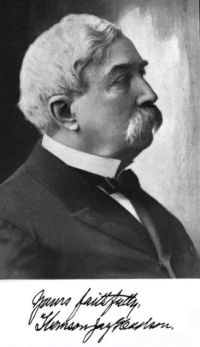
“ The same peculiarity is observed in trance-speaking mediums, especially in those who speak in a purely subjective condition. No matter how great is their flow of eloquence, or how perfect their command of their subject, they utterly break down when confronted by an adverse argument. So well is this peculiarity known that their friends never suffer them to be interrupted. ”
E. A. Poe, The Literati of New York (1864)
“ The four faculties in question seem to me all of their class; but when either fancy or humour is expressed to gain an end, is pointed at a purpose — whenever either becomes objective in place of subjective, then it becomes, also, pure wit or sarcasm, just as the purpose is benevolent or malevolent. ”
“ Though perfectly unpretending in structure and language, the most fastidious taste will acknowledge them to be the productions of a highly refined and cultivated mind, while they equally display all the charms of an affectionate and parental disposition, conjoined with a lofty, though a gentle and rational morality. ”
William Hazlitt, The Collected Works of William Hazlitt…
“ But in giving effect to the conflict of passions arising out of the contrast of situation, in varied vehemence of declamation, in keenness of sarcasm, in the rapidity of his transitions from one tone or feeling to another, in propriety and novelty of action, presenting a succession of striking pictures, and giving perpetually fresh shocks of delight and surprise, it would be difficult to single out a competitor. ”
 Georg Wilhelm Friedrich Hegel,
The Philosophy of Fine Art, volume 4…
Georg Wilhelm Friedrich Hegel,
The Philosophy of Fine Art, volume 4…
“ If, then, these particular forces, in the way presupposed by dramatic poetry, are attached to the external expression of human activity, and are realized as the determinate aim of a human pathos which passes into action, their concordancy is cancelled, and they are asserted in contrast to each other in interchangeable succession. ”
François Guizot,
Shakspeare and His Times
“ It is said that literature expresses the life of society— especially is this affirmed of dramatic literature. If this be true, and, in a certain sense, it undoubtedly is true, due limitations being conceded, then our general literature, and more especially our drama, must have reflected more or less accurately this two-fold character of frivolity as to the essence of things, and pedantry as to their forms. ”
 Virginia Woolf,
The Common Reader
(1925)
Virginia Woolf,
The Common Reader
(1925)
“ As we read Jude the Obscure we are not rushed to a finish; we brood and ponder and drift away from the text in plethoric trains of thought which build up round the characters an atmosphere of question and suggestion of which they are themselves, as often as not, unconscious. ”
Robert Louis Stevenson,
Essays in the Art of Writing
“ He follows three purposes where his rival followed only two; and the change is of precisely the same nature as that from melody to harmony. Or if you prefer to return to the juggler, behold him now, to the vastly increased enthusiasm of the spectators, juggling with three oranges instead of two. Thus it is: added difficulty, added beauty; and the pattern, with every fresh element, becoming more interesting in itself. ”
 James Sully,
An Essay on Laughter: Its Forms…
James Sully,
An Essay on Laughter: Its Forms…
“ This is true of what we call a bizarre mixture of incongruent elements in mode of attire or in manners; for it is experience and the habits of social life which dispose our minds to regard them as foreign one to the other. Much of our mirthful gratification at exhibitions of the incongruous arises through a perception of the intrusion of something foreign into a situation. ”
 H. B. Marriott Watson,
The Kid
(1913)
H. B. Marriott Watson,
The Kid
(1913)
“ She laughed. "Theatres, balls, bridge—ask me another." "Why should I ask you anything? I don't know myself," he said. "But I'm pretty sure all our definitions need revision." "Don't say that thing about life being tolerable but for its pleasures," she begged. ”
Gorgias, The Encomium on Helen, by Gorgias (1913)
“ All poetry I ordain and proclaim to be composition in meter; the listeners of which are affected by passionate trepidation and compassionate perturbation and likewise tearful lamentation, since through discourse the soul suffers, as if its own, the felicity and infelicity of property and person of others. ”
David Nichol Smith, Eighteenth Century Essays on Shakespeare
“ And indeed this clear perception, in Novels and Plays, of the union of character and action not seen in nature, is the principal defect of such compositions, and what renders them but ill pictures of human life, and wretched guides of conduct. ”
 Aristotle,
Nicomachean Ethics
(1908)
Aristotle,
Nicomachean Ethics
(1908)
“ But those who joke in a tasteful way are called ready-witted, which implies a sort of readiness to turn this way and that; for such sallies are thought to be movements of the character, and as bodies are discriminated by their movements, so too are characters. ”
 Emily Grant Hutchings,
Jap Herron: A Novel Written from the Ouija Board
Emily Grant Hutchings,
Jap Herron: A Novel Written from the Ouija Board
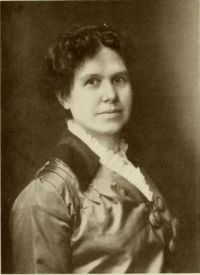
“ No less than three distinct styles of diction, accompanied by correspondingly distinct motion in the planchette under our fingers, were thrust into the record. At first we were at a loss to understand these intrusions. That they were intrusions there could be no doubt. In each case there was a sharp deviation from the plot of the story, as it had been given to us in the synopsis. ”
 Myra Reynolds,
The Learned Lady in England, 1650-1760
Myra Reynolds,
The Learned Lady in England, 1650-1760
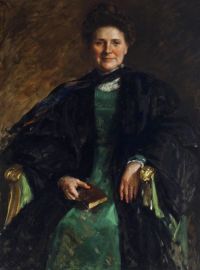
“ Passion is torn into exclamatory tatters from the first scene to the last. We have rant and bluster and tortured similes, until taste, good sense, and correct English suffer the same fate as the chief characters. ”

