Kiang

Definition and stakes

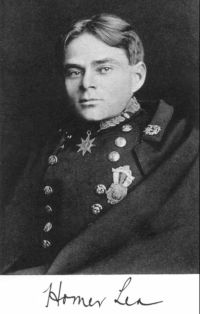
Portrait of Homer Lea Homer Lea,  The Vermilion Pencil: A Romance of China

“ But Che Kiang is not more famous for the charm of its countryside than it is for the beauty of the women, who dwell among its hills and valleys, working in the midst of their tea shrubs, rearing cocoons, spinning silk; and are no more thought of than the azaleas that brighten the hillsides or the purple lanwhui that scatters its perfume on the bosom of the careless passing winds. In the Tien Mu Mountains, toward the southwestern 27part of the province, these women have a peculiar hauteur and independence of their own, a vivacity and laughter, which is found nowhere else in China. ”
Source: Gutenberg

1911 Encyclopædia Britannica (1911)

“ KIU-KIANG FU, a prefecture and prefectural city in the province of Kiang-si, China. The city, which is situated on the south bank of the Yangtsze-kiang, 15 m. above the point where the Kan Kiang flows into that river from the Po-yang lake, stands in 29° 42′ N. and 116° 8′ E. The north face of the city is separated from the river by only the width of a roadway, and two large lakes lie on its west and south fronts. The walls are from 5 to 6 m. in circumference, and are more than usually strong and broad. ”
Source: Wikisource

Lawrence Waddell, Thomas Holdich, Albert de Lacouperie, and Osbert Howarth,  1911 Encyclopædia Britannica (1911)

“ The little that is known of this prehistoric period is gathered from the legends and the more trustworthy sidelights of contemporary Chinese records.
From the 11th century B.C. the Chinese used to call by the name of Kiang (or Shepherds) the tribes (about 150 in number) of nomads and shepherds in Koko Nor and the north-east of present Tibet; but their knowledge continued to be confined to the border tribes until the sixth century of our era. In the annals of the T'ang dynasty it is said that the population of the country originated from the Bat-Kian or Fah Kiang
”
Source: Wikisource

Get perspective with Kwize: daily news enlightened by great literature