Leitmotif

Definition and stakes

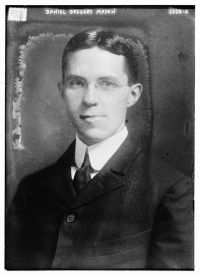
Portrait of Daniel Gregory Mason Daniel Gregory Mason,  Contemporary Composers

“ Thought, emotion, all that we call the spiritual side of music, expresses itself not through sonorous or harmonic effects, primarily sensuous in appeal, but through melody and rhythm and their interplay and elaboration in so-called thematic development. In truly great music we remember, not such and such a bit of tone-color, not this or that sonority, but the soaring or tender curve of the themes, their logical yet ever new unfolding, their embodiment, in the whole composition, of richest variety with completest final unity. ”
Source: Gutenberg

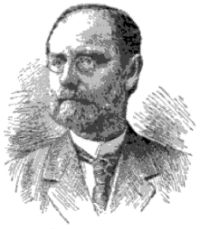
Portrait of Henry Osborn Taylor Henry Osborn Taylor,  The Mediaeval Mind (1911)

“ In the
fusing of melody and words into an utterance of song—at last into a strophe—music worked potently, shaping the composition of the lines, moulding them to rhythm, insisting upon sonorousness in the words, promoting their assonance and at last compelling them to rhyme so as to meet the stress, or mark the ending, of the musical periods. Thus the exigencies of melody helped to evoke the finished verse, while the words reciprocating through their vocal capabilities and through the inspiration of their meaning, aided the evolution of the melodies.
”
Source: Wikisource

Portrait of George Wharton James George Wharton James,  Delight and power in speech (1919)

“ When we think of melody in speech, we immediately think of the lyric. In form and in spirit it approaches nearest towards music, for it is “emotion all compact.” When we have stimulated within us a noble emotion, we begin at once to respond in some rhythmic action, a beat of our foot, sway of the body, or humming in a tuneful way. There is melody in prose as well as in poetry, only it is not so pronounced. Lincoln’s “Gettysburg Address” is a splendid example of prose-poetry. ”
Source: Gutenberg

Get perspective with Kwize: daily news enlightened by great literature