Lifespan

Definition and stakes

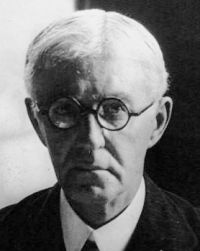
Portrait of G. Stanley Hall G. Stanley Hall,  Senescence, the Last Half of Life (1922)

“ As every one knows, every creature, man included, lives about as long after the maximum power to propagate as his offspring requires to become mature, so that the prolongation of the period of immaturity means the prolongation of old age. Our foremost duty is to transmit the sacred torch of life undimmed, to give the maximal momentum and right direction to the nature and nurture of offspring and to bring rising generations to their full maturity—that is the highest criterion of an ever rising nation, including civilization itself. ”
Source: Gutenberg

Portrait of G. Stanley Hall G. Stanley Hall,  Senescence, the Last Half of Life (1922)

“ These more marked nodes in the unity of man’s individual existence are: (1) childhood, (2) adolescence from puberty to full nubility, (3) middle life or the prime, when we are at the apex of our aggregate of powers, ranging from twenty-five or thirty to forty or forty-five and comprising thus the fifteen or twenty years now commonly called our best, (4) senescence, which begins in the early forties, or before in woman, and (5) senectitude, the post-climacteric or old age proper. ”
Source: Gutenberg

Ælfric,  The Homilies of the Anglo-Saxon Church (1844)

“ Consider also after this, that there is no stability of our body: childhood passes to boyhood, and boyhood to full growth; full growth bows to age, and age is ended by death. Verily our age stands on no stability, but so much as the body grows so greatly are its days diminished. Everywhere in our life are faintness and weariness, and decay of the body, and yet every one desires that he may live long. ”
Source: Wikisource

Get perspective with Kwize: daily news enlightened by great literature