Monopoly price

Definition and stakes

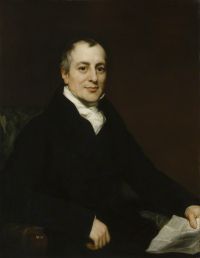
Portrait of David Ricardo David Ricardo,  On The Principles of Political Economy…

“ The monopoly price of one period may be much lower or higher than the monopoly price of another, because the competition amongst the purchasers must depend on their wealth, and their tastes and caprices. Those peculiar wines, which are produced in very limited quantity, and those works of art, which from their excellence or rarity, have acquired a fanciful value, will be exchanged for a very different quantity of the produce of ordinary labour, according as the society is rich or poor, as it possesses an abundance or scarcity of such produce, or as it may be in a rude or polished state. ”
Source: Gutenberg

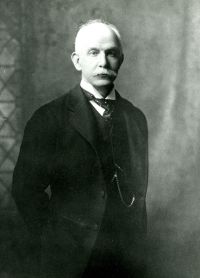
Portrait of Stephen Leacock Stephen Leacock,  The Unsolved Riddle of Social Justice

“ This gives us the fundamental law of monopoly price. It is to be noted that under modern conditions of production the cost of manufacture per article decreases to a great extent in proportion as a larger and larger number is produced and thus the widening of the sale lowers the proportionate cost. In any particular case, therefore, it may turn out that the price that suits the monopolist's own interest is quite a low price, one such as to allow for an enormous quantity of sales and a very low cost of manufacture. ”
Source: Gutenberg

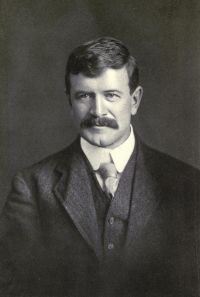
Business Administration: Theory…

“ Nor is it necessary to control the production, sale, or purchase of a commodity absolutely in order to exercise monopoly power; the control of 50 or 60 per cent may suffice to secure virtual monopoly. The purpose of a monopoly is so to fix the price that it will obtain the maximum net profit. It is conceivable that this result may be attained by lowering the monopoly price below the point of the competitive price, but this is unusual. In general a monopoly price has meant a high price, and a high price has meant a restriction of the output. ”
Source: Gutenberg

Get perspective with Kwize: daily news enlightened by great literature