 Susanna Moodie,
Life in the Clearings versus the Bush
Susanna Moodie,
Life in the Clearings versus the Bush
“ The want of education and moral training is the only real barrier that exists between the different classes of men. ”
Susanna Moodie,
Life in the Clearings versus the Bush
“ The want of education and moral training is the only real barrier that exists between the different classes of men. ”
Samuel Philips, The Christian Home
“ But one of the most effectual means is, by moral training, by which we mean, to draw out and properly direct the moral faculties, and to habituate them to the exercise of moral principle. Without this, all mechanical education will be fruitless. To call forth muscular power you must exercise the muscles. So you give the child moral stamina by developing its moral faculties, and establishing in them the habit of moral action. This training has its foundation in the law of habit. ”
 Ida Pfeiffer,
The last travels of Ida Pfeiffer…
Ida Pfeiffer,
The last travels of Ida Pfeiffer…
“ But how few, how very few, trouble themselves about the moral training of the children intrusted to their charge, by teaching them the difference between right and wrong, by endeavoring to rouse their hearts and minds to healthy action, and, above all, by setting them a good example! ”
Leonard Huxley, Thomas Henry Huxley: A Character Sketch
“ Moral training, in a knowledge of moral and social laws, and an engaging of the affections for what is good instead of what is evil; Intellectual training, in knowledge and the means of acquiring knowledge, alike for practical purposes and for recreation. ”
Hans Gross, Criminal Psychology: A Manual for Judges…
“ And how far these are at fault, and how far the nature of the individual himself, can be determined only in each concrete case by itself. It will not occur to anybody to wish for a return to savagery and anarchy because of the low value we set on the training of the mind. There is still the business of moral training, and its importance can not be overestimated. Considering the subject generally, we may say that the aim of education is the capacity of sympathizing with the feeling, understanding, and willing of other minds. ”
G. A. Johnston, An Introduction to Ethics, for Training Colleges… (1915)
“ One party holds that the ends of moral education are most effectively promoted by moral instruction, the other that moral education, to be of any value, must be either primarily or wholly moral training. The aim of moral training is to help the child to form good habits of conduct; moral instruction seeks to give the child right ideas about conduct. Moral training insists that the important thing in life is that the child should as a matter of fact act rightly. Moral instruction claims that the child should not only act rightly, but should know why he acts rightly. ”
Thomas W. Shannon, Self Knowledge and Guide to Sex Instruction…
“ Moral training.—The object of all moral training of a child is self-government or self-control. Before a child is capable of self-government, he must be taught to distinguish between right and wrong. This is largely the work of the intellect. His conscience must be awakened and quickened. Conscience is a natural instinct through which God’s spirit and man’s conception, of right and wrong, prompts him to moral action, and which condemns the action he conceives to be wrong and approves the action he conceives to be right. ”
William Henry Pyle, The Science of Human Nature: A Psychology for Beginners
“ Specifically, it is a training in honesty, truthfulness, sympathy, and industry. There are other factors of morality but these are the most important. It is evident at once that moral training is the most important of all training. This is, at any rate, the view taken by society; for if a man falls short in his relations with his fellows, he is punished. If the extent of his falling is very great, his liberty is entirely taken away from him. In some cases, he is put to death. Moral training, in addition to being the most important, is also the most difficult. ”
 Ellice Hopkins,
The Power of Womanhood, or Mothers and Sons
Ellice Hopkins,
The Power of Womanhood, or Mothers and Sons
“ James Martineau, that I first got a clue to the moral difficulty and to that fuller understanding of our human nature which is so essential to all who have the training and moulding of the young. And, therefore, I ask you to let me enter at some length into this teaching, which will not only give us light for our own guidance, but enable us to grasp the right principles on which we have to act in the moral training of the coming generation. ”
 Alexander Bain,
Moral Science; a Compendium of Ethics
Alexander Bain,
Moral Science; a Compendium of Ethics
“ It is fully admitted, being, indeed, impossible to deny, that education must concur with natural impulses in making up the moral sentiment. No human being, abandoned entirely to native promptings, is ever found to manifest a sense of right and wrong. As a general rule, the strength of the conscience depends on the care bestowed on its cultivation. Although we have had to recognize primitive distinctions among men as to the readiness to take on moral training, still, the better the training, the stronger will be the conscientious determinations. ”
George D. Strayer, A brief course in the teaching process (1911)
“ New situations will demand new adjustments, and it is not possible to supply the child with a morality which will be sufficient for his future needs. The one preparation which will certainly be effective in making possible later growth is to be found in the moral action of to-day.The subjects of instruction lend themselves to moral training. ”
 Frank Pierrepont Graves,
A student's history of education
Frank Pierrepont Graves,
A student's history of education
“ Disciplinary Attitude in Moral and Physical Training.—The same disciplinary conception of education For moral training, the desires should be guided by reason. underlies Locke’s ideals of moral training: “That a man is able to deny himself his own desires, cross his own inclinations, and purely follow what reason directs as best, tho’ the appetite lean the other way. ”
 Philip Gilbert Hamerton,
French & English
(1889)
Philip Gilbert Hamerton,
French & English
(1889)
“ The truth is that moral training is chiefly an affair of personal influence, and that influence of this kind is a special gift. For example, Dr. Arnold had the gift in the supreme degree, but a man might be placed in control of the same educational machinery and yet be destitute of it. ”
 Michael Ernest Sadler,
Dictionary of National Biography…
(1912)
Michael Ernest Sadler,
Dictionary of National Biography…
(1912)
“ Moral training, ‘practised not by preaching and as little as possible by punishment, but mainly by example and by atmosphere,’ he held to be of supreme importance, and its primary purpose to be ‘an intellectual clearing and purifying of the moral sense.’ To physical training (including play, gymnastics, singing, and handwork) he attached importance only less than that which was assigned to moral culture. ”
G. A. Johnston, An Introduction to Ethics, for Training Colleges… (1915)
“ Though we may agree that "evil is wrought by want of thought as well as by want of heart," yet it is also true that a man will never do his best in the moral struggle unless his heart is in the fight. In order that moral principles may not remain simply facts known, but may become dynamic forces in conduct, moral education must, in addition to proceeding by way of instruction, make use of every means of actual moral training. ”
Homer Heath Nugent, A Book of Exposition
“ There is, accordingly, no better known or more generally useful precept in the moral training of youth, or in one's personal self-discipline, than that which bids us pay primary attention to what we do and express, and not to care too much for what we feel. ”
 Ida Craddock,
Heavenly Bridegrooms — August 1917
(1918)
Ida Craddock,
Heavenly Bridegrooms — August 1917
(1918)
“ The preliminary training necessary may be summed up by the admonition: Live a correct moral life, according to our own highest standard (a standard, by the way, which should never be fixed, but always moving onward to still greater excellence) and to strive to think clearly and to form accurate conceptions of ideas, to express conceptions of ideas, to express conceptions with exactness, and to follow Truth, wherever she leads, and whatever your previous convictions upon any given subject. ”
Edwin Seward Puller, Your boy and his training (1916)
“ It requires no student of psychology to recognize the different developments of moral concepts shown in these replies. Some betray the first signs of the dawning of moral consciousness, while others show a keen appreciation of altruistic ideals, the result of ennobling home influence and proper training.The performance of the daily good turn develops the faculty for the formulation of ideals. ”
G. A. Johnston, An Introduction to Ethics, for Training Colleges… (1915)
“ These aspects of moral education have already been dealt with at length, and we mention them again only to emphasise that in all these ways the growing self of the child is undergoing moral training. The moral training of the child is furthered by the corporate life of the school of which he is a pupil. Though "corporate life" has a very vague sound, and would be very difficult to define, it exercises an influence that is all the more pervasive because it so often operates subtly and imperceptibly. The corporate life of the school is part of the child's social environment. ”
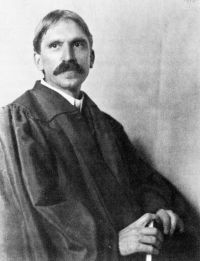 John Dewey,
Democracy and Education
(1916)
John Dewey,
Democracy and Education
(1916)
“ Since morality is concerned with conduct, any dualisms which are set up between mind and activity must reflect themselves in the theory of morals. Since the formulations of the separation in the philosophic theory of morals are used to justify and idealize the practices employed in moral training, a brief critical discussion is in place. It is a commonplace of educational theory that the establishing of character is a comprehensive aim of school instruction and discipline. ”
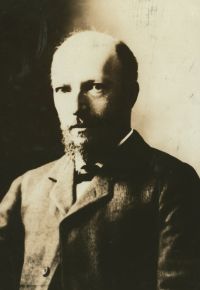 Felix Adler,
The Moral Instruction of Children
Felix Adler,
The Moral Instruction of Children
“ I propose in the present lecture to cast a glance at the moral training which the normal child receives before it enters school, and the moral outfit which it may be expected to bring with it at the time of entering. ”
Mrs. Katherine Dunlap Cather, Educating by Story-Telling
“ Moral training should begin with the babe, and therefore the mother and primary teacher need stories that have ethical values as early as they need Mother Goose tales and jingles. Very early in life the child must be brought to realize that there is a higher law than that of its own will or desire. It must be taught obedience, cleanliness, kindness to animals, consideration for the rights of others, truthfulness, industry, honesty, and courtesy, and these lessons can be inculcated more effectively by means of story-telling than in any other way. ”
 John Stuart Mill,
Inaugural address delivered to the University of St…
(1867)
John Stuart Mill,
Inaugural address delivered to the University of St…
(1867)
“ Nothing hinders us from so training a man that he will not, even for a disinterested purpose, violate the moral law, and also feeding and encouraging those high feelings, on which we mainly rely for lifting men above low and sordid objects, and giving them a higher conception of what constitutes success in life. ”
Various, Popular Science Monthly (1901)
“ We expect, for example, a greater foresight and power of self-control in those who have enjoyed educational advantages and whose horizon has been widened. And we expect a much greater sensitiveness to moral considerations on the part of those who have had the inestimable advantage of good moral training, and have been brought up in a good home. ”
 Naomi Norsworthy,
How to Teach
Naomi Norsworthy,
How to Teach
“ If social well-being is taken in its broadest sense, then all moral behavior is social, and all social behavior comes under one of the three types of morality. Training for citizenship, for social efficiency, for earning a livelihood, all have a moral aspect. It is only as the individual is trained to live a complete life as one of a group that he can be trained to be fully moral, and training for complete social living must include training in morality. ”
G. A. Johnston, An Introduction to Ethics, for Training Colleges… (1915)
“ In these ways he is organising his desires with reference to some relatively permanent and comprehensive aim. The great purpose of moral education is to encourage the organisation of desires under some worthy end. Right desires are as important for the child as true knowledge. It has been said, and with much truth, that the great aim of all education is to teach men and women to desire the right things. ”
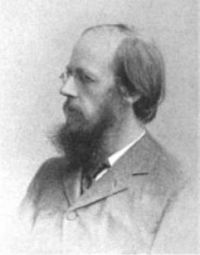 C. H. Herford,
Robert Browning
C. H. Herford,
Robert Browning
“ Training and discipline have their relative worth, but the spirit bloweth where it listeth, and the heights of moral achievement are won by those alone in whom it breathes the heroism of aspiration and resolve. His idealists grow for the most part in the interstices of the social organism. ”
 Edwin Abbott Abbott,
The Kernel and the Husk
(1886)
Edwin Abbott Abbott,
The Kernel and the Husk
(1886)
“ You need some emotional and moral exercise to counterbalance your mental and intellectual training. You are not aware how much of the most valuable knowledge, conviction, certainty—call it what you will, but l mean that kind of moral and spiritual knowledge which is the basis of all right conduct–springs in the main from spiritual and emotional sources. ”
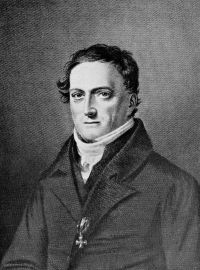 Johann Friedrich Herbart,
Outlines of Educational Doctrine
Johann Friedrich Herbart,
Outlines of Educational Doctrine
“ The pupil may get an erroneous impression as to the relative importance of the lessons, practice, and performance demanded of him, and so be betrayed into the belief that he is essentially perfect when these demands are satisfied.19. For this reason alone, if others were wanting, it is necessary to combine moral education proper, which in everyday life lays stress continually on correct self-determination, with religious training. The notion that something really worthy has been achieved needs to be tempered by humility. ”
Charles H. Ham, Mind and Hand: Manual Training the Chief Factor in Education (1900)
“ Nor will it be disputed that there is such a blending of the moral with the mental nature in the mind of man as to render any consideration of the subject irrational and incomplete which does not comprehend both, and treat them, practically, as one and the same. Man is so constituted, and his relations to society are such, that every mental impression he receives produces a moral effect, the character of which is, of course, largely dependent upon the accepted standards of right, truth, and justice. Hence all scholastic training is both mental and moral. ”
John Dewey,
Moral Principles in Education
“ The attempt to attach genuine moral effectiveness to the mere processes of learning, and to the habits which go along with learning, can result only in a training infected with formality, arbitrariness, and an undue emphasis upon failure to conform. That there is as much accomplished as there is shows the possibilities involved in methods of school activity which afford opportunity for reciprocity, coöperation, and positive personal achievement. ”
Charles A. McMurry, The Elements of General Method…
“ The second great series of studies, the natural sciences, come in to support the moral aims, while the personal example and influence of the teacher, and the common experiences and incidents of school life and conduct, give abundant occasion to apply and enforce moral ideas.That the other justifiable aims of education, such as physical training, mental discipline, orderly habits, gentlemanly conduct, practical utility of knowledge, liberal culture, and the free development of individuality will not be weakened by placing the moral aim in the forefront of educational motives, we are convinced. ”
Charles Ebert Orr, The Gospel Day; Or, the Light of Christianity
“ The mental, moral and spiritual training of children go hand in hand. We shall speak of them under separate chapters, but the one has a great influence upon the other. It is true, the intellectual faculties may be cultivated to a high degree while the moral [pg 269] powers are unimproved, but the individual is out of harmony with true manhood. ”
 James Hutchins Baker,
Education and life
(1900)
James Hutchins Baker,
Education and life
(1900)
“ His training, however, has been more or less mechanical. He is now at an age when his capacity, his studies, and his social relations admit him to a broader field—a field in which he makes essays at independent action; when his physical development brings new problems and dangers; when contact with the world begins to acquaint him with the vicious maxims of selfish men; when there is a tendency to break away from the moral codes, without the wisdom of experience to guide him in his growing freedom. ”
 Aristotle,
Nicomachean Ethics
(1937)
Aristotle,
Nicomachean Ethics
(1937)
“ From this appears immediately the necessity of good training as preparatory to the study of Moral Philosophy: for good training in habits will either work principles into our nature, or make us capable of accepting them as soon as they are put before us; which no mere intellectual training can do. ”
G. A. Johnston, An Introduction to Ethics, for Training Colleges… (1915)
“ If the boy or young man is seriously troubled and anxious about this question, can ethics help him by suggesting any principles on which he may decide? There is no other moral matter on which advice and guidance is more frequently sought. The teacher finds that his boys are very ready to consult him on this question, and if he is conscientious he is often puzzled what advice to give, and what principles to suggest for the guidance of the boy. ”
Johann Friedrich HerbartFrank Pierrepont GravesCharles H. HamWilliam Henry PyleMary L. ReadGeorge D. Strayer Janet Erskine Stuart
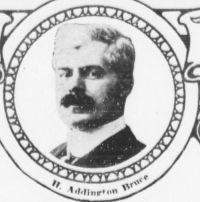 H. Addington Bruce
 William Torrey HarrisJames Hutchins Baker
 Anna Garlin Spencer
 Dorothea Beale
 William Edward Hartpole LeckyWilliam C. BagleyNaomi Norsworthy
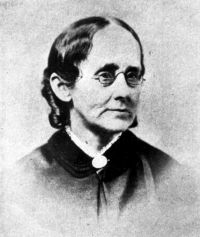 Mary Tyler Peabody MannPaul JanetSamuel Philips