Musical horn

Definition and stakes

Kathleen Schlesinger,  1911 Encyclopædia Britannica, Volume 13… (1911)

“ The origin of the horn must be sought in remote prehistoric times, when, by breaking off the tip of a short animal horn, one or at best two notes, powerful, rough, unsteady, only barely approximating to definite musical sounds, were obtained. This was undoubtedly the archetype of the History. modern families of brass wind instruments, and from it evolved the trumpet, the bugle and the tuba no less than the horn. ”
Source: Wikisource

Nikolay Rimsky-Korsakov,  Principles of Orchestration, with Musical Examples Drawn from His Own Works

“ Juxtaposition of strings and wood-wind which overweights legato or declamatory singing may nevertheless be employed if one of the groups forms the harmony in sustained notes and the other executes a melodic design, when, for instance the sustaining instruments are clarinet, and bassoon, or bassoon and horn, and the melodic design is entrusted to violins or violas—or in the opposite case, when the harmony is given to violas and 'cellos divisi, and the harmonic figure to the clarinets. ”
Source: Gutenberg

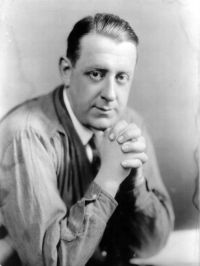
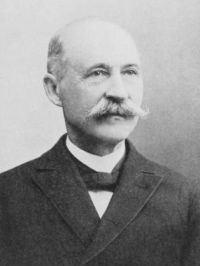
Portrait of Thomas Fillebrown Thomas Fillebrown,  Resonance in Singing and Speaking

“ The air column in the tube of the French horn, and the sounding-board of the pianoforte develop the vibrations caused by the lips and strings into musical tones pleasing to the ear. The tuning-fork alone can scarcely be heard, while the induced vibrations it sets up through properly adjusted resonance may be audible far away.
The vocal cords alone cannot make music any more than can the lips of the cornet player apart from his instrument. The tone produced by the vibrations alone of the two very small vocal bands must, in the nature of things, be very feeble.
”
Source: Gutenberg

Get perspective with Kwize: daily news enlightened by great literature