Various, The Knickerbocker, Vol. 10, No…
“ Natural productions teem in wild and luxuriant profusion. Fruits and vegetables, which, under the hand of cultivation, undergo the happiest modifications, are every where seen in the greatest abundance. ”
Various, The Knickerbocker, Vol. 10, No…
“ Natural productions teem in wild and luxuriant profusion. Fruits and vegetables, which, under the hand of cultivation, undergo the happiest modifications, are every where seen in the greatest abundance. ”
Robert Hunt, The Poetry of Science; or, Studies of the Physical Phenomena of Nature
“ The chemist is now enabled by simple processes, from the refuse of manufactories to produce fruit essences which are equal in flavour to the natural production; and from benzoic acid, which is obtained in great abundance from the houses in which cows are kept, the most delicate essences are produced, which are given to the world as the distillations of a thousand flowers. ”
J. A. Warder, American Pomology. Apples
“ It is evident, that very often the conditions of a plant and its products, which we most highly prize, and towards which all our efforts in its culture are directed, are really departures from the natural and healthful status ”
Dr. Isabelle A. Moser with Steve Solomon, How and When to Be Your Own Doctor (August, 2003 [Etext# 4343])
“ Virtually everything they ate was produced by themselves. If they were an agricultural people, naturally, everything they ate was natural: organic, whole, unsprayed and fertilized with what ever local materials seemed to produce enhanced plant growth. ”
 W. H. Mallock,
A Critical Examination of Socialism
W. H. Mallock,
A Critical Examination of Socialism
“ Those which we will consider first are the [Pg 210] products of organic nature, which have been dwelt upon by a well-known writer as showing us the ultimate source of industrial interest generally, and also at the same time its natural and essential justice. ”
Homer Heath Nugent, A Book of Exposition
“ The fundamental species, a poor resource in their original state, we borrowed as they were from the natural treasury of the vegetable world; the perfected race, rich in alimentary materials, is the result of our art. ”
 Herbert Spencer,
The Principles of Biology — Chapter III.8
(1898)
Herbert Spencer,
The Principles of Biology — Chapter III.8
(1898)
“ His wild notions about the way in which natural causes acted in the production of plants and animals, must not make us forget the merit of his intuition that animals and plants were produced by natural causes. ”
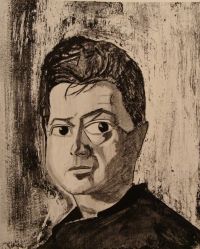 Francis Bacon,
Novum Organum; Or, True Suggestions for the Interpretation of Nature
Francis Bacon,
Novum Organum; Or, True Suggestions for the Interpretation of Nature
“ Lastly, we must particularly recommend and suggest, that man’s present industry in the investigation and compilation of natural history be entirely changed, and directed to the reverse of the present system. For it has hitherto been active and curious in noting the variety of things, and explaining the accurate differences of animals, vegetables, and minerals, most of which are the mere sport of nature, rather than of any real utility as concerns the sciences. ”
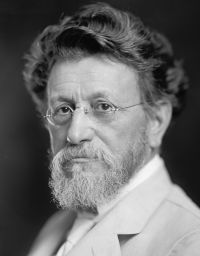 Louis F. Post,
The basic facts of economics
(1927)
Louis F. Post,
The basic facts of economics
(1927)
“ Consumption of food is a natural effect of the natural necessity for food—a natural law. Production of food is a natural effect of the natural need of food for consumption—a natural law. Resort to Natural Resources as the sole source and foundation from and upon which to produce food is a natural effect caused by the natural need for food—a natural law. ”
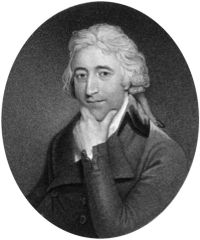 James Edward Smith,
An introduction to physiological and systematical botany
(1807)
James Edward Smith,
An introduction to physiological and systematical botany
(1807)
“ I shall not labour to prove how delightful and instructive it is to "Look through Nature up to Nature's God." Neither, surely, need I demonstrate, that if any judicious or improved use is to be made of the natural bodies around us, it must be expected from those who discriminate their kinds and study their properties. Of the benefits of natural science in the improvement of many arts, no one doubts. Our food, our physic, our luxuries are improved by it. By the enquiries of the curious new acquisitions are made in remote countries, and our resources of various kinds are augmented. ”
comte de Georges Louis Leclerc Buffon, Buffon's Natural History, Volume 03…
“ If it is once allowed, that the productions of Nature follow in an uniform order, and advance by imperceptible degrees and links, we shall have no difficulty in conceiving there are organic bodies existing, which belong neither to animals, vegetables, nor minerals. ”
 Washington Irving,
Bracebridge Hall, or The Humorists
Washington Irving,
Bracebridge Hall, or The Humorists
“ In seeking to multiply the precious metals, also, we seek but to germinate and multiply, by natural means, a particular species of nature’s productions; and what else does the husbandman, who consults times and seasons, and, by what might be deemed a natural magic, from the mere scattering of his hand, covers a whole plain with golden vegetation? ”
Jas. F. W. Johnston, Elements of agricultural chemistry and geology (1842)
“ The principles above explained, therefore, shew that the value of any vegetable production, considered as the sole food of an animal, is not to be judged of—cannot, in short, be accurately determined—by the amount it may contain of any one of those substances, all of which together are necessary to build up the growing body of the young animal, and to repair the natural waste of such as have attained to their fullest size. ”
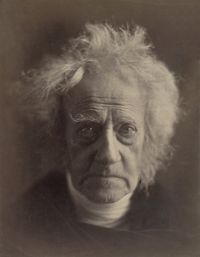 John F. W. Herschel,
Preliminary Discourse on the Study of Natural Philosophy
John F. W. Herschel,
Preliminary Discourse on the Study of Natural Philosophy
“ The history of the animal and vegetable productions of the globe, as affording objects and materials for the convenience and use of man, and as dependent on and indicative of the general laws which determine the distribution of heat, moisture, and other natural agents, over its surface, and the revolutions it has undergone, are of course intimately connected with our subject, and will, therefore, naturally afford room for some remarks,344 but not such as will long detain the reader’s attention. ”
Duchess of Margaret Cavendish Newcastle, Philosophical Letters: or, modest Reflections upon some Opinions in Natural Philosophy
“ Neither can I perceive that any of the Elements is produced by seed, unless Fire, which seems, to my sense and reason, to encrease numerously by its seed, but not any other of the Elements. And thus productions are almost as various as Creatures, or rather parts of Creatures, are; for we see how many productions there are in one animal body, as the production of flesh, bones, marrow, brains, gristles, veines, sinews, blood, and the like, and all this comes from Food, and Food from some other Creatures, but all have their original from the onely matter, and the various motions of Nature. ”
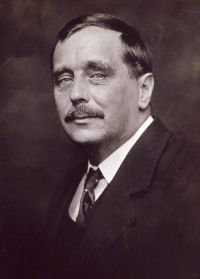 H. G. Wells,
The World Set Free
H. G. Wells,
The World Set Free
“ And the chemists’ triumphs of synthesis, which could now give us an entirely artificial food, remain largely in abeyance because it is so much more pleasant and interesting to eat natural produce and to grow such things upon the soil. ”
R. Elton Smile, The Manatitlans
“ With cultivated attainments for the discernment of cause and effect, she had with the dependent emergency of her people upon a continued supply of vegetable products become a practical botanist, capable of tracing at sight the natural life-sustaining affinities of fruits and roots, although ignorant of their technical classification into generas, orders, and species. ”
“ My learned friend used to bring garden seeds and eggs of rare poultry, and received in exchange curious insects and dried plants, which he sold to natural history collections and foreign museums, and made a good profit out of them, for science is not only a passion but a means of sustenance. ”
 Alfred Russel Wallace,
Contributions to the Theory of Natural Selection
Alfred Russel Wallace,
Contributions to the Theory of Natural Selection
“ Though less capable than most other animals of living on the herbs and the fruits that unaided nature supplies, this wonderful faculty taught him to govern and direct nature to his own benefit, and make her produce food for him, when and where he pleased. ”
Thomas H. Huxley, Evolution and Ethics and Other Essays (November, 2001 [Etext #2940])
“ Now, herbaceous and all other green plants stand alone among terrestrial natural bodies, in so far as, under the influence of light, they possess the power to build up, out of the carbonic acid gas in the atmosphere, water and certain nitrogenous and mineral salts, those substances which in the animal organism are utilised as work-stuff. They are the chief and, for practical purposes, the sole producers of that vital capital which we have seen to be the necessary antecedent of every act of labour. ”
 Thomas Henry Huxley,
The Advance of Science in the Last Half-Century
Thomas Henry Huxley,
The Advance of Science in the Last Half-Century
“ Every mechanical artifice, every chemically pure substance employed in manufacture, every abnormally fertile race of plants, or rapidly growing and fattening breed of animals, is a part of the new Nature created by science. ”
comte de Georges Louis Leclerc Buffon, Buffon's Natural History, Volume 02…
“ Can it be thought, that certain forms of the body, as those of quadrupeds and birds, requisite for the perfection of sensation, would cost nature more organic particles than the production of less important animals? [269] Let us now pass to the comparison of animals and vegetables, with respect to situation, form, and size. The earth is the only place wherein vegetables can subsist. The greatest number grow above the surface, and are attached to the soil by roots. ”
comte de Georges Louis Leclerc Buffon, Buffon's Natural History. Volume 06…
“ Thus the earth produces plants, the earth and plants make animals, and of the earth, plants, and animals, are formed men; for the qualities of vegetables, proceed immediately from the soil and air; the temperament and other relative qualities of animals which feed on herbs, have a close affinity to the particular kinds they use, and the physical qualities of men, and other animals which subsist on flesh, as well as on vegetables, depend, though more remotely, on the same causes, whose influence extends even to disposition and manners. ”
Edmund Swift, Evolution and Natural Selection in the Light of the New Church (1879)
“ It is a something in the life and in its varied method or law of operation which constitutes the actual difference between the inorganic and organic, between the vegetable and animal, and, most of all, between the merely animal and man. Creative Life is always intelligently operating according to a definite plan and fixed laws ”
P. L. Simmonds, The Commercial Products of the Vegetable Kingdom
“ It is strange and startling, but nevertheless perfectly true, that even at the present time there are many excellent and abundant productions of nature with which not only our manufacturers, but, in some instances, even our men of science, are wholly unacquainted. ”
Freiherr von Justus Liebig, Familiar Letters on Chemistry, and Its Relation to Commerce…
“ Having now occupied several letters with the attempt to unravel, by means of chemistry, some of the most curious functions of the animal body, and, as I hope, made clear to you the distinctions between the two kinds of constituent elements in food, and the purposes they severally subserve in sustaining life, let me now direct your attention to a scarcely less interesting and equally important subject—the means of obtaining from a given surface of the earth the largest amount of produce adapted to the food of man and animals. Agriculture is both a science and an art. ”
Charles Hall, The Effects of Civilisation on the People in European States (1849)
“ If we consider the economy of nature, with regard to animal and vegetable life, we may observe that, in order, probably, to keep up the different species of living creatures and plants, the seed produced of both kinds is very abundant ”
Fernand Papillon, Popular Science Monthly (1874)
“ In other words, the products of industry are constantly taking the place of those of Nature more and more. In all these cases, these instances of composition of odorous principles are among the finest triumphs of organic chemistry. The creative power of the chemist is ever widening its range. ”
Various, The Mirror of Literature, Amusement…
“ A facetious, philosophical, friend of mine, lately amused me with some remarks, on the nature and properties of different kinds of food. "We know," said he, "that one herb produces this effect, and another that; that different species and varieties of plants have different virtues; and, why may we not infer that the same rule extends to animated nature; that our fish, flesh, and fowl, not only serve as nutriment, but that each kind possesses peculiar and individual properties." ”
Thomas Henry Huxley,
Critiques and Addresses
“ Multitudes of these, having diverse tendencies, are competing with one another for opportunity to exist and multiply; and the organism, as a whole, is as much the product of the molecules which are victorious as the Fauna, or Flora, of a country is the product of the victorious organic beings in it. ”
Horatius Flaccus, Life: Its True Genesis
“ All that the materialists can claim respecting man's agency in the production of life is, that he may take advantage of the uniform laws of nature, so far as they are known to him, planting seeds here, changing chemical conditions there, using different infusions in his experimental flasks,--organic or inorganic, as he may choose--and then await the action of these uniform laws. ”
 Bill Clinton,
Proclamation 6842
Bill Clinton,
Proclamation 6842
“ In addition, these rich tracts of land produce raw materials for building and other uses and are an essential source of food and medicines derived from trees, shrubs, forbs, fungi, and micro-organisms. ”
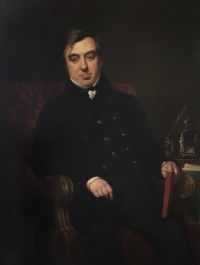 John Ayrton Paris,
The Life of Sir Humphry Davy, Bart…
John Ayrton Paris,
The Life of Sir Humphry Davy, Bart…
“ The knowledge of the composition of soils, of the food of vegetables, of the modes in which their products must be treated, so as to become fit for the nourishment of animals, is essential to the cultivator of land; and his exertions are profitable and useful to society, in proportion as he is more of a chemical professor. ”
Thomas Huxley, Collected Essays
“ The Past Condition of Organic Nature In the lecture which I delivered last Monday evening, I endeavoured to sketch in a very brief manner, but as well as the time at my disposal would permit, the present condition of organic nature, meaning by that large title simply an indication of the great, broad, and general principles which are to be discovered by those who look attentively at the phenomena of organic nature as at present displayed. ”
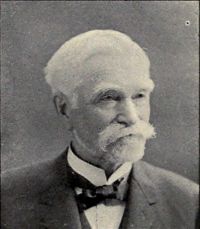 Albert Benjamin Prescott,
Popular Science Monthly
(1877)
Albert Benjamin Prescott,
Popular Science Monthly
(1877)
“ It is the organic world together, to be sure, that is able to subsist on the fourteen elements as these are given by the earth, the animal kingdom obtaining most of its material at second hand, as elaborated by the vegetable. ”
Herbert Spencer,
Essays: Scientific, Political, & Speculative…
“ yet, they can show that any existing species—animal or vegetable—when placed under conditions different from its previous ones, immediately begins to undergo certain changes fitting it for the new conditions. They can show that in successive generations these changes continue; until, ultimately, the new conditions become the natural ones. They can show that in cultivated plants, in domesticated animals, and in the several races of men, such alterations have taken place. ”
Northern Nut Growers Association Report of the Proceedings at the Thirty-Seventh Annual Report
“ The future race, let us admit, may eventually be able, by means of an almost unthinkable development of food, clothing, building and medical supplies of a synthetic or semi-synthetic nature, to dispense with some of the agriculture we know. ”
 Isabella Beeton,
Mrs. Beeton's Book of Household Management
(1907)
Isabella Beeton,
Mrs. Beeton's Book of Household Management
(1907)
“ Plants live on purely inorganic substances, such as water, carbonic acid and ammonia, and they have the power of making out of these true organic substances, such as starch, cellulose, sugar, etc. Plants, therefore, take as food very simple bodies, and manufacture them into more complex substances, so that plants are the great producers in nature. ”
Thomas Henry Huxley,
Lectures and Essays
“ Food takes a mid-place, and then come the organic conditions; by which I mean the conditions which depend upon the state of the rest of the organic creation, upon the number and kind of living beings, with which an animal is surrounded. You may class these under two heads: there are organic beings, which operate as 'opponents', and there are organic beings which operate as 'helpers' to any given organic creature. ”
Various, Popular Science Monthly (1910)
“ There are the arts of the food supply, such as hunting, fishing, agriculture, food preservation and eventually food production by synthetic chemistry in the broader classifications, of house building, of useful clothing, of hygiene, etc. ”
 Brigham Young,
Journal of Discourses — Volume 10…
Brigham Young,
Journal of Discourses — Volume 10…
“ Here are the elements for every cereal, vegetable and fruit, and for every textile material that grows in the same latitude and altitude in any part of the world. No country in the world will yield more and a greater variety of the products of life than will portions of this mountain country. ”
Various, Scientific American Supplement…
“ The inseparable duties of studying the composition of the various animal and vegetable fabrics, as also their nature—when in contact with the various mineral, vegetable, animal, and gaseous bodies applied in the individual industries—should not devolve upon the heads, chemists, or managers of firms alone. ”
Various, The Continental Monthly, Vol. 2…
“ Organic Materials—embracing whatever is practically interesting in all vegetable and animal substances used in manufacturing, having in view their sources, culture, collection, commercial importance and qualities as connected with manufacturing. This department presents a vast field of immense importance to every merchant and importer of raw material. ”
Charles Morris, Popular Science Monthly (1882)
“ And they shall be eaten—and their eaters eaten; and thus the organic world, which grew up by this devouring process from the smallest plant to man, slowly drops back by form after form through the lower world of animals and plants, until every grain of vitality is sucked out of it, and it falls at last, utterly juiceless and lifeless, into the mineral world from which it came. ”
W. H. MallockLouis F. PostThomas H. HuxleyHerbert SpencerFrancis BaconAlfred Russel WallaceThomas Henry HuxleyHomer Heath NugentVariousRobert HuntDr. Isabelle A. Moser with Steve SolomonJ. A. WarderJohn F. W. HerschelJames Edward SmithH. G. WellsR. Elton Smile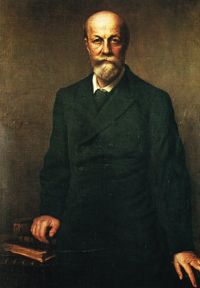 Mór JókaiWashington IrvingJas. F. W. Johnston
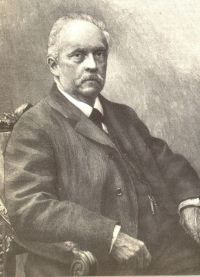 Hermann von Helmholtz