Henry David Thoreau,
Walden
(1854)
“ Individuals, like nations, must have suitable broad and natural boundaries, even a considerable neutral ground, between them. ”
Henry David Thoreau,
Walden
(1854)
“ Individuals, like nations, must have suitable broad and natural boundaries, even a considerable neutral ground, between them. ”
 John Taylor,
Journal of Discourses — Volume 26…
“ When we talk of law it is a very comprehensive subject, and enters into all the ramifications of human life, and, as has been remarked, through all nations. Generally among the governments of the world—and also among many of the institutions referred to, there is a kind of neutral ground, a sort of neutral zone, something similar to that which sometimes exists between one State and another in order to prevent collision and difficulty, and it is upon this ground that a great many troubles and difficulties frequently exist on various matters. ”
Pierre-François Eugène Cortambert, Popular Science Monthly (1879)
“ The place might be the common property of all the civilized nations which might agree to its acquisition; for, we repeat, it must be neutral ground, a position independent of all political power, and under guarantee of all the states of the civilized world. ”
John Taylor,
Journal of Discourses — Volume 1…
“ Suppose you were one of the kings of those nations, or one of the counsellors, and some of the largest nations should undertake to command you to supply a number of men to help fight their battles, and you would say, "We wish to remain neutral;" ”
 Ella Wheeler Wilcox,
Poems of Optimism — Neutral
(1919)
“ That pale word ‘Neutral’ sits becomingly On lips of weaklings. But the men whose brains Find fuel in their blood, the men whose minds Hold sympathetic converse with their hearts, Such men are never neutral. ”
“ In reference to what one and another has said about the value of the subject, nothing is needed beyond the fact that neutral rights have, even in its present position, been respected in all essentials. ”
 Francis Taylor Piggott,
The neutral merchant
(1915)
“ The Meaning of NeutralityAt the outbreak of war the nations are divided into two classes: those that are fighting and those that are not. To give them their scientific names, they are belligerents and neutrals. With the laws of war I do not concern myself, but only with those principles by which neutrals are supposed to govern themselves in order to avoid being swept into the vortex. ”
 John Holladay Latané,
From Isolation to Leadership, Revised
“ Having once abandoned neutrality and isolation we are not likely to remain neutral again in any war which involves the balance of power in the world or the destinies of the major portion of mankind. Neutrality and isolation were correlative. ”
 Thomas Erskine Holland,
Letters to "The Times" upon War and Neutrality…
“ Or, to vary the phrase, "a neutral Power is bound to acquiesce in losses inflicted by a belligerent upon such of its subjects as are engaged in adding to the military resources of the enemy of that belligerent." ”
J. Arthur Hill, Psychical Miscellanea
“ So with the earth-spirit. Being far greater than the human subsidiary spirits, it is longer in coming to maturity. Its elements are still largely at loggerheads with each other. The nations war against each other, and universal peace seems a long time in coming. But steadily, steadily works the earth-spirit, and the nations almost unconsciously—like somnambulists—carry out its will. They are working, consciously or unconsciously, towards universal at-one-ment. A League of Nations has arisen, and the Federation of the World is in sight. Union is the political watch-word. ”
 Georg Wilhelm Friedrich Hegel,
The Logic of Hegel
“ The neutral body is therefore capable of disintegration. But the discerning principle, which breaks up the neutral body into biassed and strained extremes, and which gives to the indifferent object in general its affinity and animation towards another;—that principle, and the process as a separation with tension, falls outside of that first process. ”
Great Speeches of the War/Authors, Great Speeches of the War (1915)
“ In devising a plan, we have given anxious study to the interests of neutrals. We have settled upon certain general principles that seem to us more favourable to neutrals than are the hitherto sufficient principles of international law. ”
John Lord, Beacon Lights of History, Volume 14…
“ The establishment of correlation and equivalence between the forces of the outer and the inner worlds serves to assimilate either to the other, according as we set out with one or the other. He who rightly interprets the doctrine propounded in "First Principles" will see that neither the forces of the outer, nor the forces of the inner, world can be taken as ultimate. ”
 James Frederick Ferrier,
Blackwood's Magazine
(1839)
“ The groundwork, then, of our love of our enemies, the feature which principally characterises it, and the condition which renders it practicable, is an act of resistance exerted against our natural hatred of them ”
Paul Janet, Elements of Morals
“ Neutrality.—We call neutrality the situation of States which, in a case of war, side with neither the one nor the other of the belligerents, but remain at peace with the two parties. They are, therefore, obliged to practice toward them the laws of natural right impartially: if, for example, they render to one a service of humanity, they must not refuse the same service to the other. ”
William James, Is Life Worth Living? (1896)
“ And after all, isn’t this duty of neutrality where only our inner interests would lead us to believe, the most ridiculous of commands? Isn’t it sheer dogmatic folly to say that our inner interests can have no real connection with the forces that the hidden world may contain? ”
 Thomas Hill Green,
Lectures on the Principles of Political Obligation
“ The 'state of nature' and the 'state of war' 'are so far distant as a state of peace, good-will, mutual assistance and preservation, and a state of enmity, malice, violence, and mutual destruction, are from one another. Men living together, according to reason, without a common superior on earth with authority to judge between them, is properly the state of nature. ”
 Thorstein Veblen,
An Inquiry into the Nature of Peace and the Terms of Its Perpetuation
“ So it may broadly be affirmed that all nations look with complacency on their own peculiar Culture—the organised complex of habits of thought and of conduct by which their own routine of life is regulated—as being in some way worthier than the corresponding habits of their neighbors. ”
Henry James, Notes of a Son and Brother
“ Let us then accept political and all other distraction that chooses to come; because what is disorder and wrath and contention on the surface is sure to be the greatest peace at the centre, working its way thus to a surface that shall never be disorderly. ”
 Bertrand Russell,
Our Knowledge of the External World…
(1914)
“ But this brings us to the second of the two questions which we raised in regard to free will, namely, whether, assuming determinism, our actions can be in any proper sense regarded as compelled by outside forces. (2) Are human actions subject to an external compulsion? We have, in deliberation, a subjective sense of freedom, which is sometimes alleged against the view that volitions have causes. ”
Willard French, ../../ (1913)
“ We earnestly advocate such a compact between nations, because we know that the result will be world-peace, in perpetuity; yet we are deliberately abrogating the theory among ourselves when, just as surely, the result can be only disorder and chaos. ”
 W. M. Ramsay,
The Imperial Peace
(1913)
“ Why should it accommodate itself to the alien world around? Why should it pay any heed to the wars, the cruelty, the horrors, the ignorance, that reigned in politics, in international relations, and in the administration of the law? ”
Duchess of Margaret Cavendish Newcastle, Philosophical Letters: or, modest Reflections upon some Opinions in Natural Philosophy
“ But as War is made by the division of Natures parts, and variety of natural actions, so Peace is caused by the unity and simplicity of the nature and essence of onely Matter, which Nature is peaceable, being always one and the same, and having nothing in it self to be crossed or opposed by; when as the actions of Nature, or natural Matter, are continually driving against each other, as being various and different. ”
 Wilhelm Roscher,
Principles of Political Economy…
“ But these two forces, instead of compromising the destinies of humanity by their opposing action, maintain and balance them, as the contrary impulses given by the hand of the Great Architect has peopled the universe with worlds which gravitate in space. ”
 Thomas Henry Huxley,
Aphorisms and Reflections from the Works of T. H. Huxley
“ The first men who substituted the state of mutual peace for that of mutual war, whatever the motive which impelled them to take that step, created society. But, in establishing peace, they obviously put a limit upon the struggle for existence. ”
Ron Paul, Neo-CONNED (2003)
“ Look at the map of the world: national boundaries have not been drawn by peaceful men leading lives of spiritual contemplation. National boundaries have been established by war, and national character has been shaped by struggle, most often bloody struggle. ”
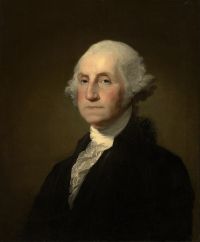 George Washington,
George Washington's Farewell Address
(1796)
“ 48 The duty of holding a neutral conduct may be inferred, without any thing more, from the obligation which justice and humanity impose on every nation, in cases in which it is free to act, to maintain inviolate the relations of peace and amity towards other nations. ”
Robert Edward Crozier Long, Count Tolstoy in Thought and Action (1901)
“ I said, "that a whole nation, or group of nations, were to be converted to this belief, and were to live together in ideal peace, it is still not to be expected that the world will be simultaneously converted. ”
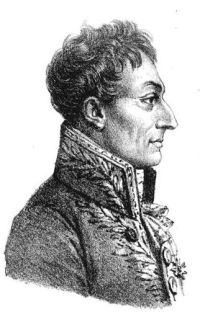 C.-F. Volney,
The Ruins; Or, Meditation on the Revolutions of Empires and the Law of Nature
“ There will be established among the several nations an equilibrium of force, which, restraining them all within the bounds of the respect due to their reciprocal rights, shall put an end to the barbarous practice of war, and submit their disputes to civil arbitration.* The human race will become one great society, one individual family, governed by the same spirit, by common laws, and enjoying all the happiness of which their nature is susceptible. ”
 Carl Schurz,
Speeches, correspondence and political papers of Carl Schurz
(1913)
“ It will set to mankind the example of two very great nations, the greatest rivals in the world, neither of them a mere theorist or sentimental dreamer, both intensely practical, self-willed and hard-headed, deliberately agreeing to abstain from the barbarous ways of bygone times in adjusting the questions of conflicting interest or ambition that may arise between them, and to resort instead in all cases of difficulty to the peaceable and civilized methods suggested by the enlightenment, the moral sense and the humane spirit of our age. ”
 ʻAbdu'l-Bahá,
‘Abdu'l-Bahá in London
“ So let us try, as an experiment, peace, and if the results of peace are bad, then we can choose if it would be better to go back to the old state of war! Let us in any case make the experiment. If we see that unity brings Light we shall continue it. For six thousand years we have been walking on the left-hand path ”
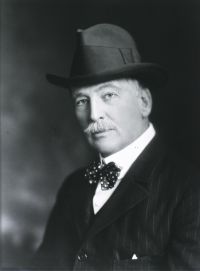 Morton Prince,
The unconscious
(1921)
“ Thus an international habit of looking to common ideals may grow up sufficiently strong to develop a general will, and to make the binding power of those ideas a reliable sanction for their obligations to each other. ”
the Elder Pliny, The Natural History of Pliny, Volume 4…
“ And let no one, misled by the apparent triviality of the names which we shall have to employ, regard this subject as one that is frivolous or contemptible: for we shall here have to set forth the state of peace or of war which exists between the various departments of Nature, the hatreds or friendships which are maintained by objects dumb and destitute of sense, and all, too, created—a wonderful subject for our contemplation!—for the sake of man alone. ”
 Friedrich Schiller,
Aesthetical Essays of Friedrich Schiller
“ Here nothing can be sacred to him but his own law: the only condition imposed upon him is to respect the border which separates his own sphere from the existence of things or from the realm of nature. ”
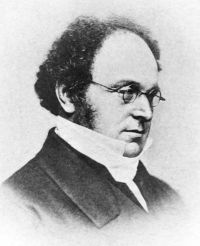 Augustus De Morgan,
A Budget of Paradoxes — 1864
(1872)
“ The Useful Knowledge Society, starting on the principle of perfect neutrality in politics and religion, was obliged to keep strict watch against the entrance of all attempt even to look over the hedge. ”
 Thomas Jefferson,
The Writings of Thomas Jefferson…
“ One hemisphere of the earth, separated from the other by wide seas on both sides, having a different system of interests flowing from different climates, different soils, different productions, different [14] modes of existence, and its own local relations and duties is made subservient to all the petty interests of the other, to their laws, their regulations, their passions and wars, and interdicted from social intercourse, from the interchange of mutual duties and comforts with their neighbors, enjoined on all men by the laws of nature. ”
 William Elliot Griffis,
The Religions of Japan, from the Dawn of History to the Era of Méiji
“ Keep the boundary line clear between God and his world and all is order and discrimination. Obliterate that boundary and all is pathless morass, black chaos and on the mind the phantasms which belong to the victim of delirium tremens. ”
Thomas Hart Benton, Thirty Years' View (Vol. 1 of 2…
“ It was then that I used those words, not entirely enigmatical, and which have since been repeated by some, without the prefix of their important qualifications, namely; that while neutrality was the obvious line of our duty and of our interest, yet there might be emergencies in which the obligation of duty could have no force, and the calculations of interest could have no place; when, in fact, a man should have no head to think! ”
 Franklin Henry Giddings,
Towards an enduring peace
(1916)
“ So the most practical question for each of us for some time is likely to be this: what will be the effect of our own country’s conduct in its relations with other countries, upon the future peace and international condition of the world? ”
 Andrew H. Foote,
Africa and the American Flag
(1854)
“ But such experiments are not capable of indefinite repetition; space is wanting for them in the world. Nations are now called by the imperious force of circumstances, or more properly speaking, by the decree of Providence, to the nobler task of preventing rather than punishing ”
 William Morris,
Signs of Change
“ They try to think that peace is not only possible, but natural, between the two classes, the very essence of whose existence is that each can only thrive by what it manages to force the other to yield to it. ”
 Johann Gottlieb Fichte,
The Vocation of Man — Book Three…
(1846)
“ Thus, from the establishment of a just internal organization, and of peace between individuals, there will necessarily result integrity in the external relations of nations towards each other, and universal peace among them. ”
 Scott Nearing,
The Germs of War
(1916)
“ They talk back and forth, as man with man. If they were not at war they would work side by side in the same shops; eat side by side in the same restaurants, and sleep side by side in the same rooms. Human nature has many sides. ”
Intercollegiate Peace Association, Prize Orations of the Intercollegiate Peace Association
“ When two nations of adjacent territory cannot agree over a boundary line, why should settlement be made in terms of physical force? When two nations fail to see eye to eye in adjusting the questions of certain fishing rights, why should they incarnadine the seas in seeking for the truth to be applied in settlement? In civil disputes, why, asks the student, should rifles be employed to discover truth and right? War is an intellectual anachronism, a breach of logic. Of course, one may reply, humanity is not logical in its reasoning any more than it is exact in its observing. ”
 Walter Lippmann,
Public Opinion
(1929)
“ The very use of these principles, so pretentious and so absolute, meant that the spirit of accommodation did not prevail and that, therefore, the substance of peace was not there. For the moment you start to discuss factories, mines, mountains, or even political authority, as perfect examples of some eternal principle or other, you are not arguing, you are fighting. ”
 Otto Neurath,
International Planning for Freedom
(1942)
“ I suggest we start from scratch in discussing international relations, and do so on the 'societal' pattern of mankind without using the traditional split into 'international law', 'international politics', 'world trade', 'history', etc. Let us regard - thus continuing the Utilitarian approach-the whole fabric of international human relation as producing human happiness and unhappiness. ”
Carl Schurz,
The Reminiscences of Carl Schurz
(1908)
“ And so, I suppose, they are indeed, not only as individuals but as a nation—a huge, unshapely mass, with a glossy polish on the outer surface, but fierce forces within, kept in control by a tremendous pressure of power, or superstition, or stolid faith, but really untamed and full of savage vigor. ”
Alexander Hamilton, The Federalist (1863, Dawson edition)
“ The rights of neutrality will only be respected, when they are defended by an adequate power. A nation, despicable by its weakness, forfeits even the privilege of being neutral. ”
Karl Dieterich, Hellenism in Asia Minor
“ That our ideals have conquered the greater part of the world, creating strong bonds of solidarity between the peoples who are impregnated with them, permitting us to face with confidence the creation of the league of nations which will assure to the world an era of happiness in freedom through law. ”