“ Where a person has high notability and a list of their works is desired, regardless of copyright restrictions to host the works on Wikisource. This means author pages for notable copyrighted authors are allowed. It runs counter to contraindication 3: no works are likely to be hosted at Wikisource. What is your take? Hrishikes (talk) 14:38, 28 May 2017 (UTC) That pretty much sums up the discussions we had recently at WS:PD (particularly this one) . If an author has no hostable works, we're likely to delete their page, UNLESS they are highly notable, in which case we'll keep them. ”
Quotes about “notability”
 Cesare Beccaria,
An Essay on Crimes and Punishments…
(1764)
Cesare Beccaria,
An Essay on Crimes and Punishments…
(1764)
“ TO determine exactly the credibility of a witness, and the force of evidence, is an important point in every good legislation. Every man of common sense, that is, every one whose ideas have some connexion with each other, and whose sensations are conformable to those of other men, may be a witness ”
Alexander Mackenzie, The History of the Highland Clearances
“ It is painful to dwell on this subject, but as information communicated by men of honour, judgment, and perfect veracity, descriptive of what they daily witness, affords the best means of forming a correct judgment, and as these gentlemen, from their situations in life, have no immediate interest in the determination of the question, beyond what is dictated by humanity and a love of truth, their authority may be considered as undoubted. ”
by John Marshall Harlan, Connecticut Mut Life Insurance Company v…
“ The truth is, the statement of a non-professional witness as to the sanity or insanity, at a particular time, of an individual, whose appearance, manner, habits, and conduct came under his personal observation, is not the expression of mere opinion. In form it is opinion, because it expresses an inference or conclusion based upon observation of the appearance, manner, and motions of another person, of which a correct idea cannot well be communicated in words to others without embodying, more or less, the impressions or judgment of the witness. ”
by John Marshall Harlan, Shauer v. Alterton — Opinion of the Court
“ Proof of circumstances, short of actual notice, which should put a prudent man upon inquiry, authorizes the court or jury to infer and find actual notice; or, to express it exactly, good faith consists in an honest intention to abstain from taking any unconscientious advantage of another, even through the forms or technicalities of law, together with an absence of all information or belief of facts which would render the transaction unconscientious ”
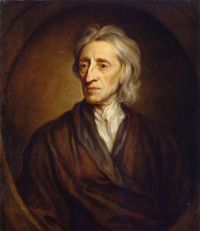 John Locke,
An Essay Concerning Human Understanding…
John Locke,
An Essay Concerning Human Understanding…
“ The difficulty is, when testimonies contradict common experience, and the reports of history and witnesses clash with the ordinary course of nature, or with one another ; there it is, where diligence, attention, and exactness are required, to form a right judgment, and to proportion the assent to the different evidence and probability of the thing : which rises and falls, according as those two foundations of credibility, viz. common observation in like cases, and particular testimonies in that particular instance, favour or contradict it. ”
 Upton Sinclair,
The Brass Check: A Study of American Journalism
Upton Sinclair,
The Brass Check: A Study of American Journalism
“ So now, taking the witness-stand in the case of the American public versus Journalism, I tell what I have personally seen and experienced. I take the oath of a witness: the truth, the whole truth, and nothing but the truth, so help me God. After this pledge, earnestly given and earnestly meant, the reader must either believe me, or he must exclude me from the company of civilized men.My motive in writing this book is not to defend myself. We live in a time of such concentrated agony and peril that a man who would waste ink and paper on a defense of his own personality would be contemptible. ”
Oliver Wendell Holmes, John Lothrop Motley, A Memoir…
“ No man is safe if the hearsay reports of his conversation are to be given to the public without his own careful revision. When we remember that a proof-text bearing on the mighty question of the future life, words of supreme significance, uttered as they were in the last hour, and by the lips to which we listen as to none other,—that this text depends for its interpretation on the position of a single comma, we can readily see what wrong may be done by the unintentional blunder of the most conscientious reporter. ”
 James Moore Wayne,
Gaines v. Relf — Dissent
James Moore Wayne,
Gaines v. Relf — Dissent
“ I understand that the credit of a witness may be impeached, 1st. By the results of a cross-examination. 2d, By witnesses called to disprove such of the facts stated by the witness whether in his direct or cross examination, as are material to the issue. 3d, By evidence reflecting upon the character of the witness for veracity. Under this the evidence must be confined to general reputation, and particular facts will not be permitted, for the law presumes every one to be capable of supporting the one, and that it is not likely that a witness, without notice, will be prepared to answer the other. ”
Peter Vivian Daniel, Dred Scott v. Sandford — Separate Opinion (1857)
“ In the constructing of pleadings either in abatement or in bar, every fact or position constituting a portion of the public law, or of known or general history, is necessarily implied. Such fact or position need not be specially averred and set forth; it is what the world at large and every individual are presumed to know — nay, are bound to know and to be governed by. ”
Horace Gray, Jones v. United States (137 U.S. 202…
“ In the ascertainment of any facts of which they are bound to take judicial notice, as in the decision of matters of law which it is their office to know, the judges may refresh their memory and inform their conscience from such sources as they deem most trustworthy. ”
Various, Graham's Magazine, Vol. XXX, No…
“ In all civilized nations, at all times, up to the present period, we have testimony of unequivocal authority, giving minute details of extraordinary facts, on the evidence of individuals of unimpeachable integrity, which confound experience, elude investigation, and baffle research. ”
 James Mill,
Jurisprudence — Section VI.
(1825)
James Mill,
Jurisprudence — Section VI.
(1825)
“ That a man should not be heard as a witness, on account of his religious creed, is an absurdity which we cannot descend to notice.2. The second of the three things which we found necessary, as above, for making the best use judicially of whatever evidence to the fact in question, exists, was, that it should be taken under those circumstances, which are most conducive to trust-worthiness. Those circumstances are constituted by the artificial securities, which arrangements can be made to apply. ”
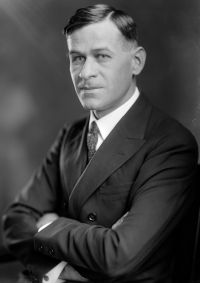 Charles G. Ross,
The Writing of News
Charles G. Ross,
The Writing of News
“ Learn to observe and you will have gone far toward mastering the art of news getting and news writing. Casual observation is nearly always faulty. Take for example the conflicting statements of persons on the witness stand. One man, telling his version of an automobile accident, swears the car was going fully thirty miles an hour, another is certain the speed was only eight miles; one heard the driver sound a warning “honk,” another is equally positive no warning was given. Each witness is a reputable citizen and each thinks his version is the truth. ”
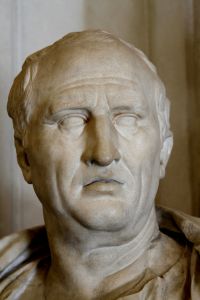 Marcus Tullius Cicero,
On Invention — Book 1
Marcus Tullius Cicero,
On Invention — Book 1
“ And if we promise that we will in a very short time prove our own cause; and if we explain the whole of the examination into the excuses alleged, or the different examinations, if there be more than one.We shall render our hearers willing to receive information, if we explain the sum total of the cause with plainness and brevity, that is to say, the point on which the dispute hinges. For when you wish to make a hearer inclined to receive information you must also render him attentive. For he is above all men willing to receive information who is prepared to listen with the greatest attention. ”
Marcus Tullius Cicero,
On Invention — Book 2
“ For praise, or blame, or the statement of an opinion, or accusation, or denial, ought all to effect different ends. In judicial investigations the object of inquiry is, what is just; in demonstrative discussion the question is, what is honourable; in deliberations, in our opinion, what we inquire is, what is honourable and at the same time expedient. For the other writers on this subject have thought it right to limit the consideration of expediency to speeches directed to persuasion or dissuasion. ”
 Ambrose Bierce,
The Collected Works of Ambrose Bierce…
(1911)
Ambrose Bierce,
The Collected Works of Ambrose Bierce…
(1911)
“ In giving hearsay evidence, for example, he may suggest a new and important witness of whom the counsel for the other side would not otherwise have heard, and who can then be brought into court. By some unguarded and apparently irrelevant statement he may open an entirely new line of inquiry, or throw upon the case a flood of light. Everyone knows what revelations are sometimes evoked by apparently the most insignificant remarks. Why should justice be denied a chance to profit that way? ”
Ralph Neville, Death of Mr. Justice Neville — A versatile equity lawyer (1918)
“ No man possessed more fully the gift of divining quickly the temperament of a witness, of framing his questions in terse and homely language, and of coaxing a vital admission, as if he were merely seeking the disclosure of a harmless fact. ”
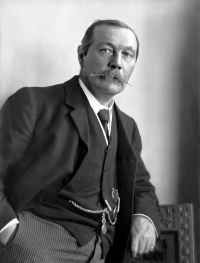 Arthur Conan Doyle,
The Crime of the Congo
Arthur Conan Doyle,
The Crime of the Congo
“ Can any one say that we are precipitate if we now brush aside vain words and say definitely that the matter has to be set right by a certain near date, or that we will appeal to each and all of the Powers, with the evidence before them, to assist us in setting it right? ”
 John Timbs,
Knowledge for the Time
John Timbs,
Knowledge for the Time
“ Not only in matters of science, but in matters of daily life, is this credulity observed. You cannot step into an omnibus, or chat with an acquaintance at the club, without hearing distinct, positive, and important statements respecting the intentions of public men,—statements involving their personal honour, perhaps the national safety, and uttered with an air of conviction which would be ludicrous were it not so sad; yet if you happen to ask on what evidence the speaker relies, you find perhaps that there is nothing better than surmise or gossip. ”
Nathan Clifford, Robbins v. Chicago City — Opinion of the Court
“ But if from the facts communicated, and from the circumstances under which they were communicated, a prudent man would not be expected to act upon them, then the communication ought not to be deemed notice ”
William T. Sherman, Memoirs of General William T. Sherman…
“ If the parties named be the men you describe, the fact should not be published, to put them on their guard and thus to encourage their escape. The evidence should be carefully collected, authenticated, and then placed in my hands. ”
 G. K. Chesterton,
Fancies versus fads
(1923)
G. K. Chesterton,
Fancies versus fads
(1923)
“ In several books and newspapers I happened to read lately, I have noticed a certain tone touching the uneducated witness; phrases like "the vagueness characteristic of their class," or "easily confused, as such witnesses are." Now such vagueness is simple truthfulness. Nine times out of ten, it is the confusion any man would show at any given instant about the complications which crowd human life. ”
William H. Taft, Ethics in Service
“ The opportunity for cross-examination, for finding out the bias of the witness, the advantage or disadvantage of his point of observation, the accuracy or inaccuracy in his recollection of the details of what he saw, are all means of reaching the real truth that the introduction of hearsay evidence would entirely exclude. ”
 John Malcolm,
The Life of Robert, Lord Clive…
John Malcolm,
The Life of Robert, Lord Clive…
“ Mere inadvertencies and casual neglects arising from an unavoidable and most complicated confusion in the state of your affairs, have been treated in such language and sentiments, as nothing but the most glaring and premeditated faults could warrant. Groundless informations have, without further scrutiny, borne with you the stamp of truth, though proceeding from those who had therein obviously their own purpose to serve, no matter at whose expense. ”
 Salmon P. Chase,
Veazie Bank v. Fenno — Opinion of the Court
Salmon P. Chase,
Veazie Bank v. Fenno — Opinion of the Court
“ We are obliged, therefore, to resort to historical evidence, and to seek the meaning of the words in the use and in the opinion of those whose relations to the government, and means of knowledge, warranted them in speaking with authority. ”
Lucius Quintus Cincinnatus Lamar, Lake County v. Graham — Opinion of the Court
“ They are bound, it is true, to learn from the assessment what the limit upon their authority is, as a necessary preliminary in the exercise of their functions and the performance of their duty; but the information is for themselves alone. All the world besides must have it from the same source, and for themselves. ”
 Benjamin Fiske Barrett,
Heaven Revealed
(1885)
Benjamin Fiske Barrett,
Heaven Revealed
(1885)
“ But these disclosures, notwithstanding they come professedly as an authorized revelation, claim no authority and ask no consideration merely on that ground. They ask to be received solely upon the ground of their intrinsic reasonableness, or their clearly perceived agreement with the deepest intuitions of human reason and the verdict of the most enlightened understanding. They appeal to no miraculous evidence in attestation of their truth, but to evidence of a higher kind. ”
Cesare Beccaria,
An Essay on Crimes and Punishments…
(1764)
“ The credibility of a witness may also be diminished, by his being a member of a private society, whose customs and principles of conduct are either not known, or are different from those of the public. Such a man has not only his own passions, but those of the society of which he is a member. ”
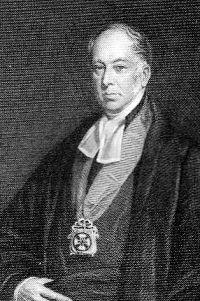 Richard Whately,
Historic Doubts Relative To Napoleon Buonaparte
Richard Whately,
Historic Doubts Relative To Napoleon Buonaparte
“ Whence this high respect which is practically paid to newspaper authority? Do men think, that because a witness has been perpetually detected in falsehood, he may therefore be the more safely believed whenever he is not detected? ”
 Samuel Johnson,
The Works of Samuel Johnson, LL.D. Volume 11
Samuel Johnson,
The Works of Samuel Johnson, LL.D. Volume 11
“ On the present occasion, my lords, I pronounce with the utmost confidence, as a maxim of indubitable certainty, that the publick has a claim to every man's evidence, and that no man can plead exemption from this duty to his country. ”
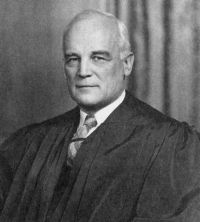 Harold Hitz Burton,
Roviaro v. United States — Opinion of the Court
Harold Hitz Burton,
Roviaro v. United States — Opinion of the Court
“ Where the disclosure of an informer's identity, or of the contents of his communication, is relevant and helpful to the defense of an accused, or is essential to a fair determination of a cause, the privilege must give way. ”
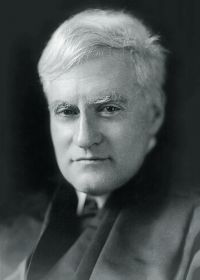 Benjamin Nathan Cardozo,
The Nature of the Judicial Process
(1921)
Benjamin Nathan Cardozo,
The Nature of the Judicial Process
(1921)
“ Here, as in many other branches of the law of evidence, we see an exaggerated reliance upon general reputation as a test for the ascertainment of the character of litigants or witnesses. Such a faith is a survival of more simple times. ”
Cesare Beccaria,
An Essay on Crimes and Punishments…
(1764)
“ Finally, the credibility of a witness is null, when the question relates to the words of a criminal; for the tone of voice, the gesture, all that precedes, accompanies and follows the different ideas which men annex to the same words, may so alter and modify a man’s discourse, that it is almost impossible to repeat them precisely in the manner in which they were spoken. ”
 Sheridan Le Fanu,
An Authentic Narrative of a Haunted House
(1862)
Sheridan Le Fanu,
An Authentic Narrative of a Haunted House
(1862)
“ All the persons—and there are many of them living—upon whose separate evidence some parts, and upon whose united testimony others, of this most singular recital depend, are, in their several walks of life, respectable, and such as would in any matter of judicial investigation be deemed wholly unexceptionable witnesses. ”
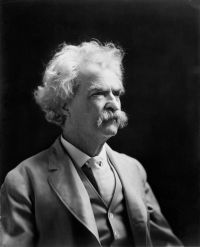
“ Never say ‘We learn’ so-and-so, or ‘It is reported,’ or ‘It is rumored,’ or ‘We understand’ so-and-so, but go to headquarters and get the absolute facts, and then speak out and say ‘It is so-and-so.’ Otherwise, people will not put confidence in your news. ”
McGrain v. Daugherty — Opinion of the Court
“ Well, sir, proposing to legislate, we want information. We have it not ourselves. It is not to be presumed that we know everything; and if any body does presume it, it is a very great mistake, as we know by experience. We want information on certain subjects. ”
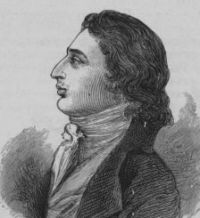 Robert Southey,
History of the Peninsular War, Volume 5…
Robert Southey,
History of the Peninsular War, Volume 5…
“ On such questions, therefore, no public men, either in or out of office, can undertake for more than a deliberate and dispassionate consideration, according to the circumstances of the case as it may appear, and to such means of information as may then be within their reach. ”
Arthur Conan Doyle,
The Strand Magazine
(1901)
“ You have nothing else to report to us before we go into this matter?" "Well, it depends upon what you think worth reporting." "I think anything out of the ordinary routine of life well worth reporting." ”
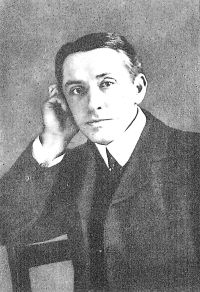 Joseph Smith Fletcher,
The Orange-Yellow Diamond
(1922)
Joseph Smith Fletcher,
The Orange-Yellow Diamond
(1922)
“ There'll be no fuss, no bother—needn't be, anyway, if you tell us what we want to know, and don't oppose us in what we've got power to do. Here's a warrant—granted on certain information—to search your premises. ”
C. A. Row, The Supernatural in the New Testament…
“ Testimony has a general credibility, subject of course to the knowledge and honesty of the informant, when the reports are derived from those who lived during the generation in which a particular event occurred, supposing it to have been one of sufficient notoriety to attract attention, and that the reporter possessed adequate means of information, and investigated it with sufficient care. ”
