Ordinal number

Definition and stakes

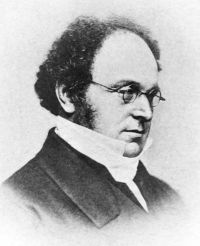
Portrait of Alfred North Whitehead Alfred North Whitehead,  1911 Encyclopædia Britannica, Volume 17… (1911)

“ The ordinal number ȯ is the class whose sole member is the null relation—that is, the relation which never holds between any pair of entities. The definitions of the finite ordinals can be expressed without use of the corresponding cardinals, so there is no essential priority of cardinals to ordinals. Here also it can be seen that the science of the finite ordinals is a particular subdivision of the general theory of classes and relations. Thus the illusory nature of the traditional definition of mathematics is again illustrated. ”
Source: Wikisource

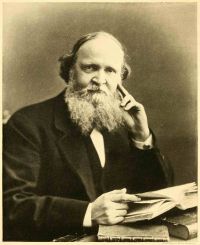
William Fleetwood Sheppard,  1911 Encyclopedia Britannica (1911)

“ Arithmetic is supposed to deal with cardinal, not with ordinal numbers; but it will be found that actual numeration, beyond about three or four, is based on the ordinal aspect of number, and that a scientific treatment of the subject usually requires a return to this fundamental basis.
One difference between the treatment of ordinal and of cardinal numbers may be noted. Where a number is expressed in terms of various denominations, a cardinal number usually begins with the largest denomination, and an ordinal number with the smallest.
”
Source: Wikisource

William Fleetwood Sheppard,  1911 Encyclopedia Britannica (1911)

“ One number is less or greater than another, according as the symbol (or ordinal) of the former comes earlier or later than that of the latter in the number-series. Thus (writing ordinals in light type, and cardinals in heavy type) 9 comes after 4, and therefore 9 is greater than 4. To find how much greater, we compare two series, in one of which we go up to 9, while in the other we stop at 4 and then recommence our counting. ”
Source: Wikisource

Get perspective with Kwize: daily news enlightened by great literature