Organ (biology)

Definition and stakes

William A. Locy,  Biology and Its Makers

“ If, therefore, we wish to understand an organ or an animal, we must follow its development, and see it in simpler conditions, before the great modifications have been added.
The tracing of the stages whereby cells merge into tissues, tissues into organs, and determining how the organs by combinations build up the body, is embryology. On account of the extended applications of this subject in biology, and the light which it throws on all structural studies, we shall be justified in giving its history at somewhat greater length than that adopted in treating of other topics.
”
Source: Gutenberg

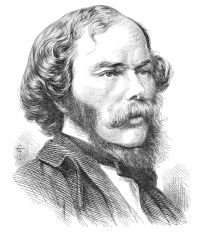
Portrait of Herbert Spencer Herbert Spencer,  The Principles of Biology — Chapter II.4 (1898)

“ Now if the compound molecules of the blood, or of an organism considered in the aggregate, have the power of moulding into their own type the matters which they absorb as nutriment; and if they have the power when their type has been changed by disease, of moulding materials afterwards received into the modified type; may we not reasonably suspect that the more or less specialized molecules of each organ have, in like manner, the power of moulding the materials which the blood brings to them into similarly specialized molecules? ”
Source: Wikisource

William A. Locy,  Biology and Its Makers

“ Just as a knowledge of the construction of a machine is necessary to understand its action, so the anatomical analysis of an organ must precede a knowledge of its office. The term "physiological anatomy of an organ," so commonly used in text-books on physiology, illustrates the point. We can not appreciate the work of such an organ as the liver without a knowledge of the arrangement of its working units. The work of the anatomist concerns the statics of the body, that of the physiologist the dynamics; properly combined, they give a complete picture of the living organism. ”
Source: Gutenberg

Get perspective with Kwize: daily news enlightened by great literature