
“ Let us remember that in our time we cannot make any show, or festival, or pageant—we have lost the art of pageantry—which can compare with the shows which our forefathers saw daily: the shows of magnificent trains, queens and princesses in such raiment as the greatest lady of these times would be afraid to put on, lords and knights and gentlemen of the livery, streets with their gabled houses hung with crimson and scarlet cloth; minstrels and music everywhere; mysteries and pageants and allegories, with fair maidens and giants, angels and devils ”
Pageantry
Definition and stakes
The theme of “pageantry” has been addressed by authors such as Adam Smith, Charles Dudley Warner, Walter Besant, Henry B. Wheatley and Susan Swain Madders. It is often associated with terms like theatre, pageant, procession, costume and stage.
Quotes about “pageantry”
Susan Swain Madders, Rambles in an Old City
“ Pageantry has been numbered among the chartered rights of the citizens, from the days of “mysteries,” when the itinerant stage, with its sacred drama provided by the church, was the only theatre known, through the age of tournaments, the season of royal visits, Elizabethan processions, and triumphal arches, of guilds, of Georges and dragons, down to the last relic of the spirit of olden times—the chairing of its members; and not even the scant nourishment offered in this nineteenth century, has yet sufficed to starve and wither the seeds thus sown and fostered in the very nature of the people. ”
Henry B. Wheatley, The Story of London
“ These were erected at the expense of the livery companies and the foreign merchants. During the eighteenth and nineteenth centuries the art of pageantry was almost entirely lost. The decoration of our streets on joyful occasions has lately considerably improved, but there is still room for a more artistic{153} treatment. With our knowledge of the past and the possession of artists who are enthusiastic for the revival of a true taste in pageantry there ought to be no difficulty in the production of pageants that would do honour to our city. ”
 Charles Dudley Warner,
Saunterings
Charles Dudley Warner,
Saunterings
“ A procession which moves down the nave is hidden by the soldiers who stand on either side, or is visible only by sections as it passes: there is no good place to get the grand effect of the masses of color, and the total of the gorgeous pageantry. I should like to see the display upon a grand stage, and enjoy it in a coup d'oeil. It is a fine study of color and effect, and the groupings are admirable; but the whole affair is nearly lost to the mass of spectators. It must be a sublime feeling to one in the procession to walk about in such monstrous fine clothes ”
 Adam Smith,
An Inquiry into the Nature and Causes of the Wealth of Nations
Adam Smith,
An Inquiry into the Nature and Causes of the Wealth of Nations
“ For the sake of an inferior pageantry of the same kind, his nobles dismiss their retainers, make their tenants independent, and become gradually themselves as insignificant as the greater part of the wealthy burghers in his dominions. The same frivolous passions, which influence their conduct, influence his. How can it be supposed that he should be the only rich man in his dominions who is insensible to pleasures of this kind? ”
Edward Parrott, The Pageant of British History
“ The Master of the Pageant spurs into the arena; he waves his baton, and the trumpets sound. In the distance you see a long procession begin to wind its way across the greensward, and as it draws nearer and nearer you recognize the form and fashion of men and women whose names are writ large in the annals of our land. Here they come—king and queen, statesman and priest, warrior and merchant, poet and man of law, shipman and craftsman, yeoman and peasant—a motley throng, all sorts and conditions of men and women, high and low, rich and poor, gentle and simple, noble and base, hero and craven ”
Cecil Weatherly, 1911 Encyclopædia Britannica, Volume 20… (1911)
“ The essence of the pageant is that all who take part are residents in the place and locality, that the costumes and accessories should be made locally, and that all classes and all ages should share in a common enthusiasm for the bringing back in the most vivid form the past history, often forgotten, in which all should feel they have an equal and common part. ”
 Louis N. Parker,
Joseph and His Brethren: A Pageant Play…
(1913)
Louis N. Parker,
Joseph and His Brethren: A Pageant Play…
(1913)
“ The term Pageant Play, which is new, may require a word of explanation. A Pageant Play, as I conceive it, is a play written on the same principles as my English Pageants. In those the towns in which they took place were the heroes. In my Pageant Plays the hero is some outstanding figure: Drake—Joseph. As in my pageants I told the entire history of the town, so in these plays I attempt to tell the entire history of the man. The so-called unities of time and place are therefore of no consideration ”
 Hilaire Belloc,
On Something
(1910)
Hilaire Belloc,
On Something
(1910)
“ I was acquainted for some hours with the actions of a youth of whose very name I am ignorant, but whose face I am very certain will reappear twenty years hence in a setting of glory, recognized as yet one other of those superb spirits who will do all for England.The occasion was a pageant - no matter what pageant - a great public pageant which passed through the Strand, and was to be witnessed by hundreds of thousands. Let us call it "The Function." ”
Cecil Weatherly, 1911 Encyclopædia Britannica, Volume 20… (1911)
“ The development in meaning from " moving platform " to that of a " processional spectacle " or " show " is obvious. The 20th century has seen in England what may in some respects be looked on as a revival but in general as a new departure in the shape of semi-dramatic spectacles illustrative of the history of a town or locality; to such spectacles the name of " Pageant " has been appropriately given. ”
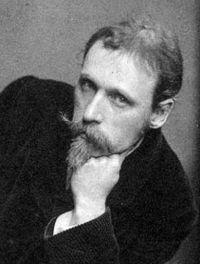 Walter Crane,
William Morris to Whistler
Walter Crane,
William Morris to Whistler
“ Historic episodes arranged in dramatic form enacted by living men and women, with all the vivid effect of life and movement, and heightened by all the resources of costume and heraldry and accessories proper to each period, the scenes, too, taking place in the open air, with green swards, noble trees, and the wide sky for proscenium leave an ineffaceable impression upon the eyes and minds of the spectators.But what is wanted is a wider appeal. We might make the pageant a means of centralizing and unifying national life. ”
Various, The art of music, Vol. 04 (of 14… (1915)
“ But thus far, so far as I know, my pageants are the only ones that regard the pageant as a musical as well as dramatic art-form and seek to work out its development as such.' Certainly the new pageant is one of the most interesting developments in American art, and it is especially interesting in view of the fact that it is a distinctly American idea particularly well calculated, one would think, to be a vehicle for the expression of the American spirit. ”
 E. M. Forster,
Pharos and Pharillon — Conclusion
(1923)
E. M. Forster,
Pharos and Pharillon — Conclusion
(1923)
“ After the fashion of a pageant it might marshal the activities of two thousand two hundred and fifty years. But unlike a pageant it would have to conclude dully. Alas! The modern city calls for no enthusiastic comment. ”
Cecil Weatherly, 1911 Encyclopædia Britannica, Volume 20… (1911)
“ Others take pagina as a translation of Gr. πῆγμα, platform, stage, a word from the same root pag-. Du Cange (Glossarium) quotes a use in Med. Lat. of pegma in this sense, Machina lignea in qua statuae collocabantur, and Cotgrave gives “Pegmate, a stage or frame whereon pageants be set or carried.” As has been said, “pageant” is first found in the sense of a scene, a division or part of a play or of the platform on which such scene was played in the medieval drama. ”
James J. Walsh, The Thirteenth, Greatest of Centuries
“ The men of no occupation, however menial it may seem to us, were barred. Each of these companies had a special pageant with a portion of the Old or New Testament to represent and in each succeeding year spent much of their spare time in preparing for their dramatic performance, studying and practising their parts and making everything ready for competition with their brother craftsmen in the other pageants. ”
 Johann Wolfgang von Goethe,
The Works of J. W. von Goethe
Johann Wolfgang von Goethe,
The Works of J. W. von Goethe
“ But even here the people is the base upon which everything rests. The spectators are themselves actors, and the multitude is melted into one whole with the stage. All day long the buyer and the seller, the beggar, the sailor, the female gossip, the advocate and his opponent, are living and acting in the square and on the bench, in the gondolas and in the palaces, and make it their business to talk and to asseverate, to cry and to offer for sale, to sing and to play, to curse and to brawl. ”
Constance D'Arcy Mackay, Patriotic Plays and Pageants for Young People
“ The pageant players should, if possible, have the sun at the side. It is very difficult to play facing a strong light. Choice of the time of day in which the pageant is given has much to do with its effectiveness. ”
Richard Middleton, The Day Before Yesterday
“ There is something pathetic in the business; for we, too, were once stars, and thought, finely enough, to hold the heavens for ever with our dreams. But now we are glad if the limelight shines by accident for a moment on our faces, or if the stage-manager gives us but one individual line. We feel, for all the sad fragrance of our old programmes and newspaper-cuttings, that it is a privilege to play a part in the pageant at all. ”
Various, The Atlantic Monthly (1858)
“ On scorching mountains, amid raw prairie-winds, or upon the regal ocean, the white pageant shall come back to us again, with all the luxury of summer heats, and all the fragrant coolness that can relieve them. ”
 Christine de Pizan,
The Book of the Duke of True Lovers
(1908)
Christine de Pizan,
The Book of the Duke of True Lovers
(1908)
“ There we seem to live the daily life of its courtly circle, and, through the vivid description of the sumptuous pageant, to take part in the three days' tournament, and in the merry revels which bring each day to a close. ”
Henry Stephens, Journeys and Experiences in Argentina…
“ The platform is very heavy and is borne by sixteen men, four on each side, four in front, and four in back, who support its weight on their padded shoulders on which rest beams. The procession is very slow, moving at a snail's pace, and as it proceeds, the pageant sways with a peculiar serpentine rhythm. ”
 Louisa May Alcott,
Jo's Boys — Chapter XIV. PLAYS AT PLUMFIELD
(1886)
Louisa May Alcott,
Jo's Boys — Chapter XIV. PLAYS AT PLUMFIELD
(1886)
“ While the audience filed out to supper in the hall, the stage was a scene of dire confusion as gods and goddesses, farmers and barons, maids and carpenters, congratulated one another on the success of their labours. Assuming various costumes, actors and actresses soon joined their guests, to sip bounteous draughts of praise with their coffee, and cool their modest blushes with ice-cream. ”
“ When a party of ladies attend the theatre, unaccompanied by a male escort, or with no conveyance but the street-car, ordinary walking costume, with quiet bonnets or hats, is correct style. Box parties, presumably arriving in carriages, may dress as prettily as they choose, subject to the general laws of taste. ”
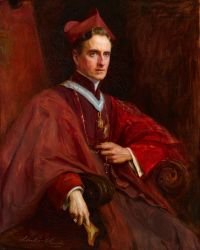 Péter Vay,
Empires and Emperors of Russia…
Péter Vay,
Empires and Emperors of Russia…
“ Pedestrians, sedan-chairs, men on horseback, are coming forward in an endless string. And what a pageant this is! What effective grouping! The minutest [259] detail has been carried out with artistic taste. The smallest traits are wonderfully harmonized, to enhance the general effect.The procession is headed by children, dressed in white from top to toe, wearing bell-shaped head-gear. Then follow bearers of torchlights and banners, servants carrying inscriptions attached to poles, others dangling lanterns, and behind these another group burning straw plaits. ”
John Thomas Codman, Brook Farm: Historic and Personal Memoirs
“ Imagine, also, all hands seated at the supper tables, with the rattle of knives, forks, mugs and plates, and the full buzz of conversation; waiters crowding up and down, supplying the fast vanishing food, and everything cheerful, when a rapping on one of the tables arrests the attention of all. One of the gentlemen, arising, announces, "There will be a dance in this hall this evening, at eight o'clock, to which all are invited." ”
 Walter Scott,
The Antiquary — Complete
Walter Scott,
The Antiquary — Complete
“ A traveller partly for business and partly for pleasure?—why, the stage partakes of both; it is a labour to the performers, and affords, or is meant to afford, pleasure to the spectators. He seems, in manner and rank, above the class of young men who take that turn; but I remember hearing them say, that the little theatre at Fairport was to open with the performance of a young gentleman, being his first appearance on any stage.—If this should be thee, Lovel!—Lovel? ”
Edith Birkhead, The Tale of Terror: A Study of the Gothic Romance
“ We are transported from the eighteenth century, not actually to mediaeval England, but to a carefully arranged pageant displaying mediaeval costumes, tournaments and banquets. The actors speak in antique language to accord with the picturesque background against which they stand. ”
 Washington Irving,
Tales of a Traveller
Washington Irving,
Tales of a Traveller
“ The country campaign of the troupe was soon at an end, and we set off for the metropolis, to perform at the fairs which are held in its vicinity. The greater part of our theatrical property was sent on direct, to be in a state of preparation for the opening of the fairs; while a detachment of the company travelled slowly on, foraging among the villages. I was amused with the desultory, hap-hazard kind of life we led; here to-day, and gone to-morrow. Sometimes revelling in ale-houses; sometimes feasting under hedges in the green fields. ”
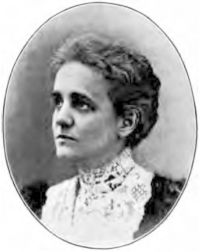 Martha Foote Crow,
The American Country Girl
Martha Foote Crow,
The American Country Girl
“ To represent a pageant with broad historic effects one must have many characters and a great deal of perspective. But the beauty of it is that this great piece of work is one that can engage the interest of every last man, woman or child in the whole town. There are so many parts to the completed whole, there are so many kinds of ability that can be brought into play that every member of the community can be given a portion of the structure for his or her responsibility ”
Augustin Filon, The English Stage: Being an Account of the Victorian Drama
“ The peasant, one need hardly remark, never existed. On the stage he has lived more than a hundred years. Hardly less indispensable to the comedy or the drama was the captain, the “man about town,” addicted to drink, with a diamond pin resplendent in his tie, wearing salmon-coloured trousers, and top boots that he is always dusting with the end of his riding-whip. He represents the selfishness, the folly, and the insolence of the higher classes, as imagined by a man who has never been inside a drawing-room. ”
"Everyman," with other interludes…
“ AND IN NEW YORK BY E. P. DUTTON & COFirst Issue of this Edition 1909 Reprinted 1910, 1912, 1914 INTRODUCTION By craftsmen and mean men, these pageants are played, And to commons and countrymen accustomably before: If better men and finer heads now come, what can be said?The pageants of the old English town-guilds, and the other mysteries and interludes that follow, have still an uncommon reality about them if we take them in the spirit in which they were originally acted. ”
Earl of Philip Dormer Stanhope Chesterfield, Letters to His Son, 1750
“ From dinner, where they drink quick, they adjourn in clusters to the play, where they crowd up the stage, dressed up in very fine clothes, very ill-made by a Scotch or Irish tailor. From the play to the tavern again, where they get very drunk, and where they either quarrel among themselves, or sally forth, commit some riot in the streets, and are taken up by the watch. Those who do not speak French before they go, are sure to learn none there. ”
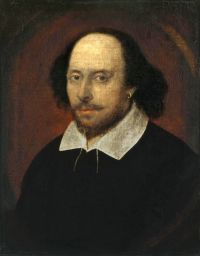 William Shakespeare,
Henry IV, Part 2
(1921)
William Shakespeare,
Henry IV, Part 2
(1921)
“ The audience hung intently on every word. The admission of the perfect success of the performance was without dissent. The revival rewarded the managers with houses crowded to the ceiling for many nights, nor was this attributable to the pageant only, for the acting was of the highest order. ”
An English Garner: Ingatherings from Our History and Literature…
“ When the Queen's Majesty had heard the child's oration and understood the meaning of the pageant at large; she marched forward towards Cornhill, always received with like rejoicing of the people.And there, as Her Grace passed by the Conduit, which was curiously trimmed against that time, adorned with rich banners, and a noise of loud instruments upon the top thereof: she espied the second pageant. And because she feared, for the people's noise, that she should not hear the child which did expound the same, she inquired what that pageant was, ere that she came to it. ”
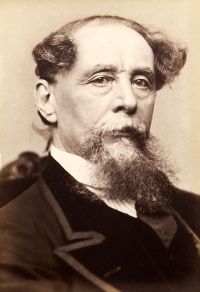 Charles Dickens,
The Posthumous Papers of the Pickwick Club
(1837)
Charles Dickens,
The Posthumous Papers of the Pickwick Club
(1837)
“ Everybody who is at all acquainted with theatrical matters, knows what a host of shabby, poverty-stricken men, hang about the stage of a large establishment—not regularly engaged actors, but ballet people, procession men, tumblers, and so forth, who are taken on during the run of a pantomime, or an Easter piece, and are then discharged, until the production of some heavy spectacle occasions a new demand for their services. ”
