
“ Here, at least, the peasant-woman—who had never been able to accustom herself to this colossal fortune, come too late, from too far, and like a thunder-clap—felt herself linked to reality by the coming and going of the work-people, the letting-out and taking-in of the cattle, their slow movement to the drinking pond, all that pastoral life which woke her by the familiar call of the cocks and the sharp cries of the peacocks, and brought her down the corkscrew staircase of the pavilion before dawn. ”
Peasant woman
Definition and stakes
The theme of “peasant woman” has been addressed by authors such as Meta Stern Lilienthal, Laura Marholm, August Bebel, Elizabeth Cady Stanton and Anton Pavlovich Chekhov. It is often associated with terms like labor, France, agriculture, industry and village.
Quotes about “peasant woman”
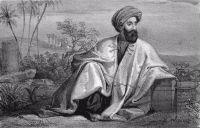 Charles Lewis Meryon,
Travels of Lady Hester Stanhope…
(1846)
Charles Lewis Meryon,
Travels of Lady Hester Stanhope…
(1846)
“ Were I desired to describe a peasant woman in her most customary occupation, I should represent her as seated at the door of her cottage, spinning with a hand-spindle, and having a long cane lying by her side to drive away the chickens, which she talks to and scolds as if they were children, giving to each a name. ”
 Matilda Betham-Edwards,
The Roof of France; Or, the Causses of the Lozère
Matilda Betham-Edwards,
The Roof of France; Or, the Causses of the Lozère
“ To attend upon us we had a delightful peasant woman, neat, clean, sturdy, unlettered; yet very intelligent, and full of interest in English inventions and English ways. What a treasure such a woman would be at home! ”
Mary Raymond Shipman Andrews, A Play to the Gallery (1903)
“ A peasant woman would not have hesitated; but as the keenness of sense, the exquisite sight and hearing, that belong to a savage are lost somewhere in the refining process of the ages between him and his twentieth-century descendant, so this woman, who was the high-water mark of civilization, had dulled in training the woman's sure instinct. ”
Baron Edward Bulwer Lytton Lytton, Godolphin, Complete
“ The fate of women in all the more polished circles of society is eminently unnatural and unhappy. The peasant and his dame are on terms of equality—equality even of ambition: no career is open to one and shut to the other;—equality even of hardship, and hardship is employment: no labour occupies the whole energies of the man, but leaves those of the woman unemployed. ”
Edward B. Pollard, Oriental Women
“ The country women have greater freedom and far more influence with their husbands than do the women of the harem. Polygamy among the former class is rare, and hence the women are more highly regarded than those of the city. The peasant woman is industrious, engaged in some useful employment about the house or in the field. She buys and sells and gets gain for her husband and her home, and often is highly esteemed by him ”
 Hannah Lynch,
French life in town and country
(1901)
Hannah Lynch,
French life in town and country
(1901)
“ Woman may leave her home to make money in the humbler walks of labour, and cause no flutter in male bosoms; but let her elect to do so in paths where ambition lures and pay is higher, and instantly a howl of dismay runs through the ranks of her oppressors and slaves. And yet, if common sense and logic were general instead of rare virtues, even in France, it would be understood that the abandonment of the homes by peasant women is of much more serious consequence to a nation than the infrequent flight into legal and medical circles. ”
Mrs. Hope, Once a Week (1863)
“ Often, on opening the door, a peasant-woman, dressed in her peculiar costume, would enter, weary and wayworn, and yet determined not to return home without bringing her present of plums, apples, or sometimes a loaf of home-made bread, and have a little talk over all her own family history, her troubles and her joys, to which most affectionate and ready ear was always lent by the sisters. ”
Alice Vansittart Strettel Carr, North Italian Folk: Sketches of Town and Country Life
“ Towards dark the great baskets are piled up that have been filled all day from each woman’s sack, and then the girls lift them upon their heads or their shoulders, and pick their way deftly along the stony paths with the burthens. Sometimes the loads are too heavy and must be left for the men, but this does not often happen, for these peasant women are strong, with a beautiful ease of strength, and proud of their power. ”
Various, Short story classics (Foreign)… (1907)
“ She suffered incessantly when she glanced around her humble home, and felt the absence of all those delicacies and luxuries which are enjoyed only by the rich. In short, all the little nothings, that another woman of her caste would not have seen, tortured and wounded her. The sight of the old Breton peasant woman who performed her [Pg 1582] simple household duties awakened in her vain longings and troubled dreams. ”
Henry K. Rowe, Society: Its Origin and Development
“ She was the dependable field-hand for the sowing and reaping, when agriculture became the principal means of subsistence. But woman's position has steadily improved. She is no longer the slave but the helper. The peasant woman of Europe still works in the fields, but American women long ago confined themselves to indoor tasks, except in the gathering of special crops like cotton and cranberries. Home economics have taught the advantage of division of labor and co-operation. ”
 Jacques Nicolas Léger,
Haiti: Her History and Her Detractors
(1907)
Jacques Nicolas Léger,
Haiti: Her History and Her Detractors
(1907)
“ The one reproach that can be made to them is that their extreme fondness leads them to spoil their children somewhat by over-indulgence. The peasant woman is quite as devoted as those of the cities. She will till the soil along with the man of her choice, both working side by side through the heat of the day; together they set out for the nearest market, there to sell the fruits of their common labor. The woman shrinks at no task, however rude ”

“ I courteously bend my head, and point to the shilling. The agricultural intelligence exerts itself. The peasant joins our melancholy procession. My wife is a fine woman, but he never once looks at my wife—and, more extraordinary still, he never even looks at the horses. His eyes are with his mind—and his mind is on the shilling.We reach the top of the hill—and, behold on the other side, nestling in a valley, the shrine of our pilgrimage, the town of Underbridge! Here our guide claims his shilling, and leaves us to find out the inn for ourselves. I am constitutionally a polite man. ”
Hermann Schoenfeld, Women of the Teutonic Nations
“ When the harvest time comes she does a good share of work in the fields. A woman parasite is unknown to the peasant family and can have no place in it. The Russian peasant woman earns her position in life through honest, wholesome toil by her husband's side. ”
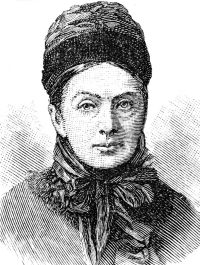 Isabella L. Bird,
Korea and her neighbors
(1897)
Isabella L. Bird,
Korea and her neighbors
(1897)
“ The peasant woman may be said to have no pleasures. She is nothing but a drudge, till she can transfer some of the drudgery to her daughter-in-law. At thirty she looks fifty, and at forty is frequently toothless. Even the love of personal adornment fades out of her life at a very early age. ”
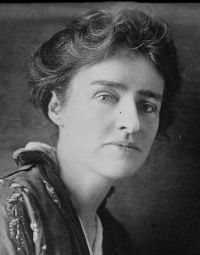 Jean Webster,
The Wheat Princess
Jean Webster,
The Wheat Princess
“ But as their eyes became accustomed to the darkness they made out a stoutly built peasant woman standing at one end of the room and grasping in her hand an ox-goad such as the herdsmen on the Campagna use. ”
Caldwell Lipsett, Where the Atlantic meets the land
“ She knew every man, woman, and child by name upon the countryside, and always had a friendly word and a cheerful smile for them. She was loved by the women, but the men worshipped her. She had an absolute recklessness and abandonment of temperament which dominated them. For, except when supported by others, your peasant is prone to be cautious. ”
| override_editor, The Way of a Virgin (1922)
“ Came night, and the tailor entered the house of a peasant. Now this peasant had married a young woman who had a liking for well-membered men. The guest went to sleep in the courtyard, leaving his yard exposed. Perceiving it, the peasant's wife felt a great desire; raising her robe, she coupled with the tailor. "Good," quoth he to himself; and he placed the ring on his finger, and his yard rose little by little to the height of one verst. But when the wife perceived herself so far from the earth, all desire to futter left her, and she clung with both hands to this strange support in mid-air. ”
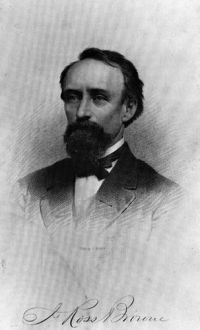 J. Ross Browne,
The Land of Thor
J. Ross Browne,
The Land of Thor
“ The peasant women, who flock in from the country with immense burdens of vegetables and other products of the farms, are a very striking, if not a very pleasing feature in the markets. Owing to the hard labor imposed upon them, they are exceedingly rough and brawny, and have a hard, dreary, and unfeminine expression of countenance, rather inconsistent with one’s notions of the delicacy and tenderness of woman. Few of them are even passably well-looking. All the natural playfulness of the gentler sex seems to be crushed out of them ”
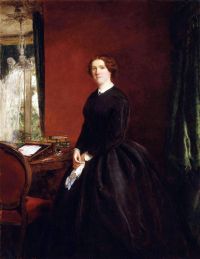 M. E. Braddon,
The Venetians
(1893)
M. E. Braddon,
The Venetians
(1893)
“ Wealth could hardly tempt her, since she could earn an income which was more than sufficient for her needs. To such a woman as this, peasant born as she was, uncultivated, friendless, he must offer the highest price—that price which he had told himself he would offer to no woman living. ”
One Hundred Merrie And Delightsome Stories
“ There lived there a good, simple, unlettered peasant, married to a nice, pleasant woman, and as long as he had plenty to eat and drink he cared for little else. He was accustomed to often go into the country to a house he had there, and stay, three, or four days—sometimes more, sometimes less, as suited his pleasure, and left his wife to enjoy herself in the town, which she did, for, in order that she might not be frightened, she had always a man to take her husband’s place, and look after the workshop and see that the tools did not rust. ”
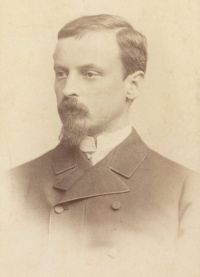 Henryk Sienkiewicz,
Without Dogma: A Novel of Modern Poland
Henryk Sienkiewicz,
Without Dogma: A Novel of Modern Poland
“ It is quite true that woman and love do not occupy a large space in the life of those who work, and those who have before them great undertakings and serious aims. The peasant marries because such is the custom, and he wants a housekeeper. ”
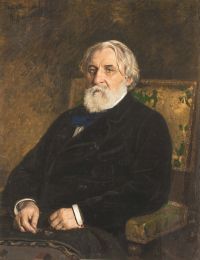 Ivan Sergeevich Turgenev,
A Sportsman's Sketches
Ivan Sergeevich Turgenev,
A Sportsman's Sketches
“ You'd always be after the girls up at the manor house.... "Have done, do, for shame!"' the old man went on, mimicking the servant girls. 'Ah, I know you, you white-handed rascal!''But what's the good of a peasant woman?''A peasant woman—is a labourer,' said Hor seriously ”
 August Bebel,
Woman under socialism
August Bebel,
Woman under socialism
“ Contempt for woman had made great progress during the times of license. The general lack of work weighed heaviest on their shoulders; by the thousands did these women, like the male vagabonds, infest the roads and woods, and filled the poorhouses and prisons of the Princes and the cities. On top of all these sufferings came the forcible ejectment of numerous peasant families by a land-hungry nobility. ”
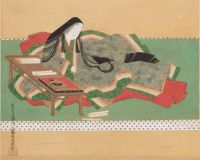 Murasaki Shikibu,
The Sacred Tree: Being the Second Part of 'The Tale of Genji'
(1926)
Murasaki Shikibu,
The Sacred Tree: Being the Second Part of 'The Tale of Genji'
(1926)
“ An old peasant finds a minute child in a bamboo-stem. She grows up into a woman of surpassing beauty, is courted by numerous lovers to whom she sets a series of grotesque tasks which they entirely fail to perform. ”
 Havelock Ellis,
Studies in the Psychology of Sex…
Havelock Ellis,
Studies in the Psychology of Sex…
“ For the peasant, whose sensibilities are uncultivated and who makes but the most elementary demands from a woman, the difference between an animal and a human being in this respect scarcely seems to be very great. "My wife was away too long," a German peasant explained to the magistrate, "and so I went with my sow." It is certainly an explanation that to the uncultivated peasant, ignorant of theological and juridical conceptions, must often seem natural and sufficient. ”
Various, The Catholic World, Vol. 22, October…
“ The peasant is then obliged to shut himself up with his beasts in his low, damp cottage, with peat for his fuel, a pine torch for his candle, brackish water relieved by a dash of vinegar for drink, meagre broth, corn bread, and perhaps salt fish for his dinner. Whole generations are said to live under one roof in the Landes, so thoroughly are the people imbued with the patriarchal spirit. Woman has her rights here—at least in the house. ”
 Jane Addams,
Newer ideals of peace
(1906)
Jane Addams,
Newer ideals of peace
(1906)
“ It has been pointed out that woman lost her earlier place when man usurped the industrial pursuits and created wealth on a scale unknown before. Since that time women have been reduced more and more to a state of dependency, until we see only among the [Pg 206] European peasant women as they work in the fields, “the heavy, strong, enduring, patient, economically functional representative of what the women of our day used to be.” ”
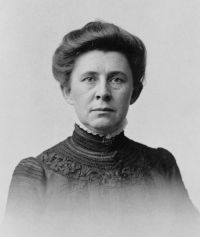 Ida Minerva Tarbell,
The Business of Being a Woman…
(1913)
Ida Minerva Tarbell,
The Business of Being a Woman…
(1913)
“ The case of peasant handicraft is in point. It is only recently that we have begun to realize that most women immigrants know some kind of beautiful handicraft which they have entirely dropped for fear of being laughed at. ”
James Johnson, Pilgrimages to the Spas in Pursuit of Health and Recreation
“ It is not very flattering nor yet creditable to the pride of civilization, that in many parts of Europe, and even in Germany, the female peasant is little more than a beast of burthen, with worse food and more care than the ox or the horse. Wherever we see three persons employed in agricultural labour, two of them are sure to be women. ”
 Alfred Henry Lewis,
The Story of Paul Jones: An Historical Romance
Alfred Henry Lewis,
The Story of Paul Jones: An Historical Romance
“ Should the Princess, in some gust of virtue, be swept into a marriage with the peasant, she becomes instantly a peasant. It is one of those strange cases, my friend, where the word ‘wife’ is a stain and the word ‘mistress’ no stain at all. ”
 Rose Hawthorne Lathrop,
Memories of Hawthorne
Rose Hawthorne Lathrop,
Memories of Hawthorne
“ As for the peasant women we met, under their little light-stands of head-drapery, they were easily comprehensible, and expressed without a shadow of reserve their vanity and tiger blood by an openly proud smile and a swing of the brilliantly striped skirt. ”
Abbie Phillips Walker, Sandman's rainy day stories (1920)
“ It did not take the peasant long to take her home, and when the Queen and the King saw their daughter in her own form again they fell on their knees before the peasant youth and thanked him.But the Princess did not understand what it all meant, and said: “Why do you kneel to him? He should kneel to you! Are you not King and Queen of this land, and this man a poor peasant?”Before the King could explain to the Princess the youth said: “I have brought you your daughter, but you must keep her. I could never marry a maid who thought herself above me. Give me gold and let me go back to my home!” ”
Various, Lippincott's Magazine of Popular Literature and Science…
“ The peasant-women, poor things! are ugly, because they work from morning till night in the vineyards, toiling until their backs are broken. The wine which the beauties drink costs their humbler sisters their life-blood, their grace, their happiness. ”
 G. K. Chesterton,
What I saw in America
(1922)
G. K. Chesterton,
What I saw in America
(1922)
“ When I see women so wildly anxious to tie themselves to all this machinery of the modern city my first feeling is not indignation, but that dark and ominous sort of pity with which we should see a crowd rushing to embark in a leaking ship under a lowering storm. When I see wives and mothers going in for business government I not only regard it as a bad business but as a bankrupt business. It seems to me very much as if the peasant women, just before the French Revolution, had insisted on being made duchesses or (as is quite as logical and likely) on being made dukes. ”
Sixty Folk-Tales from Exclusively Slavonic Sources
“ If you have no riches, if you have no wife, I will give you all.” The peasant said: “Very good, mother, if you make me richer than any of the peasants. But I have no pony, no cow, and my cottage is wretched.” The lime-tree said: “Go home; all shall be yours.” The peasant went. A new house was his: fences of stout boards, horses that were ready to fly, and store-rooms full of corn. The cottager was not satisfied, because his wife was not handsomer. What was to be done? “I’ll go off quick to Mother Lime-tree.” He took his axe, and went off into the wood. ”
The World's Great Sermons, Volume 08…
“ The peasant's daughter, in her narrow circle, feels as keenly the disappointment of her hopes, and mourns as intensely the betrayal of her confidence, or the rude ending of her day-dreams, as either queen or princess, as either Katharine of England or Josephine of France. ”
Hannah Lynch,
Dr. Vermont's fantasy, and other stories
(1896)
“ These hearts of foolish women will ever make them traitor to their heads. I naturally growl when I find our sack of corn diminished in favour of a neighbour’s hungry children, or return frost-bitten from the college to find no fire, and learn that my wife has carried a basket of fuel to a peasant dying up among snow-hills. ”
George Sturt, Change in the Village
“ It would be a mistake to suppose that the peasant economy, as practised in this valley, was nearly so good a thing for women as it was for the other sex; a mistake to think that their life was all honey, all simple sweetness and light, all an idyll of samplers and geraniums in cottage windows. ”
 Lydia Maria Child,
The history of the condition of women…
(1835)
Lydia Maria Child,
The history of the condition of women…
(1835)
“ The old peasant women in France are said to be frightfully ugly, in consequence of continued toil and exposure to the weather. In England, it is not unusual to see poor women scraping up manure from the streets, with [Pg 181] their hands, and gathering it into baskets. ”
Related terms
Authors who wrote about “peasant woman”
Meta Stern Lilienthal Laura MarholmAugust Bebel
 Elizabeth Cady StantonAnton Pavlovich ChekhovEdward B. PollardIda Minerva TarbellHavelock Ellis
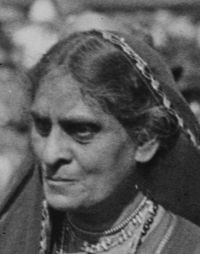 Cornelia Sorabji
 Charlotte Perkins GilmanMatilda Betham-EdwardsWilliam Smart
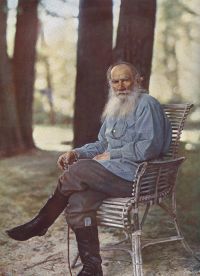 Leo TolstoyAbbie Phillips WalkerMrs. HopeIvan Sergeevich Turgenevgraf Leo TolstoyGeorge SturtArthur Ruhl
 Guy de Maupassant
Laura MarholmAugust BebelElizabeth Cady StantonAnton Pavlovich ChekhovEdward B. PollardIda Minerva TarbellHavelock EllisCornelia SorabjiCharlotte Perkins GilmanMatilda Betham-EdwardsWilliam SmartLeo TolstoyAbbie Phillips WalkerMrs. HopeIvan Sergeevich Turgenevgraf Leo TolstoyGeorge SturtArthur RuhlGuy de Maupassant