Pedal (musical instrument)

Definition and stakes

Carl Engel,  Musical Instruments [1908]

“ The carillon in the “Parochial-Kirche” at Berlin, which is one of the finest in Germany, contains thirty-seven bells; and is provided with a key-board for the hands and with a pedal, which together place at the disposal of the performer a compass of rather more than three octaves. The keys of the manual are metal rods somewhat above a foot in length, and are pressed down with the palms of the hand. The keys of the pedal are of wood; the instrument requires not only great dexterity, but also a considerable physical power. ”
Source: Gutenberg

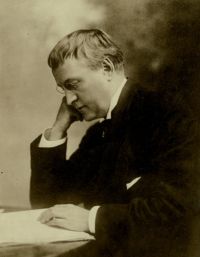
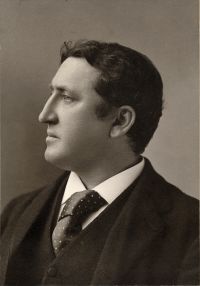
Portrait of James Huneker James Huneker,  Old Fogy: His Musical Opinions and Grotesques

“ Where was the sonority in the metallic, crushing blows you dealt in the Liszt Ballade? There was, I admit, great clearness—a clearness that became a smudge when you used the damper pedal. No, my boys, you are on the wrong track with your orchestral-tone theory. You transform the instrument into something that is neither an orchestra nor a pianoforte. Stick to the old way; [Pg 136] it's the best. Use plenty of finger pressure, elastic pressure, play Bach, throw dumb devices to the dogs, and, if you use the arm pressure at all, confine it to the forearm. ”
Source: Gutenberg

Various,  The Art of Music - Vol. 7 (of 14… (1915)

“ It will be observed that in the matter of so handling the volume of musical sound, prolonging it and slightly coloring it by the use of the pedal or by skillful emphasis of touch, the pianist’s attention is directed ever to the after-sounds, so to speak, of his instrument. He is interested, not in the sharp, clear beginning of the sound, but in what follows it. He finds in the very deficiencies of the instrument possibilities of great musical beauty. ”
Source: Gutenberg

Get perspective with Kwize: daily news enlightened by great literature