“ All physicians know, and their schools teach, that if a man is in good physical condition, his Vital Force will cause him to recover from almost any condition excepting when the vital organs are destroyed. ”
Physical condition
Definition and stakes
The theme of “physical condition” has been addressed by authors such as Roxey Ann Caplin, Thomas Henry Huxley, Francis M. Walters, Albert F. Blaisdell and W. Grant Hague. It is often associated with terms like disease, mind, health, organism and physiology.
Quotes about “physical condition”
Eliza Ann Youmans, Popular Science Monthly (1879)
“ Many years later the study of physiology revealed to me my sin, and carried instruction with it. The organism of the animal was injured and rendered miserable by the dirt, and nervous irritability, akin to insanity, was the result. This example I subsequently applied to the case of the human poor, and saw in the deleterious physical condition in which many of them habitually live the cause of some of their sufferings and crimes. ”
W. Grant Hague, The Eugenic Marriage, Volume 1…
“ It must be kept in mind that the entire apparatus of the body is accommodating a changed condition, and though that condition is a natural one, it requires perfect health for its successful accomplishment. This means a perfect physical and mental condition,—a condition that is dependent upon good digestion, good muscles, healthy nerves, clean bowels, and so on. The slightest deviation from absolute health tends to change the character of the body excretions, the quality of the blood, etc. ”
Cora May Williams, A Review of the Systems of Ethics Founded on the Theory of Evolution
“ With the ideas of unimpaired and unimpeded function as pleasurable, and of the new as demanding readjustment, we arrive at the consideration of health and disease. The free performance of any particular function is the first condition of the health of the organ of which it is the function, the regular performance of all physical functions according to the mutual adjustment [Pg 372] of the organs of the body the condition of the health of the organism as a whole. And thus again we come round to the conception of pleasure as connected with the action that accords with the health of the organism. ”
“ He reflected that there is nothing in the world like health. Live cleanly and the high thinking will look after itself—or at least won't matter. Physical condition, there's nothing like it. ”
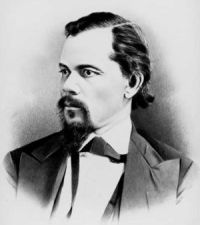 Paschal Beverly Randolph,
Dealings with the Dead
(1861)
“ Will the theory of physical disease account for the instantaneous plunging of a man or woman into the deepest anguish who, scarce ten seconds before, were in the enjoyment of perfect health of spirit, soul and body? ”
Francis M. Walters, Physiology and Hygiene for Secondary Schools
“ By means of the special sensations, a knowledge of the physical surroundings of the body is gained, and through the organic sensations the needs of the body and the state of the various organs are indicated. ”
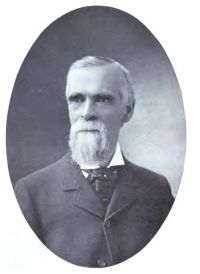 Edward Hooker Dewey,
The No Breakfast Plan and the Fasting-Cure
“ Believing I had made a most important discovery in physiology, one that would revolutionize the dietetic treatment of the sick, if not ultimately abolish it, my visits to the sick became of unsurpassed interest, I watched every possible change as an unfolding of new life, seeing the physical changes only as I would see the swelling buds evolve into the leaves or flowers, reading the soul- and mind-changes in the more radiant lines of expression. ”
Albert F. Blaisdell, A Practical Physiology: A Text-Book for Higher Schools
“ What Physiology should Teach us. The study of physiology is not only interesting, but it is also extremely useful. Every reasonable person should not only wish to acquire the knowledge how best to protect and preserve his body, but should feel a certain profound respect for an organism so wonderful and so perfect as his physical frame. For our bodies are indeed not ourselves, but the frames that contain us,—the ships in which we, the real selves, are borne over the sea of life. ”
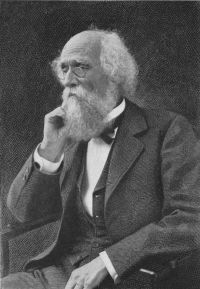 Joseph LeConte,
Evolution: Its nature, its evidence…
“ Take, then, the human body. This complex and beautiful system of correlated and nicely-adjusted parts may be studied in a state of maturity and equilibrium, in which all the organs and functions by action and reaction co-operate to produce perfect stability, health, and physical happiness. This study is physiology. ”
Albert F. Blaisdell, A Practical Physiology: A Text-Book for Higher Schools
“ It is sound physiology, as well as good morals and manners, to cease from the usual routine of six days of mental or physical work, and rest both the mind and the body on the seventh. Those who have succeeded best in what they have undertaken, and who have enjoyed sound health during a long and useful life, have studiously lived up to the mandates of this great physiological law. ”
Roxey Ann Caplin, Health and beauty by Caplin (1856)
“ Now, all who are acquainted with physiology, know perfectly well that the mind cannot be properly unfolded unless the organism through which it is manifested be in a healthy condition, so as to be enabled to register the impressions made upon it by external circumstances. ”
Charles R. Henderson, The American Journal of Sociology (1901)
“ In respect to movements, it is possible to measure speed, lung capacity and action, strength of grip, legs, back, and chest. Physiological defects are discovered and measured, as corrugation of face, inco-ordination of eyes, twitching, pallor, mouth-breathing. All of these throw light on the physical basis of mental life, the power to work, the requirements of training, diet, and exercise. A detailed study pf the senses may be made, as of sight, hearing, touch, muscle sense, smell, taste, pain. ”
William James, Habit (1914)
“ Can we now form a notion of what the inward physical changes may be like, in organs whose habits have thus struck into new paths? In other words, can we say just what mechanical facts the expression 'change of habit' covers when it is applied to a nervous system? ”
 Plato,
The Republic of Plato
(1901)
“ New secrets of physiology may be revealed, deeply affecting human nature in its innermost recesses. The standard of health may be raised and the lives of men prolonged by sanitary and medical knowledge. ”
Ray Vaughn Pierce, The People's Common Sense Medical Adviser in Plain English
“ The symptoms of disease which follow certain conditions as regularly as do the signs of development, and mind itself is no exception to this uniformity of nature. Thoughts result from conditions, and manifest them as evidently as the falling of rain illustrates the effect of gravity. The perceptive and highest emotive faculties of man depend upon this simple, but marvelously endowed nervous substance, which blends the higher spiritual with the lower physical functions. The functions of the body are performed by separate organs, distinguished by peculiar characteristics. ”
Chas. A. Tyrrell, The Royal Road to Health; Or, the Secret of Health Without Drugs
“ The human body is a wonderfully complex piece of mechanism, and if left to itself or rather to natural guidance, its manifold functions are performed with unfailing regularity; and regularity in function means health— irregularity, disease. ”
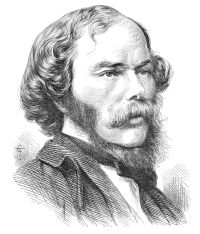 George Henry Lewes,
The Physical Basis of Mind
“ Physiology embraces the properties and functions of the tissues and organs—the primary conditions of Growth and Development out of which rise the higher functions bringing the organism into active relation with the surrounding medium. ”
John Grove, Epidemics Examined and Explained…
“ This force is influenced and modified in its action, when exercised in the regulation of nutrition, growth, and reproduction of tissues, by the passions and emotions of the mind. All the secretions and functions of the body are more or less susceptible of being accelerated, retarded or modified by the psychical relations of mind and matter. ”
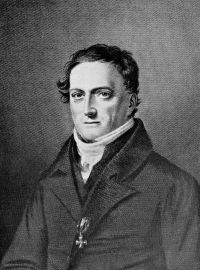 Johann Friedrich Herbart,
Outlines of Educational Doctrine
“ Upon all that has been enumerated, the physical organization of the individual exerts retarding and furthering influences. The effect of the body is seen in a certain physiological resistance to psychical processes, and in strong physical impulses far more complex, no doubt, than ordinary experience shows. ”
 Fanny Kemble,
Journal of a Residence on a Georgian Plantation…
“ There are positive physical defects which produce positive mental ones; the diseases of the muscular and nervous systems descend from father to son. Upon the agency of one corporal power how much that is not corporal depends ”
J. D. Koogle, The Farmer's Own Book: A treatise on the numerous diseases of the horse
“ Health consists in the vigorous and normal or constitutional action of all the physical organs and functions. Life consists in precisely the same action: in proportion to the vigor of this action is the amount of both health and life, but in proportion as the physical functions are enfeebled or diseased, is health enfeebled and life diminished. ”
“ Tissue Changes From Nerves.—Until one recalls how many physical changes may be brought about by mental influences or emotional disturbances, it is not always clear just how mental influence can affect disease favorably or unfavorably. ”
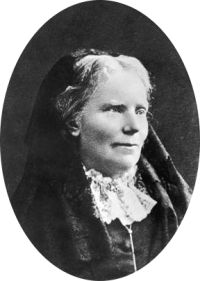 Elizabeth Blackwell,
Essays in medical sociology, Volume 2…
(1902)
“ What I would insist upon is, that we should endeavour to make ourselves thoroughly acquainted with the nature and variations of healthy human physiology before we are perplexed with the changes of pathology. ”
L. W. Rogers, Elementary Theosophy
“ But the degree of restriction is variable and depends much upon the kind of matter of which the brain and body are composed; for the physical atoms vary greatly, and as they come and go in the passing years the body may either become purified and refined or it may grow grosser and coarser. By careful attention to food and drink, and by control of the emotions, the limitations of physical matter may be lessened and a much higher and more efficient state of consciousness in the physical body can be attained. ”
Francis M. Walters, Physiology and Hygiene for Secondary Schools
“ SUMMARY OF PART II For the maintenance of life the needs of the cells must be supplied and the body as a whole must be brought into proper relations with its surroundings. The last-named condition requires that the body be moved from place to place ”
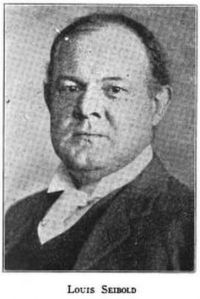 Louis Seibold,
Visit to Woodrow Wilson
(1920)
“ Nine months of isolation while the orderly processes of nature, combined with tender and efficient care, restored nervous and physical tissues strained by too heavy demands on a physique never robust at best, have manifestly affected the flesh, but have not abridged the intense devotion of Mr. ”
Charles Francis Stocking, Carmen Ariza
“ Don’t you know that physiologists themselves admit that the human body is composed of eighty-five per cent water and fifteen per cent ordinary salts? Can such a combination have intelligence and sensation? Do you still believe that life is dependent upon lungs, stomach, or liver? ”
John Clowes, Letters on the Human Body (1826)
“ And first, in regard to bodily health, I wish to observe, that the expression suggests a complex idea, viz. that of a living, active, and healing principle, combined with a dead, passive, and material subject,—inasmuch as every day’s experience testifies, that the body doth not inherently, or of itself, possess health. ”
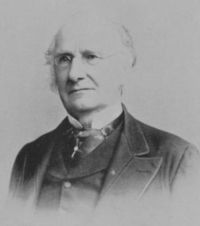 Agrippa Nelson Bell,
Popular Science Monthly
(1904)
“ Health fortified by such conditions as the organism depends upon for its fabrication and maintenance opposes itself to all exciting causes of disease by the relative integrity, strength and vigor of all the organs and functions of the body. ”
Worthington Hooker, Physician and patient (1849)
“ I pass now to the consideration of the fourth class of the causes of the uncertainty of medicine—mental influences.It never should be forgotten in our observation of disease, that we have not to deal with the body alone, but with the body inhabited by a mind, which is connected with every particle of that body by countless nervous filaments, and therefore acting through them upon it, and affecting to a greater or less degree all its diseased conditions. ”
 Isabella Beeton,
Mrs. Beeton's Book of Household Management
(1907)
“ The innumerable external influences which disturb the natural condition of our organs, or the balance of the functions which they perform, as, for example, excess or privation of the air we breathe, the water we drink, the food we eat ”
John Clowes, Letters on the Human Body (1826)
“ But further, the bodily life of man, it is evident, would be imperfect, because useless, was not the above union of the heart and lungs attended with operation, by acting on the body, and thereby supplying it with power to fulfil the various ends and purposes of bodily and natural life. ”
“ Assuming that the highest possible health of the body is represented by 100, and the lowest possible by the figure 1, and assuming, what no physiologist or metaphysician will question, that the head and heart keep step with the body, we shall not hesitate long in determining the state of the mind and soul of the fashionable, languid, nervous lady whom we meet in America at every turn, and who ranges from 10 to 50 on our scale. ”
David Hartley, Observations on Man (6th edition…
“ It may not be amiss to add here, that as all the natural functions tend to the welfare of the body, so there is a remarkable tendency in all the disorders of the body to rectify themselves. These two tendencies, taken together, make what is called nature by physicians ”
Mohandas K. Gandhi, A Guide to Health (1921)
“ THE HUMAN BODY The world is compounded of the five elements,—earth, water, air, fire, and ether. So too is our body. It is a sort of miniature world. Hence the body stands in need of all the elements in due proportion,—pure earth, pure water, pure fire or sunlight, pure air, and open space. When any one of these falls short of its due proportion, illness is caused in the body. ”
Thomas Brown, Lectures on the Philosophy of the Human Mind… (1822)
“ The innumerable changes, corporeal and mental, we reduce, by generalizing, to a few classes; and we speak, in reference to the mind, of its faculties or functions of perception, memory, reason, as we speak, in reference to the body, of its functions of respiration, circulation, nutrition. ”
 Philip Gilbert Hamerton,
French & English
(1889)
“ A good bodily condition includes health and the training which gives a similar promptitude and elasticity. Sufficient material well-being for the maintenance of body and mind in these favourable conditions is essential to true success, all beyond it is superfluous. ”
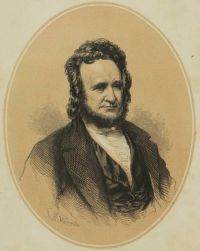 John Bovee Dods,
Twenty-Four Short Sermons On The Doctrine Of Universal Salvation
“ There is a connexion between the mind and the body so subtle that it has hitherto eluded the eagle-eye of Physiology, and will perhaps remain inscrutible forever to human comprehension. But that this connexion exists is fully demonstrated by medical experience, and observation. Many bodily disorders derange the mind, and have in many instances totally destroyed it. ”
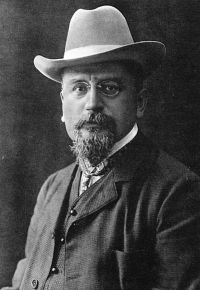 Max Verworn,
Irritability: A Physiological Analysis of the General Effect of Stimuli in Living Substance
(1913)
“ Disease consists of the influence of stimuli upon these physiological processes. The law of the specific energy of living substance is as clearly expressed in functional disease as it is in the physiological effects of stimuli. ”
O. S. Fowler, Tight-lacing or the evils of compressing the organs of animal life…
“ The human body, then, is composed of three great classes of organs, all distinct in their nature and ends, but each indispensable to happiness, and even to life. These classes of organs and their functions are sometimes called Temperaments, and the predominance or deficiency of either, is called the predominance or deficiency of the corresponding Temperament. ”
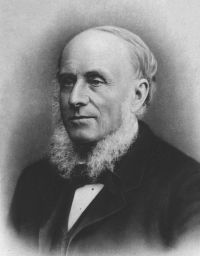 Alexander Bain,
Popular Science Monthly
(1878)
“ For, although, in the point of view of knowledge or intellect, the five senses are the really important approaches to the mind, yet, in the view of feeling or pleasure and pain, the omission of the varied organic susceptibility leaves a wide gap in the handling of the subject. Some of our very strongest pleasures and pains grow out of the region of organic life—the digestion, circulation, respiration, muscular and nervous integrity or derangement. In exerting influence over human beings this department of sensibility is a first resource. ”
 Auguste Forel,
Sexual ethics
(1908)
“ In this work new theories, some revolutionary in the extreme, are advanced as to the nature of disease, the action of drugs and stimulants, the germ theory, the quantity of food necessary to sustain life, of cancer, insanity, pain, fatigue, sleep, death, the causation and maintenance of bodily heat and of human vitality. ”
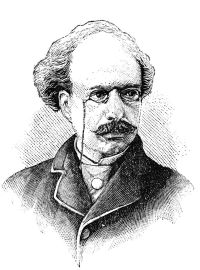 Edmond Dupouy,
Medicine in the Middle Ages
“ In certain nervous conditions, natural or provoked, this Force can possess the human organism and bring about, temporarily, either a change in one’s personality or an alteration in one’s sensations and in the intellectual and moral faculties. ”
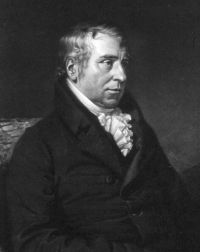 John Haslam,
Observations on Madness and Melancholy
“ The medical philosopher, in his study of human nature, must have observed, that sympathetic correspondence of action between the mind and body, which is uniformly present in health and disease, though varying with circumstances. ”
Related terms
Authors who wrote about “physical condition”
Roxey Ann Caplin Thomas Henry HuxleyFrancis M. WaltersAlbert F. BlaisdellW. Grant Hague
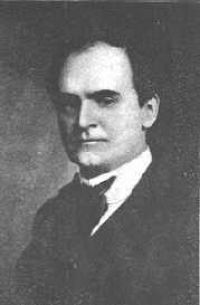 Yogi RamacharakaEliza Ann YoumansPaschal Beverly Randolph
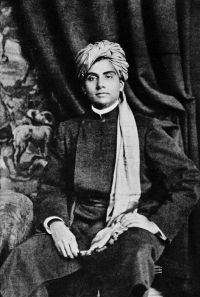 Swami AbhedanandaEdward Hooker DeweyCora May WilliamsJoseph LeConteCharles R. HendersonWilliam JamesRay Vaughn PierceJohann Friedrich HerbartFanny KembleJ. D. Koogle
 Elizabeth Bibesco
 Ralph Waldo Trine
Thomas Henry HuxleyFrancis M. WaltersAlbert F. BlaisdellW. Grant HagueYogi RamacharakaEliza Ann YoumansPaschal Beverly RandolphSwami AbhedanandaEdward Hooker DeweyCora May WilliamsJoseph LeConteCharles R. HendersonWilliam JamesRay Vaughn PierceJohann Friedrich HerbartFanny KembleJ. D. KoogleElizabeth BibescoRalph Waldo Trine