“ Nature - by which we mean physical nature - has in fact two borders, one touching the realm of the intramaterial energies which are liberated by disrupting the structure of atomic nuclei, the other leading over into creative Chaos, the fountain-head of all that appears in nature as intelligent design. ”
Physical nature
Definition and stakes
The theme of “physical nature” has been addressed by authors such as Ralph Waldo Emerson, Duchess of Margaret Cavendish Newcastle, John Campbell Shairp, Joseph LeConte and Lawrence Clement Johnson. It is often associated with terms like matter, science, natural, life and physics.
Quotes about “physical nature”
William James, Essays in Radical Empiricism
“ So far, then, as the physical world means the collection of contents that determine in each other certain [Pg 150] regular changes, the whole collection of our appreciative attributes has to be treated as falling outside of it. If we mean by physical nature whatever lies beyond the surface of our bodies, these attributes are inert throughout the whole extent of physical nature. ”
 Josiah Royce,
The World and the Individual, Second Series
(1901)
“ The fact that we men find Nature here, implies for us, then, that we are so constituted as to find the same sort of natural phenomena. The realm of the physical phenomena, whatever inner Being may be behind it, is, for us, primarily this common realm of human experience. Upon this consideration the very definition of what we call Nature depends. ”
Josiah Royce,
The World and the Individual, Second Series
(1901)
“ More to the point, at this stage of our inquiry, than a formally precise definition of Nature, is a consideration of the motives which lead us to acknowledge as real the facts that we all call physical, — viz. to acknowledge the existence of matter, the laws of natural processes, and the dependence of our own mental life upon these processes. To this aspect of the problem of Nature we accordingly at once proceed. ”
 Ernst Haeckel,
The History of Creation, Vol. 1…
“ Now, if we examine the real nature of those two important properties of life, we find that we can trace them, like all physiological functions, to physical and chemical causes, to the properties and the phenomena of motion of those substances of which the bodies of animals and plants consist. ”
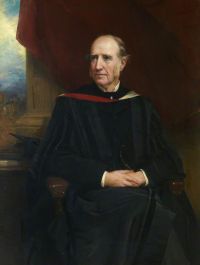 John Campbell Shairp,
On poetic interpretation of nature
(1900)
“ But besides those aspects of Nature which Physical Science explains, over and above those laws which the Sciences discover, there are other sides or aspects of Nature which come to us through other than scientific avenues, and which, when they do reach us, bring home to us new truth, and raise us to noble contemplations. ”
Robert Hunt, The Poetry of Science; or, Studies of the Physical Phenomena of Nature
“ The dependence of all the systems of worlds upon each other, every dust composing each individual globe being “weighed in a balance,” the adjustment of the powers by which every physical condition is ordered, the disposition of matter in the mass of the earth, and the close relation of the kingdoms of nature,—are all revelations of natural truths, exalting the mind to the divine conception of the universe. ”
Robert Hunt, The Poetry of Science; or, Studies of the Physical Phenomena of Nature
“ All the phenomena of life,—of the vis vitæ or vitality, are beyond human search. All the physical forces, or elements, we may examine by the test of experiment: but the principle on which sensation depends, the principle even upon which vegetable life depends, cannot be tested. Life is infinitely superior to every physical force ”
Robert Hunt, The Poetry of Science; or, Studies of the Physical Phenomena of Nature
“ In these studies of the effects which are continually presenting themselves to the observing eye, and of the phenomena of causes, as far as they are revealed by Science in its search of the physical earth, it will be shown that beneath the beautiful vesture of the external world there exists, like its quickening soul, a pervading power, assuming the most varied aspects, giving to the whole its life and loveliness, and linking every portion of this material mass in a common bond with some great universal principle beyond our knowledge. ”
Josiah Royce,
The Religious Aspect of Philosophy
(1885)
“ We believe in the Conservation of the physical forces, in the Law of Evolution as it is at present and for a limited past time found to express the facts of nature, and in the fact of the Dissipation of Energy. All this we believe as the scientifically probable view, and we do so on the authority of certain students of physical science, who, having examined the facts, seem to agree upon so much as capable of popular exposition. ”
Robert Hunt, The Poetry of Science; or, Studies of the Physical Phenomena of Nature
“ Every motion which the accurate search of the experimentalist has traced, every principle or power which the physicist has discovered, every combination which the chemist has detected, every form which the naturalist has recorded, involves reflections of an exalting character, which constitute the elements of the highest poetry. The philosophy of physical science is a grand epic, the record of natural science a great didactic poem. ”
Charles Morris, Popular Science Monthly (1881)
“ And beyond his form no physical progress seems possible, for he fulfills what we conceive to be Nature's design, viz., to husband force by the fullest avoidance of gravity and friction, to decrease weight to the lowest available point consistent with the size and strength necessary to best adapt him to surrounding conditions, and to produce the utmost susceptibility to impression of natural force—to attain a form, in fact, having the greatest excess of available energy, and best adapted to gain experiences of the conditions of nature. ”
Various, Popular Science Monthly (1887)
“ Every department and sub-department of Nature, whether it be the solar system or the earth, or the organic kingdom, or human society, or the human body, is such a system of correlated parts, and is therefore subject to evolution. We can best make this thought clear by examples: 1. Take, then, the human body. This complex and beautiful system of correlated and nicely-adjusted parts may be studied in a state of maturity and equilibrium, in which all the organs and functions by action and reaction co-operate to produce perfect stability, health, and physical happiness. ”
Robert Hunt, The Poetry of Science; or, Studies of the Physical Phenomena of Nature
“ It has, however, acquired new properties, which fit it for the requirements of creation, and by which its great tasks are facilitated. Matter and heat unite in a common bond, and, harmoniously pursuing the necessities of some universal law, the result is the extension of beautiful forms in every kingdom of nature. ”
Robert Hunt, The Poetry of Science; or, Studies of the Physical Phenomena of Nature
“ When we reflect upon the conditions which prevail throughout nature, with a few of which only has science made us acquainted, we cannot fail to be struck with the various phases of being which are presented to our observation, and the harmonious system upon which they all appear to depend. ”
“ But besides the phase of Nature-communion which we call physical science, there is the other, artistic phase. Day by day we find that the mystic influence of Nature on our human personality grows more intense and individual. ”
H. H. Curtis, Popular Science Monthly (1885)
“ How prevalent is the desire for that ostentatious splendor and luxurious ease which too often represent the fruits of many a hard and narrow life of penury and ill-requited toil! We live in an age of observation, of investigation, of a study of Nature's laws and methods. Nor is the advance of the physical sciences more marked than that of the useful arts. ”
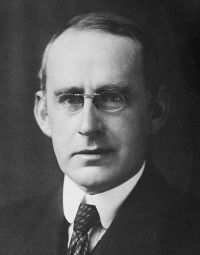 Sir Arthur Stanley Eddington,
The nature of the physical world
(1928)
“ Recognising that the physical world is entirely abstract and without “actuality” apart from its linkage to consciousness, we restore consciousness to the fundamental position instead of representing it as an inessential complication occasionally found in the midst of inorganic nature at a late stage of evolutionary history. ”
Alexander von Humboldt, Cosmos: A Sketch of the Physical Description of the Universe…
“ The general picture of nature which I have endeavored to delineate would be incomplete if I did not venture to trace a few of the most marked features of the human race, considered with reference to physical gradations — to the geographical distribution of contemporaneous types — to the influence exercised upon man by the forces of nature, and the reciprocal, although weaker action which he in his turn exercises on these natural forces. ”
Robert Hunt, The Poetry of Science; or, Studies of the Physical Phenomena of Nature
“ The organic combinations, and the physical powers by which these unions of matter are effected and retained, have a direct action over that ethereality which is life, and the powers of life again control these more material forces. ”
A. Alpheus, Complete Hypnotism, Mesmerism, Mind-Reading and Spiritualism
“ Now, in life, as in physical science, any one who can get, or has by nature, the key-note of another nature, has a tremendous power over that other nature. The following story illustrates what this power is in the physical world. ”
Elihu Palmer, Principles of nature; or, a development of the morals causes of happiness and misery among the… (1819)
“ These rays, however, are so active, as to travel 95,000,000 of miles in the space of seven minutes and a half; a celerity of motion which substantiates, beyond all contradiction, their essential power and activity. Every fact, in the physical world, forces conviction in the human mind, and proves the energetic nature of the material system. An investigation of the properties of matter, a full development of its modes of operation, would lead to the most salutary consequences, by instructing man in regard to his true predicament in nature, and reconciling him to his fate. ”
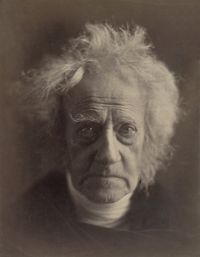 John F. W. Herschel,
Preliminary Discourse on the Study of Natural Philosophy
“ They form, it is true, a most important and deeply interesting province of philosophical enquiry; but the view that we have taken of physical science has rather been directed to the study of inanimate nature, than to that of the mysterious phenomena of organization and life, which constitute the object of physiology. ”
 Thomas Henry Huxley,
Evidence as to Man's Place in Nature
(1863)
“ A skin of some dimension was cast in the 16th century, and another towards the end of the 18th, while, within the last fifty years, the extraordinary growth of every department of physical science has spread among us mental food of so nutritious and stimulating a character that a new ecdysis seems imminent. ”
 Boris Sidis,
The Foundations of Normal and Abnormal Psychology…
(1914
| notes)
“ We must answer in the negative. The objects of the natural sciences of the physical world arc of a material and spatial nature. A physical body has weight, occupies a certain portion of space, so has the molecule, the atom. ”
“ In this book the reader will find expounded a method of investigating nature by means of which scientific understanding can be carried across the boundaries of the physical-material to the supersensible sources of all natural events, and thereby into the realm where is rooted the true being of man. ”
Alexander von Humboldt, Cosmos: A Sketch of the Physical Description of the Universe…
“ Insight into the connection of phenomena as the aim of all natural investigation. Nature presents itself to meditative contemplation as a unity in diversity. Differences in the grades of enjoyment yielded by nature. Effect of contact with free nature; enjoyment derived from nature independently of a knowledge of the action of natural forces, or of the physiognomy and configuration of the surface, or of the character of vegetation. ”
Sir Arthur Stanley Eddington,
The nature of the physical world
(1928)
“ Experience—that is to say, the self cum environment—comprises more than can be embraced in the physical world, restricted as it is to a complex of metrical symbols. The physical world is, we have seen, the answer to one definite and urgent problem arising in a survey of experience ”
 Alfred North Whitehead,
Science and the modern world
(1925)
“ In short, he elaborates a theory of primary 77and secondary qualities in accordance with the state of physical science at the close of the seventeenth century. The primary qualities are the essential qualities of substances whose spatio-temporal relationships constitute nature. The orderliness of these relationships constitutesconstitutes nature. The orderliness of these relationships constitutes the order of nature. The occurrences of nature are in some way apprehended by minds, which are associated with living bodies. ”
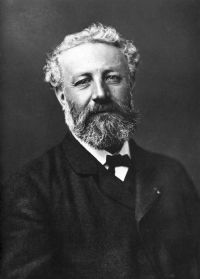 Jules Verne,
A Journey to the Centre of the Earth
(1871)
“ This lucid explanation of the phenomena we had witnessed appeared to me quite satisfactory. However great and mighty the marvels of nature may seem to us, they are always to be explained by physical reasons. Everything is subordinate to some great law of nature. ”
Thomas Henry Huxley,
Evidence as to Man's Place in Nature
(1863)
“ Thus, identical in the physical processes by which he originates—identical in the early stages of his formation—identical in the mode of his nutrition before and after birth, with the animals which lie immediately below him in the scale—Man, if his adult and perfect structure be compared with theirs, exhibits, as might be expected, a marvellous likeness of organization. He resembles them as they resemble one another—he differs from them as they differ from one another.—And, though these differences and resemblances cannot be weighed and measured, their value may be readily estimated; ”
P. Coffey, Ontology, or the Theory of Being
“ Finally, observing that effects like to those produced by ourselves, whether in ourselves or in the material world around us, are also consequent on certain other changes in external nature, whether organic or inorganic, we infer by analogy that these corporeal things have also powers, forces, energies, whereby they produce these effects. While our senses testify only to time and space connexions between physical happenings in external nature, our intellect apprehends action and interaction, i.e. ”
 Richard Feynman,
The Character of Physical Law
(1965)
“ This is the key of modern science and it was the beginning of the true understanding of Nature – this idea to look at the thing, to record the details, and to hope that in the information thus obtained might lie a clue to one or another theoretical interpretation. ”
 Friedrich Schiller,
Aesthetical and philosophical essays
(1899)
“ The second class of powers embraces those which we can account for by the universally-known laws of physics. Among these I reckon the mechanism of motion, and the chemistry of the human body, the source of vegetable life. Vegetation, then, and animal mechanism, thoroughly mingled, form the proper physical life of the human body. ”
 John William Draper,
History of the Conflict Between Religion and Science
“ The scientific study of Nature tends not only to correct and ennoble the intellectual conceptions of man; it serves also to ameliorate his physical condition. ”
Richard Feynman,
The Character of Physical Law
(1965)
“ As usual, nature’s imagination far surpasses our own, as we have seen from the other theories which are subtle and deep. ”
 Edmund Montgomery,
Popular Science Monthly
(1878)
“ We clearly conceive the manner how, and the conditions by which, motility, this most prominent vital manifestation, constitutes an inherent property of the living substance. Do we as yet comprehend in the same way the intimate modes of activity which constitute the properties appertaining to inorganic substances? Is any kind of those peculiar motions which form the scientific essence of the various forces of inorganic Nature so strictly and deeply intelligible as has now become that specific motion which forms the scientific essence of the force of life? ”
 William Isaac Thomas,
The American Journal of Sociology…
(1896)
“ Empirically all changes manifest themselves as the result of the universal reciprocal action between the simplest part and the sum of all the parts of nature,—an action which expresses itself physically as gravity, heat, light, chemical affinity ”
 Ralph Waldo Emerson,
The Method of Nature
(1841)
“ But we no longer hold it by the hand; we have lost our miraculous power; our arm is no more as strong as the frost; nor our will equivalent to gravity and the elective attractions. Yet we can use nature as a convenient standard, and the meter of our rise and fall. ”
Oliver Wendell Holmes, Medical Essays, 1842-1882
“ Just so far as we can recognize the ordinary modes of operation of the common forces of nature,—gravity, cohesion, elasticity, transudation, chemical action, and the rest,—we see the so-called vital acts in the light of a larger range of known facts and familiar analogies. ”
Various, Popular Science Monthly (1887)
“ Light, air, what we eat and drink, or what in any way gets into the system, temperature, exercise of mind and body—in short, the conditions under which we live—all exert their influence in favoring or otherwise a natural passage through life. Within us, operations forming a part of the operations of Nature proceed, but these operations are influenced by—owe their activity, indeed, to—the surrounding conditions, and thus it is that upon these surrounding conditions depends whether a natural course is run or not. ”
 William Arnold Anthony,
Elementary Text-book of Physics
(1897)
“ Divisions of Natural Science.—Everything which can affect our senses we call matter. Any limited portion of matter, however great or small, is called a body. All bodies, together with their unceasing changes, constitute Nature. ”
Related terms
Authors who wrote about “physical nature”
Ralph Waldo EmersonDuchess of Margaret Cavendish NewcastleJohn Campbell Shairp Joseph LeConteLawrence Clement Johnson
 Stopford Augustus Brooke
 Johann Gottlieb FichteVarious
 Alfred BinetRobert HuntThomas Henry HuxleyErnst Lehrs
 Francis BaconJosiah RoyceBaron Edward Bulwer Lytton LyttonAlexander von Humboldt
 Isaac Newton
 Matthew Arnold
 A. E. TaylorWilliam James
