Physical quantity

Definition and stakes

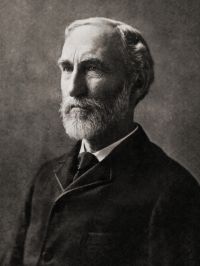
Portrait of Joseph Larmor Joseph Larmor,  1911 Encyclopædia Britannica (1911)

“ But it is only in recent times that scientific investigation has definitely established that there is a quantitative relation of simple equivalence between them, whereby each is expressible in terms of heat or mechanical power; that there is a certain measurable quantity associated with each type of physical activity which is always numerically identical with a corresponding quantity belonging to the new type into which it is transformed, so that the energy, as it is called, is conserved in unaltered amount. ”
Source: Wikisource

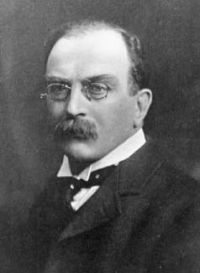
Portrait of William Stanley Jevons William Stanley Jevons,  The principles of science

“ The number of ratios n are expressible in n equations, which will contain at least n + 1 quantities, so that if we employ them to make known n magnitudes, we must have one magnitude known. Hence, whether we are measuring time, space, density, mass, weight, energy, or any other physical quantity, we must refer to some concrete standard, some actual object, which if once lost and irrecoverable, all our measures lose their absolute meaning. ”
Source: Gutenberg

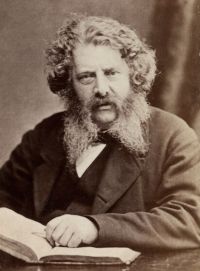
Portrait of Herbert Spencer Herbert Spencer,  Essays: Scientific, Political, & Speculative…

“ And similarly with mechanical forces, the unhesitating assumption is that if one unit of force acting in a given direction produces a certain result, two units will produce twice the result. Every process of measurement in a physical experiment takes this for granted; as we see in one of the simplest of them—the process of weighing. If a measured quantity of metal, gravitating towards the Earth, counterbalances a quantity of some other substance, the truth postulated in every act {301} of weighing is, that any multiple of such weight will counterbalance an equi-multiple of such substance. ”
Source: Gutenberg

Get perspective with Kwize: daily news enlightened by great literature