Plant anatomy

Definition and stakes

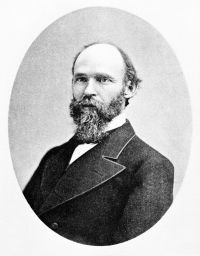
Portrait of John Wesley Powell John Wesley Powell,  Truth and Error — Chapter X. (1898)

“ We do not aspire to a treatise on botany, but stop to consider only certain facts which are essential to this argument; a consideration of the higher plants will serve our purpose. Certain phytons are modified to become roots, which are the organs devoted to the absorption from the earth of the materials which are to be woven into the plant; other phytons become the stem for support; others the branches for expansion; others the leaves for respiration; others pistils and stamens for reproduction, while others become floral envelopes for their protection. ”

Source: Wikisource

Various,  Popular Science Monthly (1895)

“ But the whole plant, often many feet in length, consists only of single gigantic cells. A tough skin incloses its juices, which flow in a continuous stream through the stem, leaves, and roots of the curious growth, here taking up through the skin and assimilating mineral substances, there producing and transforming organic matter, and at the same time advancing the growth and increase of the whole. Not less peculiar than the inner structure and appearance of the stem is the form of the leaves of water plants. Their service to the organism is the same with that of the leaves of other plants. ”
Source: Wikisource

Asa Gray,  The Elements of Botany, For Beginners and For Schools

“ These abound in the cells of all common leaves and the green rind of plants, wherever exposed to the light. The green color is seen through the transparent skin of the leaf and the walls of the containing cells. Chlorophyll is essential to ordinary assimilation in plants: by its means, under the influence of sunlight, the plant converts crude sap into vegetable matter.
418. Far the largest part of all vegetable matter produced is that which goes to build up the plant's fabric or cellular structure, either directly or indirectly.
”
Source: Gutenberg

Get perspective with Kwize: daily news enlightened by great literature