Plantigrade

Definition and stakes

John Bernhard Smith,  Explanation of Terms Used in Entomology

“ Planta -ae: the basal joint of the posterior tarsus in pollen gathering Hymenoptera: the soles of the posterior tarsal joints: the anal clasping legs of caterpillars.
Plantigrade: species that walk on the entire foot, not on the claws alone.
Plantula: a lobe of the divided tarsal pulvillus; one of the soles or climbing cushions of the foot: see arolium; pulviglus.
Plaques: the small leathery hemelytra in some Naucorids.
Plasma: the liquid portion of animal fluids and cells.
Plasticity: the capacity for being formed, moulded or developed.
”
Source: Gutenberg

Frank E. Beddard,  Cambridge Natural History Mammalia (1902)

“ The walk, although plantigrade in the older types, becomes more and more digitigrade, except in such survivals from antiquity as Hyrax. There is, too, as we pass from the ancient types to the modern, a gradual perfection of the limbs as running and not climbing or grasping organs; the number of toes becomes reduced, and culminates twice (in the horse and in the Litopterna) in one toe on each foot; at the same time the ulna becomes rudimentary and fuses with the radius, and the fibula in the hind-limb undergoes a like reduction. ”
Source: Wikisource

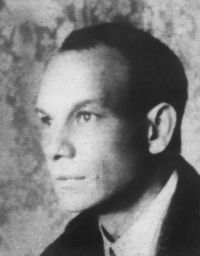
Portrait of H. M. Tomlinson H. M. Tomlinson,  The Sea and the Jungle

“ The plantain jets upwards with a copious stem, and the fountain returns in broad rippled pennants, falling outwardly, refined to points, when the impulse is lost. A world could not be old on which such a plant grows. It is sure evidence of earth’s vitality. To look at it you would not think that growing is a long process, a matter of months and natural difficulties. The plantain is an instant and joyous answer to the sun. The midribs of the leaves, powerful but resilient, held aloft in generous arches the broad planes of translucent green substance. ”
Source: Gutenberg

Get perspective with Kwize: daily news enlightened by great literature