“ Words seemed to flow out of Richmond as easily as they flow out of a master! He was talking about pocket-money."What is it but round bits of silver and copper?" he said. "Yet, my dear friends, there is a great power in it, and we should not spend it all on self. There are thousands of people who never have pocket-money, but they deserve it quite as much as us; perhaps more. Suppose you have threepence a week, which I have myself. Will it hurt you to yield up one halfpenny to the charity box? ”
Pocket money
Definition and stakes
Pocket money, as depicted in Stuart Rosenberg’s 1972 film Pocket Money, explores themes of financial hardship and ethical decision-making through the experiences of two cowboys facing debt and questionable bargains. Beyond the film, writers such as John Ruskin and Robert W. Service analyzed the role of money in society and the worth of labor, while Carl Schurz criticized the unfairness of economic systems.
Quotes from Mabel Potter Daggett and Booth Tarkington emphasize its personal importance, portraying it as both a practical need and a moral challenge. The concept connects individual survival with wider economic values, underscoring its lasting significance in both literature and film.
Quotes about “pocket money”
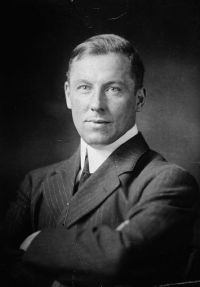 Robert W. Service,
The Trail of '98: A Northland Romance
“ So, once more, with redoubled energy, we resumed our tense, unremitting round of toil. Now, however, it was vastly different. Every bucket of dirt meant money in our pockets, every stroke of the pick a dollar. Not that it was all like the first rich pocket we had struck. It proved a most erratic and puzzling paystreak—one day rich beyond our dreams, another too poor to pay for the panning. We swung on a pendulum of hope and despair. ”
Frank Andrew Munsey, The Boy Broker; Or, Among the Kings of Wall Street
“ You will learn, though, and you will be surprised to see how easy it is to pick up a pocket book full of greenbacks and bonds—perhaps a hundred thousand dollars in any one of ’em—and then you will take it to the man what lost it, and he will give you a lots of money, maby a thousand dollars or so—’twouldn’t be much of a man as would do less than a thousand. ”
 John Ruskin,
The Queen of the Air: Being a Study of the Greek Myths of Cloud and Storm
“ And as economists have lost sight of this great function of money in relation to individual rights, so they have equally lost sight of its function as a representative of good things. That, for every good thing produced, so much money is put into everybody's pocket, is the one simple and primal truth for the public to know, and for economists to teach. ”
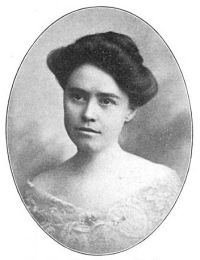 Mabel Potter Daggett,
Women Wanted
(1918)
“ Lewis: Every Saturday night there is going to be money in your own pocket. The convenience of this is that never again will you under any circumstances have to go through any one's else pockets for it. ”
 Carl Schurz,
Honest Money and Labor
“ When we hear our greenback or fiat-money apostle talk about the great things their schemes are to accomplish, we might almost receive the impression that a new issue of paper currency meant this: That some government officials would go round the country with big bags of money, putting some of it into everybody's pocket. Intelligent men need scarcely be told that this is not the way it would work. ”
 Booth Tarkington,
The Fascinating Stranger and Other Stories…
(1923)
“ Why for years and years and years it’ll go on from one pocket to another, in a millionaire’s house one day, in some burglar’s flat the next, maybe, and in one person’s hand money’ll do good, likely, and in another’s it’ll do harm. ”
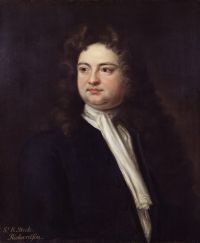 Sir Richard Steele,
Richard Steele
“ Samuel Pounce.—But let's see my cash— 'tis very true, the old saying, a man meets with more friendship from strangers than his own relations—Let's see my cash: 1, 2, 3, 4, there on that side; 1, 2, 3, 4, on that side; 'tis a foolish thing to put all one's money in one pocket; 'tis like a man's whole estate in one county—These five in my fob—I'll keep these in my hand, lest I should have a present occasion.—But this town's full of pickpockets ”
Chester Arthur Phillips, Readings in Money and Banking
“ If all prices were altered in like proportion [Pg 24] as soon as money varied in value, no one would lose or gain, except as regards the coin which he happened to have in his pocket, safe, or bank balance. But, practically speaking, as we have seen, people do employ money as a standard of value for long contracts, and they often maintain payments at the same variable rate, by custom or law, even when the real value of the payment is much altered. Hence every change in the value of money does some injury to society. ”
Chester Arthur Phillips, Readings in Money and Banking
“ The portability of money is an important quality not merely because it enables the owner to carry small sums in the pocket without trouble, but because large sums can be transferred from place to place, or from continent to continent, at little cost. ”
Alfred Charles Michaud, Our coming world (1951)
“ Money travels rapidly from hand to hand, from one pocketbook to another, from bank to bank, to borrower or drawer, in constant circulation."Has any one of your economists calculated how many times an active one-dollar multiplies itself in a year from the time it is first issued from the Treasury? How much does it earn in interest, compound interest, commissions, bonuses, dividends, and profit gain from constantly being shifted from person to person, bank to bank, and loan to loan? ”

“ But whether the lazy spendthrift must not be doubly poor?424 Whether money circulating be not the life of industry; and whether the want thereof doth not render a State gouty and inactive?425 But whether, if we had a national bank, and our present cash (small as it is) were put into the most convenient shape, men should hear any public complaints for want of money?426 Whether all circulation be not alike a circulation of credit, whatsoever medium (metal or paper) is employed, and whether gold be any more than credit for so much power? ”
 Alfred Henry Lewis,
The President: A Novel
“ Mankind has been taught that in the essence of things fiscal your question of currency is as intricate and involved as was the labyrinth of Minos. And then, to add ill-doing to ill-teaching, our own crazy-patch system of finance has been in every one of its patches cut and basted and stitched with an interest of politics or of private gain to guide the shears and needle of what money-tailor was at work. ”
 Karl Marx,
Das Kapital
(1906)
“ But we may affirm this much, that just as true paper money takes its rise in the function of money as the circulating medium, so money based upon credit takes root spontaneously in the function of money as the means of payment. ”
“ When the first effects of the great shock were over, when the lies and deceptions in the shape of rotten bank issues and fancy values had disappeared, when the self-acting contraction of currency and credit had done its work, business enterprise began once more to feel firm ground under its feet. Business men had less of that which called itself money, but they were sure that every dollar they did have not only called itself a dollar, but was a dollar and would remain a dollar. ”
 Jerome K. Jerome,
The Idle Thoughts of an Idle Fellow
“ It is a little difficult to know what to do with your hands, even in your pockets, when there is nothing else there. Years ago, when my whole capital would occasionally come down to "what in town the people call a bob," I would recklessly spend a penny of it, merely for the sake of having the change, all in coppers, to jingle. You don't feel nearly so hard up with eleven pence in your pocket as you do with a shilling. Had I been "La-di-da," that impecunious youth about whom we superior folk are so sarcastic, I would have changed my penny for two ha'pennies. ”
Victoria C. Woodhull, A Speech on the Principles of Finance
“ At certain times there are greater and less demands for money, which, under our present practices, make a dollar, to-day, worth four per cent. per annum interest, and to-morrow increase it to ten per cent. It must be remembered that we are now speaking of an irredeemable currency, the representative of the wealth of the nation: that the government representing the nation has uttered it, in behalf of the people, upon the soundest and, in reality, the only sure basis of value any money can have—the productive power and capacity of the nation. ”
Chester Arthur Phillips, Readings in Money and Banking
“ The Sources of Currency Supply.—It is, then, clear that the larger part of the circulating medium of society is not money; that not all of the money that there is is bullion money; and that not even all of the bullion money need be ultimate money—redemption money of the highest rank. The sources of currency in society are various—some of it bullion, with a cost of production limit upon its supply, some of it government paper, substantially free of cost, some of it banking credit with certain peculiar and appropriate costs attending its issue. ”
A Compilation of the Messages and Papers of the Presidents…
“ We may each one of us counsel our active and enterprising countrymen to be constantly on their guard, to liquidate debts contracted in a paper currency, and by conducting business as nearly as possible on a system of cash payments or short credits to hold themselves prepared to return to the standard of gold and silver. To aid our fellow-citizens in the prudent management of their monetary affairs, the duty devolves on us to diminish by law the amount of paper money now in circulation. ”
 John P. Jones,
Money: Speech of Hon. John P. Jones…
“ Under the operation of the present system, by which prices are constantly falling and money is constantly increasing in value, the surplus earnings of the people are flowing in a steady stream into the vaults of money-lending institutions, and into the pockets of creditors. ”
Geo. T. Fairchild, Rural Wealth and Welfare: Economic Principles Illustrated and Applied in Farm Life
“ Speculative debtors, on the other hand, always thrive on depreciating currency, paying their debts in what costs less exertion. Under appreciating currency, the creditors gain, be they bankers or workmen. Banking.—The peculiar convenience for saving found by experience in the use of each of these methods of settlement in exchange leads to a natural commingling of all. Coins serve some purposes best, and accounts have a limited range; notes of hand are often desirable, and paper money, if safe, is universally convenient. ”
Carl Schurz,
Speeches, correspondence and political papers of Carl Schurz
(1913)
“ And now, sir, when I have demonstrated by fact and reason, so that every child might understand them, propositions like these, that capital and currency are two very different things; that the wealth of a country is not augmented by printing more paper money; that when popular confidence in the issuer of irredeemable paper money is unimpaired, the constant depreciation of that paper money demonstrates its excess in quantity over and above the real requirements of legitimate business ”
The Wit and Humor of America, Volume X…
“ Now, to do this when you have money in your pockets is mean. But I have seen you do a meaner thing. I refer to your conduct last Sunday, when the contribution box arrived at our pew—and the angry blood rises to my cheek when I remember with what gravity and sweet serenity of countenance you put in fifty cents and took out two dollars and a half.... ”
 Daniel Defoe,
The Complete English Tradesman…
“ If he knows what he buys, and how to put it off, he buys a thousand pounds' worth of goods at once, sells them for less time than he buys at, and pays them with their own money. I might swell this discourse to a volume by itself, to set out the particular profit that such a man may make of his credit, and how he can raise what sums he will, by buying goods, and by ordering the people whom he is to pay in the country, to draw bills on him. ”
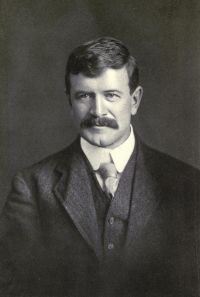 Stephen Leacock,
The Unsolved Riddle of Social Justice
“ Wages and prices, rising together, call perpetually for more money, or at least more tokens and symbols, more paper credit in the form of checks and deposits, with a value that is no longer based on the rock-bottom of redemption into hard coin, but that floats upon the mere atmosphere of expectation. ”
Carl Schurz,
Honest Money and Labor
“ There will be a lively chorus of groaning and railing among them, for the miraculous paper money, which was to relieve them of their burdens, will, instead, relieve them of their property, and not in all cases at the same time of their debts. The paper money apostles promise to make business lively. Aye, my friends, if you are in debt, they will indeed make it lively for you. ”
“ What a glorious time for enterprising contractors, what a seductive season for Congressmen to help a friend for a little share in the profits, what a carnival of fraud, what a flying about of stray millions! For, mind you, money will be no object; on the contrary, it must be spent, and the more spent the better, for the greenbacks must be got out, in obedience to the mandate, "to make and keep the volume of the currency equal to the wants of trade." ”
Benjamin M. Anderson, The Value of Money
“ Seasonal calls on an inelastic money supply for actual cash to move crops and pay agricultural wages may make a real difference in the value of money; scarcity of money of the right denominations for retail trade may give an agio to such money, [550] but the money and credit used by specula [Pg 523] tors, bill brokers, dealers in foreign exchange, investment bankers, etc., increases, rather than decreases, the funds available for ordinary industry and commerce. ”
W. H. Gantz, Postal Riders and Raiders
“ Ring up the revenues and make the dear people pay it in added purchase price!The people have a few dollars stored away in savings accounts or stockings, and if they want a thing they will broach their hoardings. They have the money. We want it.One of the surest and easiest ways to get it is to make them pay more for what they consider essentials to their subsistence, to the comforts and the pleasures of their lives. They have been buying some splendid monthly periodicals at twelve and a half cents to fifteen cents. If they want them, why not make ’em pay twenty or twenty-five cents? ”
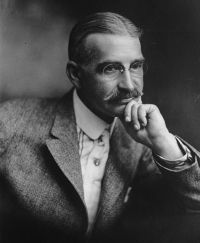 L. Frank Baum,
The Marvelous Land of Oz — Chapter 19…
(1904)
“ In the bottom of the nest are thousands of dollar bills—and two-dollar bills—and five-dollar bills—and tens, and twenties, and fifties. There are enough of them to stuff a dozen Scarecrows. Why not use the money? ”
 Lysander Spooner,
A Letter to Grover Cleveland, on His False Inaugural Address…
(1886)
“ To make their industry most effective, and to enable them, individually, to put into their own pockets as large a portion as possible of their own earnings, they need, on an average, one thousand dollars each of money capital. ”
 Brigham Young,
Journal of Discourses — Volume 11…
“ Who pays this money? Who is it that buys every dollar's worth of goods that is brought here to pay to these hands who work on the public works? Is there a man at work there but who gets a portion of money and store-pay? And with the exception of what the merchants here pay in on tithing, is there a dollar's worth of store-pay to be got without paying the money for it? Is there a light of glass, a pound of nails, a pound of rope, or anything else brought here from the east that the money is not paid for? ”
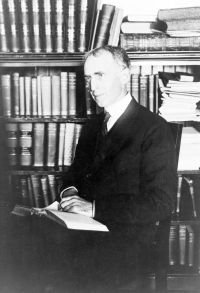 Charles A. Beard,
An Economic Interpretation of the Constitution of the United States…
(1913)
“ Speaking on the same theme, paper money, Governor Johnston said: "Every man of property - every man of considerable transactions, whether a merchant, planter, mechanic, or of any other condition - must have felt the baneful influence of that currency." ”
John P. Jones,
Money: Speech of Hon. John P. Jones…
“ Without forewarning, and with out knowledge on the part of the people, large amounts of the money volume, on which so infinite a number of equities rest, and on the basis of which all debts and time contracts have been entered into, are, as it were, surreptitiously abstracted and appropriated to other and always inferior uses, for by far the highest and noblest use of any material upon which the money function has been conferred, is the money use. ”
 David Ames Wells,
Robinson Crusoe's Money;
“ Their defects are their weight, their intrinsic value as commodities.”—Social Science and National Economy, by R. E. Thompson, Philadelphia, 1875.“The moment it is perceived that money is nothing but a token, it becomes evident that any token currently accepted in exchange of useful services and products of labor will perform the proper functions of money without regard to the material of which it is made; and that the less costly the material out of which money is made, the better for the community that uses it.”—Money, Currency, and Banking, by Charles Moran, New York, 1875, p. ”
Victoria C. Woodhull, A Speech on the Principles of Finance
“ The conclusion was inevitable, that there have been no acknowledged or even known, fundamental principles of finance operating in any of the many systems of the many nations, and that the so-called money of the world is not now, nor ever was, money, in the scientific sense of that term. ”
Alexander Hamilton, The works of Alexander Hamilton… (1850)
“ The interest is to be paid in specie, as a further temptation, for which a small sum will suffice. The denomination of the money is altered; because it will produce a useful illusion. Mankind are much led by sounds and appearances; and the currency having changed its name, will seem to have changed its nature.The Bank will advance bills to the amount of two millions of pounds sterling to Congress; and, in addition to its stock, will [Pg 129] now have a debt due it of this sum, which is to be considered as so much gained. ”