“ Possession may be direct physical custody like holding an item in one's hand, or it may be constructive, as in the case of a person who hides an item in a locker or car to which that person may return to retrieve it. ”
Possessive case
Definition and stakes
The possessive case, a grammatical structure indicating ownership or attribution, plays a crucial role in both linguistic and legal contexts. Authors such as John Hendricks Bechtel elucidate its syntactic intricacies, highlighting distinctions such as "John and Mary’s sled" versus "John’s and Mary’s sleds," while Alfred Ayres examines its use with impersonal subjects, pointing out stylistic difficulties.
Legal documents, including Horace Gray’s Union Pacific Railway Company v. Botsford and John Marshall’s Smith v. Bell, illustrate its significance in matters of property rights and inheritance, showing how possessive forms underpin legal reasoning. These differing perspectives highlight the case’s dual function: as a grammatical indicator and as a means of establishing relational and juridical obligations.
Quotes about “possessive case”
“ The difficulty of adhering to the possessive form occurs when the subject is not a person: 'It does not seem safe to rely on the rule of demand creating supply': in strictness, 'Demand's creating supply.' 'A petition was presented against the license being granted.' But for the awkwardness of extending the possessive to impersonal subjects, it would be right to say, 'against the license's being granted.' 'He had conducted the ball without any complaint being urged against him.' The possessive would be suitable, but undesirable and unnecessary."—Professor Alexander Bain. ”
Horace Gray, Union Pacific Railway Company v…
“ The only purpose, we believe, for which the like writ was allowed by the common law, in a matter of civil right, was to protect the rightful succession to the property of a deceased person against fraudulent claims of bastards, when a widow was suspected to feign herself with child in order to produce a supposititious heir to the estate, in which case the heir or devisee might have this writ to examine whether she was with child or not, and, if she was, to keep her under proper restraint till delivered. ”
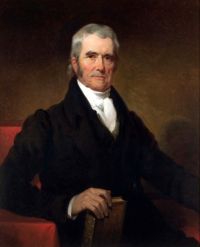 John Marshall,
Smith v. Bell — Opinion of the Court
John Marshall,
Smith v. Bell — Opinion of the Court
“ No principle in our nature could prompt him to give his property to the future husband of his wife, to the exclusion of his only child. Every consideration, then, suggested by the relation of the parties and the circumstances of the case, comes in aid of that construction which would give effect to the last as well as first clause in the will; which would support the bequest of the remainder to the son, as well as the bequest to the wife. It is not possible to doubt that this was the intention of the testator. ”
John Hendricks Bechtel, Slips of Speech : a Helpful Book for Everyone Who Aspires to Correct the Everyday Errors of Speaking
“ Double Possessives “John and Mary’s sled,” means one sled belonging jointly to John and Mary. “John’s and Mary’s sleds” means that one sled belongs to John, the other to Mary. “Men, women, and children’s shoes for sale here.” When several possessives connected by and refer to the same noun, the sign of the possessive is applied to the last one only. When a disjunctive word or words are used, the sign must be annexed to each word; as, “These are Charles’s or James’s books.” ”
Hyacinthe Ringrose, Marriage and Divorce Laws of the World
“ The husband is the legal representative of the wife. She cannot, without his permission, appear in a suit by herself or through an attorney. However, she does not need such permission to defend herself in a criminal case or to bring a suit against her husband, or to defend herself in a suit brought by her husband against her.A wife cannot, without her husband’s permission, acquire property in trade or by her labour. Neither can she, without such consent, alienate her property. ”
 Anna Garlin Spencer,
The family and its members
Anna Garlin Spencer,
The family and its members
“ Philanthropic Tendencies Respect Legal Marriage.—These tendencies, however, are not in the direction, intentionally at least, of making legal condition and status in respect to name, inheritance of family property from a father whose parental relationship is not legally established, and public recognition of parenthood, identical in the case of children born within and without the legal family circle. ”
Mitchell v. King's Lessee — Opinion of the Court
“ This has a condition precedent, without the performance of which no right could vest in the devisee.If the will is construed literally, the words employed by the testator are as strong as they can be. He gives the estate on condition that the devisee shall marry a person not in being, but expected to come into existence, the offspring of his wife's brother and his own niece. He anticipates that such a marriage may not take place. ”
Anna Garlin Spencer,
The family and its members
“ The obligation of the father where his paternity has been judicially established in his lifetime or has been acknowledged by him in writing or by the part performance of his obligations is enforceable against his estate in such an amount as the court may determine, having regard to the age of the child, the ability of the mother to support it, the amount of property left by the father, the number, age, and financial condition of the lawful issue, if any, and the rights of the widow, if any. ”
Parliament of the United Kingdom, The Offences against the Person Act 1828
“ Provided always, that no Person who shall have claimed to be the Father of an illegitimate Child, or to have any Right to the Possession of such Child, shall be liable to be prosecuted by virtue hereof, on account of his getting Possession of such Child, or taking such Child out of the Possession of the Mother, or any other Person having the lawful Charge thereof. ”
 Melville Fuller,
McDonnell v. Jordan — Opinion of the Court
Melville Fuller,
McDonnell v. Jordan — Opinion of the Court
“ By § 4284 it was provided that, 'whenever an application is made to prove a will in this state, at least ten days' notice must be given to the widow and next of kin, or to either of them, residing and being within the state, before such application is heard.' In this case Mrs. ”
Hyacinthe Ringrose, Marriage and Divorce Laws of the World
“ A decree of divorce does not render illegitimate children born of the marriage, except in the case of a decree obtained on the ground that one of the parties had a previous spouse living at the time of the marriage. ”
Horace Gray, Mutual Life Insurance Company v…
“ So letters from a husband to a third person, showing his state of feeling, affection, and sympathy for his wife, have been held by this court to be competent evidence, bearing on the validity of the marriage, when the legitimacy of their children is in issue. ”
 Caroline Wells Healey Dall,
The College, the Market, and the Court
Caroline Wells Healey Dall,
The College, the Market, and the Court
“ A husband has a freehold estate in his wife's lands as long as they both live. [304] Money earned by a married woman belongs absolutely to her husband.By her husband's particular permission, she may make a will; but he may revoke his permission at any time before probate,—that is, before the will is exhibited and proved,—even if after the wife's death.The custody of a child belongs to the father. The mother has no right of control. The father may dispose of it as he sees fit. ”
Horace Gray, Fleitas v. Richardson (147 U.S. 550…
“ Although the wife cannot maintain an action, in relation either to her dotal or to her paraphernal property, against a third person, unless authorized by her husband, or, if he fails to do it, by a judge, yet she may, with the authorization of the court in which she brings the action, sue her husband 'for the separation of property, or for the restitution and enjoyment of her paraphernal property.' Code Pr. ”
Horace Gray, Barrett v. Failing — Opinion of the Court
“ Whenever a marriage shall be declared void or dissolved, the real property of the husband or wife shall be discharged from any claim of the other to any estate therein, or right to the possession or profits thereof, except as in this section specially provided. ”
John McLean, Meegan v. Boyle — Opinion of the Court
“ That if the husband conveys the wife's lands, and possession is taken under the conveyance, and is continued for thirty years, and is open and notorious, and then the husband dies, any subsequent claim by the wife is overturned by the presumption of fact arising on these circumstances, that she has conveyed the property. ”
W. G. Aitchison Robertson, Aids to Forensic Medicine and Toxicology
“ If the husband is the offender, the wife in such circumstances may claim her right to one-third of his real estate; and if there are children, to one-third of his personal property, and to one-half if there are none. ”
George Elliott Howard, A History of Matrimonial Institutions…
“ Friedberg, op. cit., 56. "The canonists themselves having made marriages all too easy, and valid marriages all too difficult, had been driven into a doctrine of possessory marriage." In a case where a valid or canonical marriage could not be proved by the plaintiff, he was given a possessory action, actio spolii, and "in this the defendant will not be allowed to set up pleas which dispute, not the existence of a de facto marriage, but its validity," while the "plaintiff must prove a marriage celebrated in face of the church": Pollock and Maitland, op. cit., II, 379. Cf. Esmein, op. ”
Horace Gray, Hitz v. Jenks (123 U.S. 297) — Opinion of the Court
“ On the other hand, the alienation of land by deed of husband and wife, with her separate examination and acknowledgment, is, in form as well as in fact, a conveyance by the parties, and therefore does not, even if the acknowledgment is certified by a magistrate in the form prescribed by statute, and recorded, bind a wife who, by reason of infancy or insanity, is incapable of conveying. ”
Robert Warden Lee, An Introduction to Roman-Dutch Law (1915)
“ Where property alone is concerned the term ‘curatorship’ may be employed. But it is not always easy to distinguish the two functions, for the person who controls the property tends also to control the person. This is seen when we consider the relation of guardians testamentary or dative to a surviving spouse. Guardianship certainly does not exclude the parental power, [21] but neither is it excluded by it. A surviving parent, it must be remembered, was not, as such, guardian of the property of his or her minor children, [22] however much parental power might imply control of the person. ”
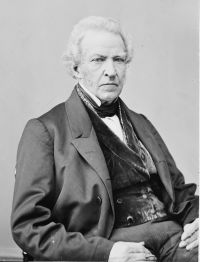 James Moore Wayne,
Gaines v. Relf — Dissent
James Moore Wayne,
Gaines v. Relf — Dissent
“ If they do not, they must bear the consequences in respect to property and other matters which may concern them, from their misconduct. But as regards their children, as they are legitimate according to the lex loci of the marriage for all purposes and to inherit that portion which the law gives them of the estate of deceased parents, they cannot be affected in any way by their parents' concealment of their marriage, if it shall be proved to have been valid where it was contracted. ”
The Visigothic code (1910)
“ Where there are no children by said marriage, the wife shall have full control of all property given her by her husband, according to the terms of his will. But if she should die intestate, the said property shall revert to her husband if he is living, and if he should not be living, it shall belong to his heirs. And we decree that the same rule shall apply to husbands who, at any time, have received gifts of property from their wives. ”
by John Marshall, Day v. Chism — Opinion of the Court
“ It is undoubtedly true, that their title cannot be in both characters, and that the will, if it passes the estate differently from what it would pass at law, defeats their title as heirs. But a man may devise lands to his heirs, and the statement that they are his heirs, as well as his devisees, though not a strictly artificial mode of declaring, is an error of form and not of substance. Of the same character is, we think, the omission to state how the plaintiffs are heirs, or to set out the will. ”
Horace Gray, Bryan v. Bernheimer (181 U.S. 188…
“ It is made his duty to collect and hold possession until the assignee is appointed or the property is released by some order of the court, and he would ill perform that duty if he should accept the statement of every man in whose custody he found the property which he believed would belong to the assignee when appointed, as a sufficient reason for failing to take possession of it. ”
Caroline Louise Marshall, Two Wyoming Girls and Their Homestead Claim…
“ The agent might, if he was disposed to be obligin’, transfer your father’s claim to you, Jessie, if you could swear that you are the head of a family, and that’s what you can’t do—not as the law requires it, you can’t. The law don’t recognize any one as the head of a family until of legal age. Even if you were of legal age, the agent might refuse, if he saw fit. ”
“ The Court go upon the ground that one who makes a representation as to the estate of the proposed husband, forming an inducement to the marriage, is bound to make it good in the manner represented. The plaintiff, being the issue, is considered to have all the rights of her mother, especially since, if the representation had been true, all the property would have gone to the plaintiff. ”
 Lydia Maria Child,
The history of the condition of women…
(1835)
Lydia Maria Child,
The history of the condition of women…
(1835)
“ A woman cannot dispose of any property, or bring an action at law, in her own name, during the lifetime of her husband; her signature to a note is of no legal value, because the law considers her as under the guardianship of her husband, and all her property as his. ”
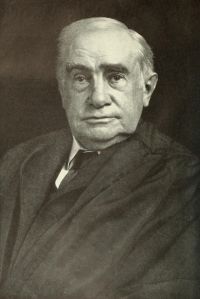 Henry Billings Brown,
Kirby v. Tallmadge — Opinion of the Court
Henry Billings Brown,
Kirby v. Tallmadge — Opinion of the Court
“ There are undoubtedly cases holding that occupation by some other person than the one holding the unrecorded deed is no notice of title in such third person, and that the apparent possession of premises by the head of a family is no notice of a title in a mere boarder, lodger, or subordinate member of such family, or of a secret agreement between the head of a family and another person. ”
John Marshall,
Smith v. Bell — Opinion of the Court
“ It is stated in many cases, that where there are two intents inconsistent with each other, that which is primary will control that which is secondary: but the intent to provide for the wife during life, is not inconsistent with the intent to provide for the son, by giving him the same property after her decease. ”
 Annie Besant,
Marriage, As It Was, As It Is, And As It Should Be…
(1882)
Annie Besant,
Marriage, As It Was, As It Is, And As It Should Be…
(1882)
“ If he takes possession, they do not, at his death, revert to the wife, but go to his heirs or to anyone he chooses by will. "If a woman be seized of an estate of inheritance, and marries, her husband shall be seized of in her right" (Comyn's Digest, under "Baron and Feme") . ”
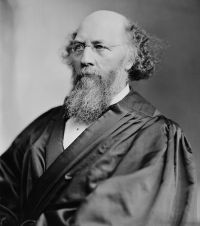 Stephen Johnson Field,
Jones v. Clifton — Opinion of the Court
Stephen Johnson Field,
Jones v. Clifton — Opinion of the Court
“ The powers of revocation and appointment to other uses reserved to the husband in the deeds in question do not impair their validity or their efficiency in transferring the estate to the wife, to be held by her until such revocation or appointment be made. ”
George Elliott Howard, A History of Matrimonial Institutions…
“ When a divorce is granted on such application, the wife shall receive back the estate which the husband had with her at the marriage, unless she has been guilty of conduct such as by the laws of the state would forfeit her right of dower; and when the husband's conduct is the cause of separation, she is entitled to the same share of his real and personal property as if he were dead. ”
Sir John W. Salmond, Jurisprudence (1913)
“ The Corpus of Possession. To constitute possession the animus domini is not in itself sufficient, but must be embodied in a corpus. The claim of the possessor must be effectively realised in the facts; that is to say, it must be actually and continuously exercised. The will is sufficient only when manifested in an appropriate environment of fact, just as the fact is sufficient only when it is the expression and embodiment of the required intent and will. Possession is the effective realisation in fact of the animus sibi habendi. ”
Sir John W. Salmond, Jurisprudence (1913)
“ The Roman lawyers distinguish between possessio juris and possessio corporis, and the Germans between Rechtsbesitz and Sachenbesitz. Adopting this nomenclature, we may define incorporeal possession as the continuing exercise of a right, rather than as the continuing exercise of a claim. The usage is one of great convenience, but it must not be misunderstood. To exercise a right means to exercise a claim as if it were a right. There may be no right in reality; and where there is a right, it may be vested in some other person, and not in the possessor. ”
Byron White, Michael H. v. Gerald D. — Dissenting Opinion (1989)
“ The basic principle enunciated in the Court's unwed father cases is that an unwed father who has demonstrated a sufficient commitment to his paternity by way of personal, financial, or custodial responsibilities has a protected liberty interest in a relationship with his child. ”
Ranulf de Glanville, A translation of Glanville (1900)
“ When a Husband, put in the place of his Wife in a suit concerning her marriage-hood or Dower, should lose any part of the property of his Wife, or should, by a Judgment or a Concord, remit any right of the Wife, whether, it may be asked, can the Wife herself again agitate the question, or whether is she absolutely bound, after the death of her Husband, to abide by his Act? ”
by John Marshall Harlan, Allen v. Hanks — Opinion of the Court
“ Laws shall be passed providing for the registration of the wife's separate property, and when so registered and so long as it is not intrusted to the management or control of her husband otherwise than as an agent, it shall not be liable for any of his debts, engagements, or obligations.' Article 12, § 6. ”
The Offences against the Person Act 1861
“ Where any Woman of any Age shall have any Interest, whether legal or equitable, present or future, absolute, conditional, or contingent, in any Real or Personal Estate, or shall be a presumptive Heiress or Coheiress, or presumptive Next of Kin, or One of the presumptive Next of Kin, to any one having such Interest, whosoever shall, from Motives of Lucre, take away or detain such Woman against her Will, with Intent to marry or carnally know her, or to cause her to be married or carnally known by any other Person; Fraudulent Abduction of a Girl under Age against the Will of her Father, &c. ”