“ It is senseless and extravagant when pronounced against actions which men cannot help, when the faulty action is the necessary consequence of their nature, and the penalty the necessary consequence of the action. ”
Principle of least action
Definition and stakes
The theme of “principle of least action” has been addressed by authors such as G. E. Moore, William Kingdon Clifford, Mary Hays, Joseph Butler and Ralph Waldo Emerson. It is often associated with terms like moral, consequence, society, punishment and will.
Quotes about “principle of least action”
 Benjamin Fiske Barrett,
Beauty for Ashes
(1855)
Benjamin Fiske Barrett,
Beauty for Ashes
(1855)
“ And by not being uitimated, their perverse tendencies gradually lose their strength and activity: for it is a universal law, that, whatever is endowed with life loses its vital force just in the degree that exercise, or freedom of action, is denied it. ”
 M. E. Braddon,
John Marchmont's Legacy, Volume 2…
M. E. Braddon,
John Marchmont's Legacy, Volume 2…
“ It is only after the fact that we recognise the awful importance which actions, in themselves most trivial, assume by reason of their consequences; and when the action, in itself so unimportant, in its consequences so fatal, has been in any way a deviation from the right, how bitterly we reproach ourselves for that false step! ”
 Georg Wilhelm Friedrich Hegel,
The Philosophy of Fine Art, volume 1…
Georg Wilhelm Friedrich Hegel,
The Philosophy of Fine Art, volume 1…
“ We have on one hand a difficulty, an obstacle, a violation effected through something human life has carried out in action. We have on the other a violation of interests and forces intrinsically just and right. ”
 Karl Rosenkranz,
Pedagogics as a System
Karl Rosenkranz,
Pedagogics as a System
“ Men, who arrive at no real concentration of their force, no clear defining of their vocation, no firm decision as to their action, dissipate their power in what is too often a great activity with absolutely no result. ”
Baroness Emmuska Orczy Orczy, The Triumph of the Scarlet Pimpernel
“ No human soul can with certainty say, "I would not do this or that, under any circumstances whatever!" Circumstance and impulse are the only two forces that create cowards or heroes. Principles, will-power, virtue, are really subservient to those two. ”
 Leo Tolstoy,
The Complete Works of Lyof N. Tolstoï
(1899)
Leo Tolstoy,
The Complete Works of Lyof N. Tolstoï
(1899)
“ How often one hears, as an excuse for not reforming our lives, the argument, that any act which is contrary to the usual mode of life would be unnatural, ludicrous,—would look like a desire to show off and would therefore not be a good action. ”
Oliver Prescott Hiller, A Chapter on Slavery (1860)
“ We set out on a course of action, planned, as we believe, from benevolent motives, — and we push on, in our own strength, determined to overcome every obstacle, and by main force to break down all opposition, and to effect our object at every hazard: — and what is the result? we accomplish nothing: we find ourselves, after all our efforts, farther from the point aimed at than when we set out. ”
 G. E. Moore,
Ethics — Chapter V
(1912)
G. E. Moore,
Ethics — Chapter V
(1912)
“ It seems to me to be self-evident that knowingly to do an action which would make the world, on the whole, really and truly worse than if we had acted differently, must always be wrong. And if this be admitted, then it absolutely disposes of the view that there are any kinds of action whatever, which it would always be our duty to do or to avoid, whatever the consequences might be. ”
 Benson John Lossing,
Life and Times of Washington, Volume 2
Benson John Lossing,
Life and Times of Washington, Volume 2
“ This command over the partialities that so generally stop men short or turn them aside in their pursuit of truth, is one of the chief causes of his unvaried course of right conduct in so many difficult scenes, where every human action must be presumed to err. If he had strong passions he had learned to subdue them, and to be moderate and mild. If he had weaknesses, he concealed them, which is rare, and excluded them from the government of his temper and conduct, which is still more rare. ”
 A. I. Kuprin,
Yama [The Pit], a Novel in Three Parts
A. I. Kuprin,
Yama [The Pit], a Novel in Three Parts
“ There is a great law, I think, the same for inanimate objects as well as for all the tremendous and many-millioned human life: the power of effort is equal to the power of resistance. The worse, the better. Let evil and vindictiveness accumulate in mankind, let them grow and ripen like a monstrous abscess—an abscess the size of the whole terrestrial sphere. ”
 Thomas Chandler Haliburton,
The Attaché; or, Sam Slick in England…
Thomas Chandler Haliburton,
The Attaché; or, Sam Slick in England…
“ When compelled to yield, it should be by the force of reason, and never by the power of agitation. Its measures should be actuated by a sense of what is right, and not what is expedient, for to concede is to recede—to recede is to evince weakness—and to betray weakness is to invite attack. ”
William Henry Furness, A Discourse for the Time, delivered January 4…
“ We may choose whether or not we will act; but the consequences, and they may be most deadly,—the consequences of our action or our no-action we cannot escape. They may fall upon us with a crushing power at our very firesides, and ruin our private and domestic peace for ever. ”
Durant Drake, Problems of Conduct: An Introductory Survey of Ethics
“ Nothing will stand in the way of thy acting justly and soberly and considerately. But perhaps some of thy active powers will be hindered? Well, by acquiescing in the hindrance, and being content to transfer thy efforts to that which is allowed, another opportunity of action is immediately put before thee in place of that which was hindered. ”
 Edwin Percy Whipple,
The Atlantic Monthly
(1866)
Edwin Percy Whipple,
The Atlantic Monthly
(1866)
“ They may deny that this is their intention; but what intention to forego the exercise of an assumed right, held by those who are out of power, can be supposed capable of limiting their action when they are in? ”
L. T. Hobhouse, Liberalism — Chapter VI. The Heart of Liberalism (1911)
“ Thus, to come at once to the real crux, the question of moral discipline, it is of course possible to reduce a man to order and prevent him from being a nuisance to his neighbours by arbitrary control and harsh punishment. ”
 Henry David Thoreau,
Walden
(1854)
Henry David Thoreau,
Walden
(1854)
“ If the injustice has a spring, or a pulley, or a rope, or a crank, exclusively for itself, then perhaps you may consider whether the remedy will not be worse than the evil; but if it is of such a nature that it requires you to be the agent of injustice to another, then, I say, break the law. Let your life be a counter friction to stop the machine. ”
 James Fenimore Cooper,
The ways of the hour
(1861)
James Fenimore Cooper,
The ways of the hour
(1861)
“ Any one, of even the dullest apprehension, must, on a little reflection, perceive that a condition of things in which the ends of justice are defeated, or so procrastinated as to produce the results of defeat, is one of the least desirable of all those in which men can be placed under the social compact; to say nothing of its corrupting and demoralizing effects on the public mind. ”
“ And second, avoid cultivating a spirit or habit which would make a man feel free to stop and ask why when simply told to do a thing, as in an emergency. So you give the reason for the action only when it is clear that the circumstances warrant it, and when it will lead to better results. ”
G. Lowes Dickinson, The Meaning of Good—A Dialogue
“ Must not our aims and purposes cease to have any interest for us, once we are clear that they are not true ends? And that which, according to the hypothesis, is the true end, the 'dateless and irrevoluble circle' of activity, that, surely, we at least cannot sanction or approve, seeing that it involves and perpetuates the very misery and pain whose destruction was our only motive for acting at all. ”
Edwin Seward Puller, Your boy and his training (1916)
“ The prohibition of a proposed action arouses all the resentment of thwarted desire and unfulfilled attainment. Such consequences may be avoided by the suggestion of better plans, methods, or acts, concurrent with the reasons why such change is desirable or necessary. The substitution of other activities or another course of conduct fills the void made by denial and satisfies his psychological requirement of being kept busy. ”
Alexander Campbell Fraser, Thomas Reid (1898)
“ Again, the fatalist, who rejects practically the moral judgment that refers the issues of a deliberate voluntary determination to the voluntary or personal agent as its responsible centre, insanely sits still in the midst of danger, and refrains from exerting a power which he denies. ”
G. E. Moore,
Ethics — Chapter VII
(1912)
“ All that could be agreed upon was that a voluntary action is right whenever and only when its total consequences are as good, intrinsically, as any that would have followed from any action which the agent could have done instead. ”
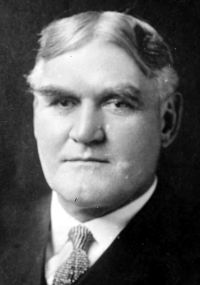 Martin Grove Brumbaugh,
Training the Teacher
Martin Grove Brumbaugh,
Training the Teacher
“ The danger-point in this crisis lies in permitting these newly awakened feelings to be dissipated without decision and action. If this occurs they weaken, the impulse to take the right stand lessens, and irresolution finally becomes the tacit choice of the self-seeking life. ”
William Hazlitt, The Collected Works of William Hazlitt…
“ If such things are ever done in any circumstances with impunity, we know what must be done every day under the same sanction. It shows that there is an utter deadness to every principle of justice or feeling of humanity ”
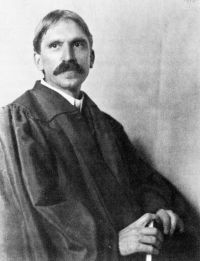 John Dewey,
Democracy and Education
(1916)
John Dewey,
Democracy and Education
(1916)
“ When they begin to act, the disagreeable results they ignored begin to show themselves. They are discouraged, or complain of being thwarted in their good purpose by a hard fate, and shift to some other line of action. ”
Albion Winegar Tourgée, Bricks Without Straw: A Novel
“ The real evils of the system were those which arose from its un-conscious barbarism—the natural and inevitable results of holding human beings as chattels, without right, the power of self-defence or protestation—dumb driven brutes, deprived of all volition or hope, subservient to another's will, and bereft of every motive for self-improvement as well as every opportunity to rise. ”
 John Stuart Mill,
On Liberty
(1869)
John Stuart Mill,
On Liberty
(1869)
“ We shall reflect that he already bears, or will bear, the whole penalty of his error; if he spoils his life by mismanagement, we shall not, for that reason, desire to spoil it still further: instead of wishing to punish him, we shall rather endeavour to alleviate his punishment, by showing him how he may avoid or cure the evils his conduct tends to bring upon him. ”
 Joseph Conrad,
The nature of a crime
(1924)
Joseph Conrad,
The nature of a crime
(1924)
“ But in the multiplicity of things that will have to be done before the whole thing is done—in the waiting for things to take effect, in the failures perhaps more than in the successes, since the failures will imply new devising—in all the meticulous thought-readings that will be necessary, the interest will lie, and in the men with whom one is brought into contact, the men with whom one struggles, the men whom one must bribe or trick. ”
Henry Robert Samuel Dalton, Lesbia Newman (1889)
“ Just as these rushes do better for being confined to a set place where they make no waste, so various excesses of human nature which, if allowed to run riot through society, are felt as intolerable, do, when grappled with and organised, become not only harmless but positively useful. ”
Alexander Hamilton, The Federalist (1863, Dawson edition)
“ Has it not, on the contrary, invariably been found that momentary passions, and immediate interests, have a more active and imperious control over human conduct than general or remote considerations of policy, utility, or justice? ”
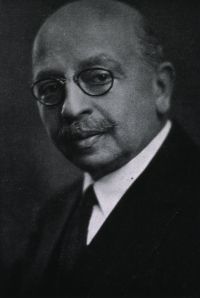 Joseph Jastrow,
Belief and Credulity
(1902)
Joseph Jastrow,
Belief and Credulity
(1902)
“ The danger of practice dissociated from principle is that of becoming time-serving, narrow, partisan, short-sighted; it tacks for every wind, loses its bearings, and sacrifices larger for smaller gains. ”
 George E. Ellis,
The Red Man and the White Man in North America
(1882)
George E. Ellis,
The Red Man and the White Man in North America
(1882)
“ Till that happy and sure disposal of any issue has been reached, discord, passion, wasteful expedients, and failure attend all discussions of it, all dealing with it. Experiment and shifting policy will still keep it open, but only justice and right can ever dispose of it. ”
 Frederick Douglass,
The North Star
Frederick Douglass,
The North Star
“ In the inception of it, we may oppose and denounce it by our most strenuous exertions, but, after its consummation, there is often no other alternative left us but to deplore its perpetration, and to acquiesce as the only alternative, in its existence, as a less evil that the frightful consequences which might ensued from the vain endeavor to repair it. ”
J. R. S. Pitts, Life and bloody career of the executed criminal… (1874)
“ But, it is true, where there are freedom of thought and action, public vices cannot accumulate beyond a limited extent before conflicting interests and passions will bring on the appropriate or temporary remedy; yet the victors not unfrequently, ere long, run into as wild excesses as their erring but fallen predecessors! so then it would appear that revolutions only amount to a change from one sort of excesses to another equally as pregnant with evils. ”
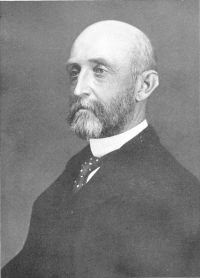 A. T. Mahan,
The Life of Nelson, Volume 1
A. T. Mahan,
The Life of Nelson, Volume 1
“ The same disregard of consequences that hazarded all for all, in battle or for duty, broke through the barriers within which prudence, reputation, decency, or even weakness and cowardice, confine the actions of lesser men. ”
Leo Tolstoy,
The Kingdom of God Is Within You
(1894)
“ Try the simple experiment, as a government official, of giving up lying, and refusing to take a part in executions and acts of violence; as a priest, of giving up deception; as a soldier, of giving up murder; as landowner or manufacturer, of giving up defending your property by fraud and force; and, you will at once lose the position which you pretend is forced upon you, and which seems burdensome to you. A man cannot be placed against his will in a situation opposed to his conscience. ”
Georgi Valentinovich Plekhanov, Anarchism and Socialism (1906)
“ But as it is, on the contrary, the sensations which determine the will, all judgment becomes impossible, every reward, every punishment unjust, however great the good or the evil done may be. "Thus one cannot judge men and acts unless one has a sufficient criterion. ”
 Bertrand Russell,
War and Non-Resistance
(1915)
Bertrand Russell,
War and Non-Resistance
(1915)
“ No one who holds that human conduct ought to be such as to promote certain ends, no matter what ends may be selected, will expect any absolute hard-and-fast rules of conduct to which no possible exception can be found. ”
 Ralph Waldo Emerson,
Miscellanies
(1878)
Ralph Waldo Emerson,
Miscellanies
(1878)
“ Will you stick to your principle of non-resistance when your strong-box is broken open, when your wife and babes are insulted and slaughtered in your sight? If you say yes, you only invite the robber and assassin ”
Ralph Waldo Emerson,
Representative Men: Seven Lectures
“ Men’s actions are too strong for them. Show me a man who has acted, and who has not been the victim and slave of his action. ”
 Laurence Housman,
Ploughshare and Pruning-hook
(1919)
Laurence Housman,
Ploughshare and Pruning-hook
(1919)
“ For as he estimates the moral value of things solely by that empyric sense which has been evolved in him through a faithful recognition of the inevitable laws of cause and effect, so must he become demoralised, if he is to be taught that what he has regarded as inevitable can be capriciously suspended by a power independent of those laws which life has taught him to reverence. ”
Laurence Housman,
Ploughshare and Pruning-hook
(1919)
“ Similarly any form of government or of society which does not allow reason to stand upon its feet and utter itself unashamed is a discreditable form of discipline to impose, if reason is to be man's guide. ”
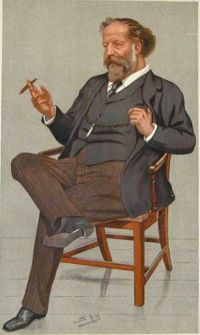 J. Comyns Carr,
Coasting Bohemia
J. Comyns Carr,
Coasting Bohemia
“ And so it happens that where she only follows she sometimes seems to lead, and the man, who has devised the policy which her readier resource only avails to carry into execution, appears in the guise of the reluctant victim of her stronger purpose and more undaunted will. ”
Various, The Delinquent (Vol. IV, No. 5…
“ Let us not, however, deceive ourselves into thinking that such a frontal attack absolves us from effort in other and different directions. Further achievements depend upon alterations in the constitution of society and its component parts. ”
G. E. Moore,
Ethics — Chapter V
(1912)
“ Or suppose that a man has deliberately chosen a course, which he has every reason to suppose will not produce the best consequences, but that some unforeseen accident defeats his purpose and makes it actually turn out to be the best: are we to say that such a man, because of this unforeseen accident, has acted rightly? This also may seem an outrageous thing to say; and yet we must say it, if we are to hold that right and wrong depend upon the actual consequences. ”
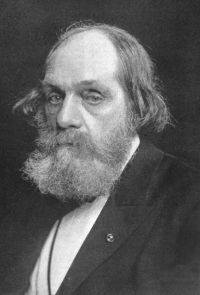 Edward Everett Hale,
How to Do It
Edward Everett Hale,
How to Do It
“ It is frequently observed, that the complete discharge of the obligations pressing upon us as moral agents is attended with conflict and difficulty. Frequently, therefore, we address ourselves to the discharge of these obligations with some measure of resistance, perhaps with obstinacy, and I may add, indeed, with unwillingness. ”
 Ralph Barton Perry,
The Moral Economy
Ralph Barton Perry,
The Moral Economy
“ In the end every purely destructive programme is inevitably futile, because it goes against the grain. For all conduct is constructive in motive, and forward in direction. But how wasteful is the momentary fury—wasteful of high passion and distinguished capacity, and how mystifying to the lay intelligence!It may, of course, be said that there is method in this madness; since man's twofold blindness, his dogmatism and his scepticism, his immobility and his wantonness, tend in the long run to neutralize one another. ”
Related terms
Authors who wrote about “principle of least action”
G. E. Moore William Kingdon CliffordMary HaysJoseph ButlerRalph Waldo Emerson
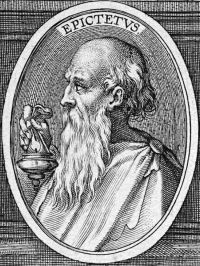 Epictetus
 Oscar WildeJohn DeweyMartin Luther King, Jr.M. E. Braddon
 James Anthony FroudeDurant DrakeEdwin Percy WhippleLincoln C. AndrewsJames Fenimore CooperOliver Prescott HillerBenjamin Fiske BarrettLeo TolstoyGeorg Wilhelm Friedrich HegelKarl Rosenkranz