Principle of non-contradiction

Definition and stakes

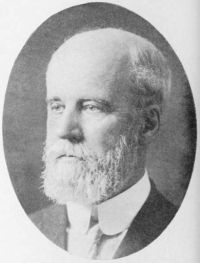
Portrait of F. H. Bradley F. H. Bradley Ethical Studies — Essay IV. (1876)

The principle of non-contradiction does not mean Do not contradict yourself; produce a harmony, a system in your acts and yourself; realize yourself as an organic whole. That would be vague enough without further directions; but what our principle here says is not that. It says the act must not contradict itself.
Source: Wikisource

Portrait of F. H. Bradley F. H. Bradley Ethical Studies — Essay IV. (1876)

Realize, i.e. act and keep acting; do not contradict yourself, i.e. let all your acts embody and realize the principle of non-contradiction; for so only can you realize the formal will which is the good will. Whatever act embodies a self-contradiction is immoral. Whatever act is self-consistent is legal. Whatever act is self-consistent, and is done for the sake of realizing self-consistency, and for the sake of nothing else, is moral.
Source: Wikisource

Portrait of F. H. Bradley F. H. Bradley Ethical Studies — Essay IV. (1876)

We have shown that a formal will is self-contradictory, since the essence of will is that it should not be formal. Duty for duty’s sake is false and impossible. It may not be superfluous to show in addition that, even if such a principle of action were possible, yet it would be worthless and of no avail for practice.
The maxim of non-contradiction is useless. We have seen that it contradicts itself, since it posits a content which is the contradiction of its bare form; but, apart from that, it gives us no information. What am I to do? ‘Produce a tautology’ is the answer.
Source: Wikisource

Get perspective with Kwize: daily news enlightened by great literature