Railway locomotive

Definition and stakes

Victor Verasius Branford,  Science and Citizenship : A Lecture delivered before the Manchester Sociological Society November 13th… (1906)

“ With literal and historical accuracy, the typical railway engineer sees the modern locomotive as just an elaborated pit pump-engine placed on wheels, and engaged all day in hauling coal-laden trollies from the pit mouth to the cities, and all night in hauling them back empty. ”
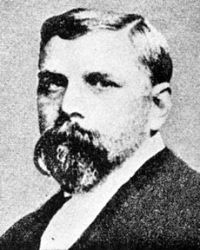
Source: Wikisource

George Augustus Nokes,  The evolution of the steam locomotive (1899)

“ Readers are probably aware that very much has been written on the subject of the early Great Western Railway locomotives during the past few years, and a surprising lack of knowledge of the subject has been exhibited by people taking part in discussions that have arisen. The facts are clearly established, so that it would be waste of time to recapitulate the many inaccurate statements that have been made relative to the original broad-gauge locomotives. ”
Source: Gutenberg

Archibald Williams,  The Romance of Modern Mechanism

“ All power gears are so arranged that, in case of a breakdown of the power, a hand-wheel can be quickly brought into play.
BLOWING AND VENTILATING APPARATUS
A railway locomotive sends the exhaust steam up the funnel with sufficient force to expel all air from the same and to create a vacuum. The only passage for the air flying to fill this empty space lies through the fire-box and tubes traversing the boiler from end to end. Were it not for the "induced draught"—the invention of George Stephenson—no locomotive would be able to draw a train at a higher speed than a few miles an hour.
”
Source: Gutenberg

Get perspective with Kwize: daily news enlightened by great literature