“ If the two forces act away from each other, as in the breaking of a string, the stress is called a tension, but if they act toward each other as in crushing anything, the stress is called a pressure. In order for a body to exert force it must meet with resistance. The force exerted is never greater than the resistance encountered. Thus one can exert but little force upon a feather floating in the air or upon other light objects. A fast moving shot exerts no force unless it encounters some resistance. ”
Resistance (physics)
Definition and stakes
The theme of “resistance (physics)” has been addressed by authors such as Isaac Newton, Richard Feynman, Ernest Christian Wilford, James Clerk Maxwell and Henry Kater. It is often associated with terms like force, velocity, air, fluid and gravity.
Quotes about “resistance (physics)”
“ For the resistance arises partly from the centripetal or centrifugal forces with which the particles of the system mutually act on each other, partly from the collisions and reflexions of the particles and the greater parts. The resistances of the first kind are to each other as the whole motive forces from which they arise, that is, as the whole accelerative forces and the quantities of matter in corresponding parts ”
Various, The Catholic World, Vol. 20, October 1874‐March 1875
“ In this view, the resistance which a body, i.e., a system of atoms, offers to the intrusion of another body is due not to the rigidity or unchangeability of volume of the individual atoms, but to the relation between the attractive and repulsive forces with which they are supposed to be endowed. ”
“ Let us suppose the particles of the medium to fly back from the globe with a force which is neither the greatest nor yet none at all, but with a certain mean force; then the resistance of the globe will be in the same mean ratio between the resistance in the first case and the resistance in the second. ”
“ One way of seeing how this may occur is to imagine that when ordinary matter moves in the ether it only tends to produce motion of translation of the ether particles, and therefore no resistance. But anything such as light, which must operate in turning axes of rotating parts, may encounter enormous elastic resistance. ”
James Slough Zerbe, Aeroplanes
“ MASS AND RESISTANCE.—Owing to the fact that resistance acts with such a retarding force on an object of small mass, and it is difficult to set up a rapid motion in an object of great density, lightness in flying machine structures has been considered, in the past, the principal thing necessary. ”
John Bernhard Stallo, Popular Science Monthly (1874)
“ For the same reason it is without electrical or chemical properties—in short, it is utterly destitute of all those properties in virtue of which, irrespective of its magnitude, it could be an appreciable object of sense, unless we except the properties of weight and extension. But weight is a mere play of attractive forces; and extension, too, is known to us only as resistance, which in turn is a manifestation of force, and thus a phase of motion. ”
 William Whewell,
History of scientific ideas
(1858)
“ There is, in every case, a resistance to motion, which shows itself, not in preventing the motion, but in a reciprocal force, exerted backwards upon the agent by which the motion is produced. And this resistance resides in each portion of matter, for it is increased as we add one portion of matter to another. ”
N. Hawkins, Hawkins Electrical Guide v. 02…
“ Work is the overcoming of resistance through a certain distance. It is measured by the product of the resistance into the space through which it is overcome, thus:For instance, in lifting a body from the earth against the attraction of gravity, the resistance is the weight of the body, and the space, the height to which the body is raised, the product of the two being the work done. ”
 Samuel Johnson,
Rasselas, Prince of Abyssinia
“ We are only to proportion our power of resistance to the different density of matter through which we are to pass. You will be necessarily up-borne by the air if you can renew any impulse upon it faster than the air can recede from the pressure. ”
Various, The Continental Monthly, Vol. 4…
“ If we take, for instance, the inertia of matter, and consider it philosophically, we can make of it nothing more than a power of resistance, or persistence, residing in certain points, which we call particles of matter. ”
Sydney T. Klein, Science and the Infinite; or, Through a Window in the Blank Wall
“ We may go a little further by "pushing," when we know, by the amount of resistance compared with the power exerted, what force of gravity is being exerted by and on that chair, and we declare it heavy or light, but by these means we get no nearer to the knowledge of what matter is. ”
1911 Encyclopædia Britannica, Volume 18… (1911)
“ On the other hand, under the influence of the mechanics of his day, which had hardly distinguished between inertia, or the inability of a body to change itself, and resistance or the ability of bodies to oppose one another, he concluded that, as inertia is passive, so is resistance, and refused to recognize that in collision the mutual resistance of moving bodies is a force, or active power, of changing their movements in opposite directions. ”
Henry Kater, A Treatise on Mechanics
“ The force applied acts upon those particles nearer to the axis than its own direction under advantageous circumstances; for, according to what has been already explained, their power to resist the effect of the applied force is small in the same proportion with their distance. On the other hand, the applied force acts upon particles of the mass, at a greater distance than its own direction, under circumstances proportionably disadvantageous; for their resistance to the applied force is great in proportion to their distances from the axis. ”
“ But because this is not done, the globes that move swiftly are not so much pressed at their hinder parts as the others, and by the defect of this pressure it comes to pass that their resistance is a little greater than in a duplicate ratio of their velocity. ”
 Isaac Newton,
The Mathematical Principles of Natural Philosophy
(1846)
“ So that if the disparity of velocities is so great as to overcome all that resistance which commonly arises either from the attrition of contiguous bodies as they slide by one another, or from the cohesion of continuous bodies that are to be separated, or from the weights of bodies to be raised, the excess of the force remaining, after all those resistances are overcome, will produce an acceleration of motion proportional thereto, as well in the parts of the machine as in the resisting body. ”
 William Morris Davis,
Popular Science Monthly
(1878)
“ The resistance which these masses have to contend with is of two kinds: first, the feeble, insensible attraction of the remaining mass; second, the resistance of the ether. The first diminishes with the square of the increasing distance, but is never reduced to absolute zero; the second, however, diminishes with the diminishing speed, and finally becomes nothing, at which time the body stops. Now, would these farthest masses return? Most certainly they would; for no distance can be named so great that the force of gravity shall become absolutely nothing. ”
 Henry Adams,
The Education of Henry Adams — Chapter 34…
(1918)
“ No one is likely to suggest a theory that man’s convenience had been consulted by Nature at any time, or that Nature has consulted the convenience of any of her creations, except perhaps the Terebratula. In every age man has bitterly and justly complained that Nature hurried and hustled him, for inertia almost invariably has ended in tragedy. Resistance is its law, and resistance to superior mass is futile and fatal.Fifty years ago, science took for granted that the rate of acceleration could not last. ”
“ I suppose also the resistance, caeteris paribus, to be proportional to its density. Whence in mediums whose force of resistance is not as the density, the density must be so much augmented or diminished, that either the excess of the resistance may be taken away, or the defect supplied.Proposition XVII. Problem IV. To find the centripetal force and the resisting force of the medium, by which a body, the law of the velocity being given, shall revolve in a given spiral. ”
Isaac Newton,
The Mathematical Principles of Natural Philosophy
(1846)
“ Therefore the bodies D and F, when they move with very great swiftness, meet with resistances very nearly equal; and therefore since the resistance of the body F is in a duplicate ratio of the velocity, the resistance of the body D will be nearly in the same ratio. ”
active 1883-1912 James Weir, The Energy System of Matter: A Deduction from Terrestrial Energy Phenomena
“ But the maximum force which can be applied to any body depends entirely on the resistance offered by that body, and in this case the resisting force is the gravitative attraction of the earth on the projectile, which attraction is again a direct function of its mass. The greater the mass, the greater the gravitative force, and the greater the possibility of transformation. The ultimate limit of the process would be reached if the projected mass were so great as to equal half the mass of the earth. ”
John William Strutt, Popular Science Monthly (1884)
“ Recognizing the fallacy of views then widely held as to the nature of the resistance to be overcome, he showed to demonstration that, in the case of fair-shaped bodies, we have to deal almost entirely with resistance dependent upon skin-friction, and at high speeds upon the generation of surface-waves by which energy is carried off. At speeds which are moderate in relation to the size of the ship, the resistance is practically dependent upon skin-friction only. ”
Henry Kater, A Treatise on Mechanics
“ It is obvious that all that has been said respecting a variable weight or resistance, is also applicable to a variable power, which, therefore, may, by the same means, be made to produce a uniform effect. ”
comte de Georges Louis Leclerc Buffon, Buffon's Natural History. Volume 10…
“ Impenetrability, which we must not regard as a force, but as a resistance essential to matter, not permitting two bodies to occupy the same place, what must happen when two molecules, which attract the more powerfully as they approach nearer, suddenly strike against each other? Does not then this invincible resistance of impenetrability, become an active force, which, in the contact, drives the bodies with as much velocity, as they had acquired at the moment they touched? ”
 Galileo Galilei,
Dialogues Concerning Two New Sciences…
(1638)
“ It is this second type of resistance which we must consider, seeking to discover in what [152] proportion it is found in prisms and cylinders of the same material, whether alike or unlike in shape, length, and thickness. In this discussion I shall take for granted the well-known mechanical principle which has been shown to govern the behavior of a bar, which we call a lever, namely, that the force bears to the resistance the inverse ratio of the distances which separate the fulcrum from the force and resistance respectively. ”
Isaac Newton,
The Mathematical Principles of Natural Philosophy
(1846)
“ But the proportion of the resistance to the weight is augmented, when either the specific gravity is made less, the magnitude remaining equal, or when the density of the medium is made greater, or when, by diminishing the magnitude, the resistance becomes diminished in a less ratio than the weight. ”
Isaac Newton,
The Mathematical Principles of Natural Philosophy
(1729)
“ The resistance we find in air, water, quick-silver and the like fluids that are not tenacious, is almost all of the first kind; and cannot be diminished by a greater degree of subtilty, if the density and vis inertia, to which this resistance is proportional, remains ”
 James Clerk Maxwell,
On Faraday's Lines of Force
(1855)
“ If instead of an abrupt change from one coefficient of resistance to another we take a case in which the resistance varies continuously from point to point, we may treat the medium as if it were composed of thin shells each of which has uniform resistance. ”
 Herbert Spencer,
First Principles
“ For every experience of a muscular tension, (under which form alone we can immediately know an attractive force,) presupposes an equivalent resistance—a resistance shown in the counter-balancing pressure of the body against neighbouring objects, or in that 484absorption of force which gives motion to the body, or in both—a resistance which we cannot conceive as other than equal to the tension, without conceiving force to have either appeared or disappeared, and so denying the persistence of force. ”
 Adrien Guébhard,
Popular Science Monthly
(1882)
“ This power of resistance, or power of annular elasticity, is the most striking characteristic of these singular forms, real magazines of energy, in which all the living primitive force collects itself under the influence of external friction. Theoretically, the vortical movement, in a perfect fluid, can neither be created nor destroyed; eternal as matter itself, it has neither beginning nor end. ”
Henry Kater, A Treatise on Mechanics
“ Setting aside, for the present, the last cause227 of inequality, and considering the machinery, whatever it be, to transmit the power to the resistance without irregular interruption, it is evident that every contrivance, having for its object to render the velocity uniform, can only accomplish this by causing the variations of the power and resistance to be proportionate to each other. ”
Galileo Galilei,
Dialogues Concerning Two New Sciences…
(1638)
“ Thus if we consider only the resistance which the air offers to the motions studied by us, we shall see that it disturbs them all and disturbs them in an infinite variety of ways corresponding to the infinite variety in the form, weight, and velocity of the projectiles. ”
 Richard A. Proctor,
Myths and Marvels of Astronomy
“ In the familiar instance of a body whirled round by a string, the breaking of the string no more implies that an active force has pulled away the body, than the breaking of a rope by which a weight is pulled implies that the weight has exerted an active resistance. ”
 Osborne Reynolds,
1911 Encyclopædia Britannica, Volume 17…
(1911)
“ Friction, or resistance to tangential shifting of matter over matter, whatever the mode and arrangement, differs greatly according to the materials, but, like all material resistance, is essentially limited. ”
 Joshua Rose,
Modern Machine-Shop Practice, Volumes I and II
“ Under light loads, the internal resistance, which is nearly constant in amount, may be a large percentage of the power transmitted, while under heavy loads the percentage of slip may become the principal loss. ”
William Whewell,
History of scientific ideas
(1858)
“ Force implies resistance; and the force is effective only when the resistance is called into play. If we grasp a stone, we have no hold of it till the closing of the hand is resisted by the solid texture of the stone. If we push open a gate, we must surmount the opposition which it exerts while turning on its hinges. However slight the resistance be, there must be some resistance, or there would be no force. If we imagine a state of things in which objects do not resist our touch, they must also cease to be influenced by our strength. ”
C. C. Merriman, Popular Science Monthly (1877)
“ It resists the passage of light eight minutes in 90,000,000 miles, thus proving its materiality by its resistance to force, which is one of the definitions of matter. If one could conceive of any force passing through an absolute vacuum, it could only be conceived of as passing instantaneously—there is absolutely nothing to detain it. ”
James Clerk Maxwell,
On Faraday's Lines of Force
(1855)
“ We may obtain a more general law from the consideration that the potential of the whole system is proportional to the amount of work done by the fluid in overcoming resistance. The introduction of a second medium increases or diminishes the work done according as the resistance is greater or less than that of the first medium. ”
 Robert Andrews Millikan,
Popular Science Monthly
(1912)
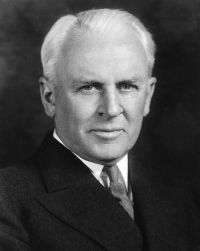
“ He showed that if a body like one of our minute oil drops is dancing about in a resisting medium subjected to no forces but those arising from its own energy of agitation, that is, from the bombardment of the surrounding molecules, the mean distance which it will drift in a given time, say ten seconds, from its position at the beginning of this time, can be computed in terms of three factors: (1) its energy of agitation, (3) a resistance factor of the medium, and (3) the length of the time interval through which the drift is observed. ”
 Robert S. Ball,
Experimental Mechanics
“ In the first place the rod may be taken by a force at each end and torn asunder by pulling, as a thread may be broken. To do this requires very great power, and the strength of the material with reference to such a mode of destroying it is called its resistance to extension. In the second place, it may be broken by longitudinal pressure at each end, as a pillar may be crushed by the superincumbent weight being too large; the strength that relates to this form of force is called resistance to compression: finally, the rod may be broken by a force applied transversely. ”
Related terms
Authors who wrote about “resistance (physics)”
Isaac Newton Richard FeynmanErnest Christian WilfordJames Clerk MaxwellHenry KaterN. HawkinsWilliam J. M. Rankine & William E. Dalby
 T. O'Conor SloaneGalileo Galilei
 Bertrand RussellThomas D. CopeOsborne Reynolds
 William John Macquorn RankineVariousHerbert SpencerRichard A. ProctorWilliam WhewellJohn Bernhard StalloSydney T. KleinWilliam Morris Davis
