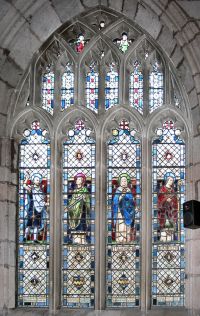
The rose window, a circular architectural element prominent in Gothic cathedrals, represents both spiritual elevation and technical skill. Historically derived from Roman oculi, it developed through medieval styles such as plate tracery and Rayonnant Gothic, featuring elaborate patterns and stained glass. Authors like J.H. Kurtz emphasize its symbolic quietude, while Michael Earls poetically describes its light as a winter rose.
George Edmund Street elaborates on its intricate design, and Sir George Gilbert Scott liken it to conoidal vaulting. These diverse viewpoints—ranging from symbolic to structural—show the rose window as a meeting point of art, theology, and architectural ingenuity, enduring across centuries as both practical and otherworldly.