“ You are now rising at near-maximum speed, and not much more forward velocity can be anticipated. You have an air-speed relative to surface of six-nine-two miles per hour. The rotational speed of Earth at this latitude is seven-seven-eight. You have, then, a total orbital speed of one-four-seven-oh miles per hour, or nearly twelve per cent of your needed final velocity. Since you will take off laterally and practically without air resistance, a margin of safety remains. ”
Rotational speed
Definition and stakes
The theme of “rotational speed” has been addressed by authors such as Edmond Hamilton, Charles T. Porter, William D. Ennis, Sir Oliver Lodge and Nicholas Wilcox Cundy. It is often associated with terms like rotation, engine, velocity, gear and inertia.
Quotes about “rotational speed”
Jr. John W. Campbell, The metal horde (1930)
“ It has gained speed in the direction of the sun, but this has operated to increase its rotational speed. Thus it has gained a greater centrifugal force—you can see the effect with a bit of chalk on the end of a string. The smaller the circle it swings in, the greater the tendency to fly outward. But as long as we continue the force that was added to draw it in, it will remain in equilibrium. ”
 A. C. Seward,
Darwin and Modern Science
“ The shrinkage will, in ordinary parlance, bring the weights nearer to the axis of rotation. Hence in order to keep up the rotational momentum, which as we have seen must remain constant, the mass must rotate quicker. The greater speed of rotation augments the importance of centrifugal force compared with that of gravity, and as the flattening of the planetary spheroid was due to centrifugal force, that flattening is increased; in other words the ellipticity of the planetary spheroid increases. ”
Arthur A. Hebert, The Sending Set (1916)
“ In connection with the rotary gap, bear in mind that the speed at which it revolves has a material effect on the oscillations radiated, and it is not the greatest speed that will give the best radiation. A simple method to determine the note or pitch of the wave emitted by a rotary gap is to hold lightly a piece of stiff paper over the revolving wheel touching it as though cleaning the teeth. If the speed of the Motor is varied, there will be different tones given out which can be compared to the frequency of the signals radiated and received by other stations. ”
Various, Chambers's Edinburgh Journal, No…
“ The difference between the rotative velocity of the earth in surface-motion at London and at Liverpool is about twenty-eight miles per hour; and this amount of lateral movement is to be gained or lost, as respects the locomotion in each journey, according to the direction we are travelling in from the one place to the other; and in proportion to the speed will be the pressure against the side of the rails, which, at a high velocity, will give the engine a tendency to climb the right-hand rail in each direction. ”
Frederick William Lanchester, Aerodynamics, constituting the first volume of a complete work on aerial flight… (1906)
“ Conservation of Rotation.—Let us suppose a hollow circular cylindrical vessel filled with fluid to be set in rotation, about its axis: then if the fluid possessed viscosity it would, in course of time, acquire sensibly the same speed of rotation as the vessel, so that the whole system would revolve en bloc. With an ideal fluid, however, the rotation of the vessel might be continued indefinitely without imparting any motion to its contents. ”
Leigh Richmond, Where I Wasn't Going
“ Hot Rod's pull on a taut cable would be to the south.No. Lab One could be re-oriented to trail the thrusting balloon. But the lab's servos should have prevented that re-orientation unless the thrust were really heavy."What is our velocity?" he asked. Temporarily he was baffled by the placid Cow's literal translation of his request as one for any actual velocity, since she had replied with a figure very close to their original orbital speed. "What is our velocity at right angles to original course?" ”
 Robert S. Ball,
Time and Tide: A Romance of the Moon
“ These illustrations will suffice to show how a rapidly rotating body may contain energy in virtue of its rotation, just as a cannon-ball contains energy in virtue of its speed of translation, or as a clock-weight has energy in virtue of the fact that it has some distance to fall before it reaches the earth. The rotating body need not necessarily have the shape of a wheel—it may be globular in form; nor need the axes of rotation be fixed in bearings, like those of the fly-wheel; nor of course is there any limit to the dimensions which the rotating body may assume. ”
William D. Ennis, Flying Machines Today
“ The velocity necessary to just sustain the load at a given angle of inclination is called the critical or soaring velocity. For a given machine, there is an angle of inclination (about half a right angle) at which the minimum speed is necessary. This speed is called the “least soaring velocity.” If the velocity is now increased, the angle of inclination may be reduced and the planes will soar through the air almost edgewise, apparently with diminished resistance and power consumption. ”
 C. Lloyd Morgan,
Animal Life and Intelligence
“ He is only aware that he has been gently turned round a little two or three times. Now let the speed of rotation be slackened. He has a sensation of being gently turned round a little in the opposite direction. Each time the speed is lessened he has this sense of being turned the reverse way. From these experiments we see that what we are conscious of is change of rate of rotation, or, in technical language, acceleration, positive or negative. Fig. 30.—Diagram of semicircular canals. ”
Alfred Seymour, Practical Lithography
“ The mechanical principle of the rotary machine (Fig. 23) at once suggests an absolute precision of movement which it is scarcely possible to guarantee in the flat-bed press. There is no appreciable lift in the gearing of the cylinders when the impression is made, and practically no risk whatever of slogger, such as that described in Chap. VII. page 38. The uniform velocity of the cylinders, which is to a great extent due to the points already indicated, considerably reduces friction, produces perfect registration, and enables the machine to be worked at a high rate of speed. ”
Thomas Walter Barber, The Engineer's Sketch-Book
“ Two drivers A, A′, equally speeded in opposite directions, will drive the bevil gear at same velocity without revolving the spur wheel C′ which is loose on the shaft; but any alteration in the relative speeds of A and A′, causes the bevil pinion to travel round, carrying the spur wheel C′ at a speed equal to half the difference of the two velocities. ”
 Sir Oliver Lodge,
Pioneers of Science
“ At higher speeds of rotation some light would reappear, and at lower speeds it would also reappear; by noticing, therefore, the precise speed at which there was constant eclipse the velocity of light could be determined. ”
Hans Witte, Translation:Once Again: Sagnac Effect and Aether (1914)
“ If one considers the rotating system from the view of the rest-system, then the light ray which is following the same direction of the rotation, experiences a path-elongation corresponding to the factor , yet also a velocity increase corresponding to the same factor , which is canceling each other; the same arises at the oppositely moving ray ; there, is the orbit velocity of () , is the speed of light. ”
 Octave Chanute,
Flying Machines: Construction and Operation
“ The damping out of the oscillations of the flight path, discussed in the last lecture, increased with the fourth power of the natural velocity of flight, and rapid damping formed the easiest, and sometimes the only, defense against dangerous oscillations. A machine just stable at 35 miles per hour would have reasonably rapid damping if its speed were increased to 60 miles per hour. ”
 James Alfred Ewing,
1911 Encyclopædia Britannica
(1911)
“ But a peripheral velocity approaching 2000 ft. per second is impracticable. Apart from the difficulties which it would involve as regards gearing down to such a speed as would serve for the driving of other machines, which are to employ the power, there are no materials of con- struction fitted to withstand the forces caused by rotation at such a speed. ”
Various, The Little Gleaner, Vol. X
“ The wheel, when rotating, drives the water through the race, and out at the stern, with great velocity. The maximum result of experiments indicates that a ship of 500 tons, with a wheel of 50 feet diameter, making 50 revolutions per minute, will attain a speed of 56 knots an hour, after allowing one-fourth for slip and other contingencies. Although the wheel is described as making 50 revolutions per minute, it may reach 100, more or less. ”
Thomas Commerford Martin, The inventions, researches and writings of Nikola Tesla
“ If held quite close to the armature it will turn as long as the speed of rotation of the poles exceeds that of the armature; but when the normal speed is reached, or very nearly so, it ceases to rotate and is permanently attracted. ”
Robert Routledge, Discoveries and Inventions of the Nineteenth Century
“ The intensity of the induced currents increases with the velocity with which the armature is made to revolve up to a certain point; but because the magnetization of the soft iron requires a sensible time to be effected, and the poles are reversed at every half-turn, it is found that a speed increasing beyond the limit is attended by decrease of the intensity of the current. The intensity in such machines has, therefore, a definite limit. ”
William D. Ennis, Flying Machines Today
“ It is this relative velocity, not the velocity of the balloon as compared with a point on the earth’s surface, that marks the limit of progression. Hence the speed of the wind is an overwhelming factor to be reckoned with in developing an aerial time table. If we wish to travel east at an effective speed of thirty miles per hour, while the wind is blowing due west at a speed of ten miles, our machine must have an independent speed of forty miles. On the other hand, if we wish to travel west, an independent speed of twenty miles per hour will answer. [Pg 115] ”
 Arthur Cheney Train,
The Man Who Rocked the Earth
“ The application of this brake— (Bremsekraft) , as we may term it—caused acceleration phenomena to manifest themselves precisely as on a railroad train when being brought to a stop. The change in the surface speed of the earth at the equator has amounted to about 6.4 kilometres an hour; and various observations show that this change of velocity was brought about by the operation of the unknown force for a period of time of less than three minutes. ”
Harvard Psychological Studies, Volume 2
“ Through various preliminary experiments to determine the most favorable speed, it was found that a rotation rate of over one turn of the table per second produced such a strong centrifugal force that unless the animals were set exactly over the centre they were swept off against the side of the pan in such a manner that it was difficult to decide whether the rotation as such had any effect upon their movements. ”
Oliver Lodge, Experiments on the Absence of Mechanical Connexion between Ether and Matter (1897)
“ In an actual experiment of this kind, centrifugal force would give some trouble by introducing strains, and rapid rotation would be uncomfortable for the observer; but really rapid rotation should be unnecessary to show the effect. My present optical apparatus mounted on a turn-table revolving 4 times a minute should show something, viz.: th band shift each way. A certain amount of discomfort during the accelerative stages of any speed could hardly be avoided, and even during steady motion there would be some inconvenience ”
 George Biddell Airy,
Popular Astronomy: A Series of Lectures Delivered at Ipswich
(1881)
“ Everybody knows well that whirling these balls round by the rotation of the axis CD, to which they are attached, causes them to spread out. When the speed has reached a certain limit, the spreading out of these brings the moving parts, as at E and F, into contact with the fixed parts GH, and produces a degree of friction which prevents further acceleration ”
 James Clerk Maxwell,
Encyclopædia Britannica, Ninth Edition…
“ Now, it is manifest that this rotation cannot be that of the medium as a whole about an axis, for the magnetic field may be of any breadth, and there is no evidence of any motion the velocity of which increases with the distance from a single fixed line in the field. If there is any motion of rotation, it must be a rotation of very small portions of the medium each about its own axis, so that the medium must be broken up into a number of molecular vortices. ”
 Hilaire Belloc,
First and Last
(1911)
“ Every speedometer up to now has depended upon the same principle as a Watt's governor; that is, there are two little balls attached to each by a limb to a central shaft: they rise and fall according to their speed of rotation, and this movement is indicated upon a dial. ”
 Sir Arthur Stanley Eddington,
The nature of the physical world
(1928)
“ It can scarcely be doubted that the flattened form of the system is due to rapid rotation, and indeed there is direct evidence of strong rotational velocity; but it is one of the unexplained mysteries of evolution that nearly all celestial bodies have come to be endowed with fast rotation. ”
 Joshua Rose,
Modern Machine-Shop Practice, Volumes I and II
“ Suppose we increase the rotations three times in the first pair, then the second pulley will make 300 rotations, or three times those of the main shaft, and all we have to do is to make the second driven one-half the diameter of the second driver, and its rotations will be double those of the second driver, which will give the required speed of 600 revolutions. ”
Thomas Commerford Martin, The inventions, researches and writings of Nikola Tesla
“ The rotation may be reversed by a magnet kept at some distance. The brush rotates best, seemingly, when it is at right angles to the lines of force of the earth. It very likely rotates, when at its maximum speed, in synchronism with the alternations, say, 10,000 times a second. The rotation can be slowed down or accelerated by the approach or receding of the observer, or any conducting body, but it cannot be reversed by putting the bulb in any position. When it is in the state of the highest sensitiveness and the potential or frequency be varied, the sensitiveness is rapidly diminished. ”
Various, Scientific American Supplement…
“ But now let there be a different rotational velocity imparted to the jointed square round the axis of the two projecting hooked rods, such as to give a resultant moment of momentum round any given line through the center of inertia of the system; and let pairs of the hooked rods in the model thus altered, which is no longer a model of a mere spring balance, be applied as connections between millions of pairs of particles as before, with the lines of resultant moment of momentum all similarly directed. ”
 Edmond Hamilton,
The universe wreckers
(1930)
“ For the sun, we knew, rotated at the speed of one turn in 25 days, at its equator, and to split it would have to be rotating at a speed of one turn in an hour. That meant that it would be unthinkable eons before the sun's rotatory speed would have increased to that point. For though a sun's rotatory speed does increase as time passes, due to the shrinkage of its mass, it increases so infinitely slowly that it would be eons, indeed, before the sun's rate of spin would be so great as to cause its division. ”
 Charles T. Porter,
Engineering reminiscences contributed to "Power" and "American machinist"
(1908)
“ The speed of 300 revolutions per minute had proved to be admirably suited for the machine. Familiarity with this speed in the running of the stone-dressing machine made me alive to the value of high rotative speeds in all cases to which they are adapted. ”
Frederick William Lanchester, Aerodynamics, constituting the first volume of a complete work on aerial flight… (1906)
“ In this centrifugal balance, as in all apparatus of its type, the precise speed at which the whirling table is propelled is unimportant for the reasons already given. It is, however, necessary that the velocity should be steady, i.e., the whirling table should not be undergoing acceleration when the experiment is made. The reason of this precaution is that the pivot piece and bar possess moment of inertia, and change of speed of rotation involves a torque about the axis foreign to the conditions. ”
Sir Oliver Lodge,
The Ether of Space
“ This is a genuine case of kinetic rigidity; and the fact that the wave-transmission velocity is equal to the rotatory speed of the material, is typical and important,—for in all cases of kinetic elasticity these two velocities are of the same order of magnitude.A flexible chain, set spinning, can stand up on end while the motion continues. ”
S. P. Langley, Langley Memoir on Mechanical Flight…
“ When the rotor plates are revolving the centrifugal force keeps the water pressed toward the circumference of the drum, and the friction at any speed is dependent on the area of the rotor plates in contact with the water. The horse-power required to revolve the plates at any definite speed can therefore be controlled by having an outlet for the water at the proper radial distance from the shaft. ”
Related terms
Authors who wrote about “rotational speed”
Edmond HamiltonCharles T. PorterWilliam D. EnnisSir Oliver LodgeNicholas Wilcox CundyOliver LodgeOctave ChanuteJr. John W. CampbellArchibald Williamsby the United States government Albert A. MichelsonH. BarberFrederick William LanchesterVariousJoshua RoseArthur A. HebertThomas Commerford Martin
 Ronald ReaganRobert Routledge
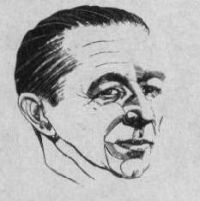 Murray Leinster
