 Percy Bysshe Shelley,
The sensitive plant
(1899)
Percy Bysshe Shelley,
The sensitive plant
(1899)
“ A sensitive plant in a garden grew,And the young winds fed it with silver dew,And it opened its fan-like leaves to the light,And closed them beneath the kisses of night. ”
Percy Bysshe Shelley,
The sensitive plant
(1899)
“ A sensitive plant in a garden grew,And the young winds fed it with silver dew,And it opened its fan-like leaves to the light,And closed them beneath the kisses of night. ”
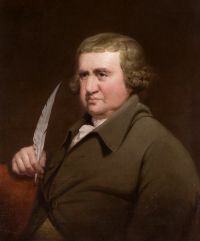 Erasmus Darwin,
The Botanic Garden, a Poem in Two Parts…
Erasmus Darwin,
The Botanic Garden, a Poem in Two Parts…
“ The upper side of the leaf is the organ of vegetable respiration, as explained in the additional notes, No. XXXVII, hence the leaf is liable to injury from much moisture on this surface, and is destroyed by being smeared with oil, in these respects resembling the lungs of animals or the spiracula of insects. To prevent these injuries some leaves repel the dew-drops from their upper surfaces as those of cabbages; other vegetables close the upper surfaces of their leaves together in the night or in wet weather, as the sensitive plant ”
John Platts, The Book of Curiosities
“ When we oppose these observations to those from which we might infer the sensibility of plants, we remain in uncertainty, and we cannot explain the phenomena related above. Our knowledge upon this subject is very imperfect, and is confined to simple conjecture. We neither attribute sensibility to plants, nor deny it to them, with certainty.The Sensitive Plant.—This singular plant rises from a slender woody stalk seven or eight feet in height, armed with short recurved thorns; the leaves grow upon long footstalks, which are prickly, each sustaining two pair of wings ”
Percy Bysshe Shelley,
The Complete Poetical Works of Percy Bysshe Shelley…
“ For the Sensitive Plant has no bright flower; Radiance and odour are not its dower; _75 It loves, even like Love, its deep heart is full, It desires what it has not, the Beautiful! ”
 Roscoe Wilfred Thatcher,
The Chemistry of Plant Life
Roscoe Wilfred Thatcher,
The Chemistry of Plant Life
“ It is evident that those aromatic compounds which occur as normal secretions of plants and which give to the plants their characteristic odors may act either as an attraction to animals which might utilize the plants as food and so serve to distribute the seed forms, or as a repellent to prevent the too rapid destruction of the leaves, stems, or seeds of certain species of plants whose slow-growing habits require the long-continued growth of these portions of the plant for the perpetuation of the species. ”
 Frances Theodora Parsons,
Plants and their children
(1896)
Frances Theodora Parsons,
Plants and their children
(1896)
“ You know that they are stowing away their food in warmer, safer places than can be supplied by the delicate leaves. And when all the food has been drawn out of the leaves, and packed away in the right spots, then the plant finishes a piece of work it began some time before. This piece of work is the building-up of a row of little cells just where the leafstalk joins the stem or branch. When this row is complete, it acts almost like a knife, loosening the stalk from the stem. ”
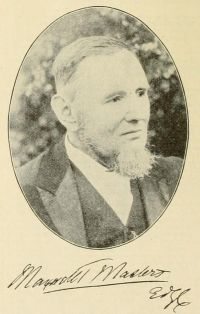 Maxwell T. Masters,
Vegetable Teratology
Maxwell T. Masters,
Vegetable Teratology
“ The production of a flower is preceded by an arrest of vegetation; this is obvious: the current of the plant's life becomes changed, the growth of the leaves is checked, the lengthening of the branches is arrested as the flower-bud forms; moreover, there is a close relationship in a large majority of flowers between the outer envelopes of the flower and the scales of a leaf-bud; this is especially so in regard to the venation, and is admitted by all morphologists. So far, then, it may be said that the production of a flower, like that of a bud, is due to a diminution of vegetative action ”
G. F. Scott Elliot, The Romance of Plant Life
“ Each plant is fighting with its neighbours for light, for air, for water, and for salts in the soil, and it is also trying to protect itself against grazing animals, against the vole which gnaws its roots, and against the insects and caterpillars which try to devour its buds. ”
gardener William Keane, In-Door Gardening for Every Week in the Year
“ A small portion of air to be admitted on fine days, to purify the atmosphere of the house. Keep the surface of the soil in the pots free from weeds, as also from moss and lichen; but when doing so do not loosen the soil so as to injure the roots near the surface. Keep every plant free from dead leaves, and all climbing plants neatly tied up. The Achimenes, Clerodendrons, Erythrinas, Gloxinias, and the various bulbs will now be approaching a state of repose, and therefore will require but little or no water. ”
H. Marshall Ward, Disease in plants
“ Every plant is adapted to certain ranges of light intensity, and most cultivators know how impossible it is to grow shade plants in fully exposed situations, and how easily plants which live in open sunny situations are "drawn" and killed by shade. ”
Robert Buist, The American Flower Garden Directory
“ Having last month put the house in complete order, all that remains necessary to be attended to, is the state of the plants and pots, which should be regularly examined, and of those where the roots fill the soil, a little may be taken off the top, supplying its place with fresh earth, thereby giving what is called a top dressing. Give each a sufficient rod that requires it, tieing the plant neatly thereto; minutely scrutinise each for insects, and where they are detected, have them eradicated. ”
Rev. Alexander Stewart, Nether Lochaber
“ When a single plant once gets root-hold in pasture land, it spreads with amazing rapidity, damaging and crowding out the grass in all directions, so that whenever and wherever it appears its utter and thorough extirpation, whatever the labour and cost, should be insisted upon with the least possible delay. When plucked by the hand the plant emits a fœtid, sickening smell, all trace of which is only effaced from the fingers by a very thorough washing indeed. ”
H. Marshall Ward, Disease in plants
“ In the first place, the enormous holdfast, ensured by the millions of points of adherence, enables the plant to withstand even powerful lever actions from above, and provides fixed points against which the root-tips can work as they drive deeper into the soil. In the second place, the intimate contact of the root-hairs and particles of soil, ensures that the films of water held by surface-action on the soil-particles and root-hairs shall be in continuity with the water saturating the cell-walls of the latter, and therefore with the protoplasm and cell-sap in their interior. ”
Lillian Elizabeth Roy, Norma: A Flower Scout (1925)
“ These sap the vitality of the plants and check their progress. If you dig up the soil a few inches and mix in it the fresh clipped grass from the lawn or a bit of very old manure you can offset this evil.“The minute you find mildew on a plant, fight it, or it will spread so rapidly to other plants that you will find it well nigh impossible to kill it. In a very short time, your most beautiful flowers will be nothing but a memory. Powder your diseased plants with soot and sulphur nor care for their looks as long as you save them in the end. ”
Sutton & Sons Ltd., The Culture of Vegetables and Flowers From Seeds and Roots
“ The seed-beds must be tended with scrupulous care to keep down weeds and avert other dangers. It is of great importance to secure a robust plant, short, full of colour, and free from club at the root. ”
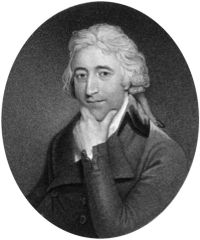 James Edward Smith,
An introduction to physiological and systematical botany
(1807)
James Edward Smith,
An introduction to physiological and systematical botany
(1807)
“ But when we attempt to consider how the particular secretions of different species and tribes of plants are formed; how the same soil, the same atmosphere, should in a leaf of the vine or sorrel produce a wholesome acid, and in that of a spurge or manchineel a most virulent poison; how sweet and nutritious herbage should grow among the acrid crowfoot and aconite, we find ourselves totally unable to comprehend the existence of such wonderful powers in so small and seemingly simple an organ as the leaf of a plant. ”
John Grove, Epidemics Examined and Explained…
“ Light, heat, moisture, and soil are therefore to be considered as the agents required to exist in a certain balance, or proportion, in reference to the health or power of vitality of the plant. Within a certain amount of variation, health may persist in virtue of the power of selection, which appertains to the spongioles of the root in absorbing nutriment; and also as regards light, from the tendency which most plants have to accommodate themselves to any deficiency of this element, by presenting their leafy expansion in that direction where the most of its influence may be obtained. ”
Andrew Wilson, Popular Science Monthly (1879)
“ The latter, when duly fertilized by being brought into contact with the "pollen" of the stamens, become "seeds," and are capable of growing up, when planted, into new plants. Now, the botanist will inform us that it is a matter of common experience to find some individual plants of a species with well-developed petals or blossoms, and other individuals of the same species with petals in a rudimentary condition, thus proving that the production of imperfect parts in flowers occurs as an ordinary event under our own eyes, and under the common conditions of plant-life. ”
Asa Gray, The Elements of Botany, For Beginners and For Schools
“ Cutting into pieces only multiplies the pest; for each piece (Fig. 98) is already a plantlet, with its roots and with a bud in the axil of its scale-like leaf (either latent or apparent) , and with prepared nourishment enough to develop this bud into a leafy stem; and so a single plant is all the more speedily converted into a multitude. Whereas, when the subterranean parts are only roots, cutting away the stem completely destroys the plant, except in the rather rare cases where the root freely produces adventitious buds. ”
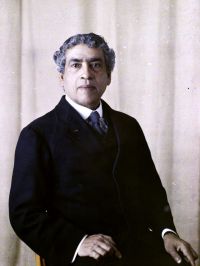 Jagadish Chandra Bose,
Researches on Irritability of Plants
(1913)
Jagadish Chandra Bose,
Researches on Irritability of Plants
(1913)
“ That they, in their totality, do leave the plant better or worse for their occurrence, we know. It is evident that internal changes are effected by their agency which are entirely beyond our visual scrutiny. Would it be possible to trace this general action of the environment into some detail, and then follow out the question of its particular effects upon the vegetal organism? ”
James Edward Smith,
An introduction to physiological and systematical botany
(1807)
“ If the ground in old-established botanic gardens be dug much deeper than ordinary, it frequently happens that species which have been long lost are recovered, from their seeds being latent in the soil, as I have been assured by Mr. Fairbairn of Chelsea garden, and others. The integuments of the seed, having fulfilled their destined office of protection, burst and decay. The young root is the first part of the infant plant that comes forth, and by an unerring law of Nature it is sent downwards, to seek out nourishment as well as to fix the plant to the ground. ”
Joseph Edward Kirkwood, Popular Science Monthly (1909)
“ Slowly through the years the materials have been gathering for this particular task, and finally in a few short weeks of summer the supreme work is consummated, and the great candelabrum of branches stands forth with its hundreds of seed capsules, while the erstwhile luxuriant leaves are sere and withered, their substance, as indeed the whole life of the plant, sacrificed to this one supreme effort toward the propagation of its kind. When in bloom the inflorescence is surrounded by myriads of flies and other insects attracted by the abundant nectar which the flowers secrete. ”
 L. H. Bailey,
Beginners' botany
(1921)
L. H. Bailey,
Beginners' botany
(1921)
“ Every plant and animal is exposed to unfavourable conditions. It is obliged to contend with these conditions in order to live.No two plants or parts of plants are identically exposed to the conditions in which they live. The large branches in Fig. 1 probably had more room and a better exposure to light than the smaller ones. Probably no two of the leaves in Fig. 2 are equally exposed to light, or enjoy identical advantages in relation to the food that they receive from the tree. ”
R. Lloyd Praeger, Aspects of plant life; with special reference to the British flora
“ These are, as already pointed out, young plants, already a long way advanced from the egg stage, neatly tucked up and enclosed, in most cases along with a supply of food material, in a tight, strong skin, which is mostly of a particularly impervious character, protecting the young plant from injury by bruising, from attacks of small animal enemies, from extremes of heat and cold, of moisture and dryness. ”
R. Lloyd Praeger, Aspects of plant life; with special reference to the British flora
“ Should it come in contact with a living stem of a suitable plant, it attaches itself to it by means of disc-like suckers, penetrates the tissues of its victim, draws out nourishment, and, growing rapidly, spreads from plant to plant, taking a couple of close turns round each stem after the manner of a lasso, and then sending in rootlets from the attaching disc, and sucking the life out of each as it goes. It has no roots, no leaves, no chlorophyll, being of a red or yellow tint, and is entirely dependent for its nourishment on the plants which it attacks. ”
Frances Theodora Parsons,
Plants and their children
(1896)
“ And in the woods at this season you find the yellow adder’s tongue, spring beauty, anemone, wake-robin, Jack-in-the-pulpit, wild ginger, and Solomon’s seal. Each of these plants has stores of food hidden in its [Pg 217] underground stem. This may take the shape of a bulb, or a tuber, or a rootstock; but in any case it shows you at once that it is a little storehouse of food.A collection of the different kinds of underground stems which serve as storehouses for the early-flowering plants would be quite as interesting to work over as a collection of plant packages. ”
John Grove, Epidemics Examined and Explained…
“ It is quite certain, that if a healthy seed, or leaf-bud, be placed in such a situation, that, according to the laws known, it will in all likelihood germinate, if all the elements for its sustenance exist in the soil, and the temperature and hygrometric {144}condition of the atmosphere are adapted to it, a healthy plant will be the result. ”
 Herbert Spencer,
The Principles of Biology — Chapter III.9
(1898)
Herbert Spencer,
The Principles of Biology — Chapter III.9
(1898)
“ As before pointed out ( § 105) , the plants and animals inhabiting each locality are held together in so entangled a web of relations, that any considerable modification which one species undergoes, acts indirectly on many other species, and eventually changes, in some degree, the circumstances of nearly all the rest. If an increase of heat, or modification of soil, or decrease of humidity, causes a particular kind of plant either to thrive or to dwindle, an unfavourable or favourable effect is wrought on all such competing kinds of plants as are not immediately influenced in the same way. ”
Robert Hunt, The Poetry of Science; or, Studies of the Physical Phenomena of Nature
“ When the process of germination has terminated, if the young plant is brought under the yellow glass, it grows most healthfully, and forms an abundance of wood, the leaves having an unusually dark green colour, from the formation of a large quantity of chlorophylle. Plants do not, however, produce flowers with readiness under this medium ”
W. Robinson, The Subtropical Garden; or, beauty of form in the flower garden
“ The leaves being handsome, it is worth a place in full collections of fine-foliaged hardy herbaceous plants, and would look to best advantage in small groups in the rougher parts of the pleasure-ground and by wood-walks. Thrives best in peaty soil, and is best multiplied by division, as the seed is very slow and capricious in germinating, sometimes not starting until the second year, and it is some years before the seedlings are strong enough to flower. The root of this plant is exceedingly poisonous. ”
 John Ruskin,
Modern Painters, Volume 2 (of 5…
John Ruskin,
Modern Painters, Volume 2 (of 5…
“ Those forms which appear to be necessary to its health, the symmetry of its leaflets, the smoothness of its stalks, the vivid green of its shoots, are looked upon by us as signs of the plant's own happiness and perfection; they are useless to us, except as they give us [Page 93] pleasure in our sympathizing with that of the plant, and if we see a leaf withered or shrunk or worm-eaten, we say it is ugly, and feel it to be most painful, not because it hurts us, but because it seems to hurt the plant, and conveys to us an idea of pain and disease and failure of life in it. ”
L. H. Bailey,
Manual of Gardening (Second Edition…
“ One soon becomes familiar with the wants of individual plants, and can judge closely as to need of water. All soft-wooded plants with a large leaf-surface need more water than hard-wooded plants, and a plant in luxuriant growth of any kind more than one that has been cut back or become defoliated. ”
Norman Taylor, Botany: The Science of Plant Life
“ Actually what are ordinarily thought of as plants make up only a fraction of the great plant world. The fact that our familiar roadside and garden plants produce blossoms followed by a fruit and seed, such as peas and beans and all the ordinary flora of any region, separates them at once from that other large group of plants that do not. Common examples of the latter class are the green scum on the ponds, moss, seaweed, the rust on wheat, yeast, disease-causing bacteria, the smallest of all known plants, and many others. ”
L. H. BaileyFrances Theodora ParsonsH. Marshall WardJames Edward SmithG. F. Scott ElliotIda D. BennettJoseph Edward KirkwoodRobert BuistSutton & Sons Ltd.gardener William KeaneJohn GroveAlfred B. Rendle, Arthur G. Tansley…John PlattsGeorge W. HunterRoscoe Wilfred ThatcherW. Robinson Charles DarwinHerbert Spencer