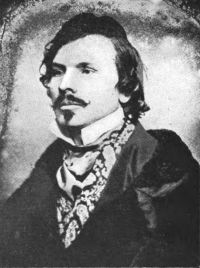
W. S. Gilbert,
The Complete Plays of Gilbert and Sullivan
“ But I have a left shoulder-blade that is a miracle of loveliness. People come miles to see it. My right elbow has a fascination that few can resist. ”
W. S. Gilbert,
The Complete Plays of Gilbert and Sullivan
“ But I have a left shoulder-blade that is a miracle of loveliness. People come miles to see it. My right elbow has a fascination that few can resist. ”
Mountain Craft (1920)
“ Guides carry it, and it is the best position, over the hollow of the elbow, like a gun, with the head under the shoulder, and so turned that the curve of the pick adheres upward along the shoulder-blade and only the balanced weight of the shaft rests across the forearm. The only absolute rule is that, whether carried in hand or over or under the shoulder, the axe should always be held with the spike end of the shaft pointing forward. Nothing betrays the beginner or the badly instructed climber so fatally as an axe swung with the head to the front and the spike out behind. ”
Cassell's Natural History, Vol…
“ One muscle, which in ourselves forms the cushion on the shoulder, and reaches down the outside of the arm for a little distance, is called the deltoid or Δ-shaped muscle, and its especial duty is, when the shoulder-blade is fixed, to lift up the arm by its contraction. The movement is permitted because between the spots where the muscles are adherent to the blade-bone on the one hand, and to the outside of the arm-bone on the other, a distance of several inches, there is a joint like a ball and socket. ”
Albert F. Blaisdell, A Practical Physiology: A Text-Book for Higher Schools
“ As already mentioned, its rounded head fits into the socket of the shoulder-blade, forming a ball-and-socket joint, which permits great freedom of motion. The shoulder joint resembles what mechanics call a universal joint, for there is no part of the body which cannot be touched by the hand. ”
Günther F. Hertzer, Garment cutting in the twentieth century (1892)
“ To connect the shoulder seam with a satisfactory result, square up from line 111⁄4 and in front of armhole, and nick each back and each front on said line, which is even, to moving the forepart down on the front plumb line until the shoulders meet. In sewing the shoulder seam together the back should always be a trifle the fullest, because the back passes over the round shoulder blade and the front passes over the hollow on top of the shoulders, and should be stretched a trifle. ”
Anne Cobbett, The English Housekeeper (1851)
“ For this purpose, put the fork firmly into the shoulder joint, and then cut underneath the blade-bone beginning at a (Fig. 5) , and continue all round in the direction of a circular line, and pretty close to the under part of the blade-bone. Some people like to cut the shoulder large, while others take off no more meat with it than is barely necessary to remove the blade-bone. It is most convenient to place the shoulder on a separate dish. ”
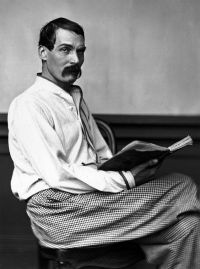 Sir Richard Francis Burton,
First Footsteps in East Africa
“ The thrust is parried with the shield, and a wound is rarely mortal except in the back: from the great length of the blade, the least movement of the man attacked causes it to fall upon the shoulder-blade. ”
Duke of Saxe-Weimar-Eisenach Bernhard, Travels Through North America, During the Years 1825 and 1826…
“ The anterior extremities of animals are in all respects analogous to those of the superior extremities of man; hence the second joint from the shoulder blade uniformly bends backward like the human elbow. ”
Robert Moreton, On horse-breaking (1877)
“ The shoulder-blade must be long and oblique, not straight, neither must it be coarse, but blend gradually into the withers and back; a coarse thick shoulder should always be avoided, as also a very fine one, leaving the withers to stand up by themselves like a plough-share, for an animal with such shoulders will soon tire, owing to insufficient muscular development of the parts. ”
Lewis R. Freeman, In the Track of the Trades
“ At the psychologic moment the right foot is advanced half a pace, the left leg straightened into a brace, the right arm, with its extended cutlass, stiffened to a bar of steel—and the thing is done. The keen two-foot blade, slipping between the shoulder blade and the first rib, shores its way through heart and lungs, and its point may even penetrate to the abdominal cavity. ”
Anthony Florian Madinger Willich, Domestic Encyclopædia (1802)
“ The elbow should be bent, in order to relax the muscles. A firm leather bandage, from four to five inches broad, with strong straps, is next to be tied round the arm, immediately above the elbow; when the arm should be gradually extended by assistants, pulling these straps, while another person withdraws the shoulder-blade. The extension and counter-extension must be regulated by the situation of the head of the bone. ”
Baron Rowland George Allanson-Winn Headley, Broad-Sword and Single-Stick
“ Again, in thrusting at him, if you keep your hand as high as your shoulder, and in a line with your right shoulder, you will protect the upper half of your own body from a counter, so that, even if your thrust fails and does not get home, the upper part of your blade will stop his cut.It is necessary to study so to attack your opponent that, in the very act of delivering a cut or thrust, you may stop him in as many lines or directions of attack as possible. ”
Anonymous, The boy's book of trades and the tools used in them (1866)
“ The cutting part of the blade thus rudely formed is next welded to a piece of iron, which forms the bolster, or shoulder, that is, the part that rises round the handle of the knife. To make the shoulder of the size and shape required, and to give it neatness and finish, it is introduced into a die by the side of the anvil, and a swage (see Blacksmith) placed upon it, to which a few smart blows in the proper direction are given by the striker. ”
Hugo Blümner, The Home Life of the Ancient Greeks
“ In the historic age the swords are usually short, the blade about{475} twenty inches long, reed-shaped, and two-edged, adapted for thrusting and piercing; the handle, which is generally suited for parrying strokes, is rather small (compare the sword in Fig. 169, where the sheath and shoulder-belt are well represented) . The sheath was often of some costly material, and artistically decorated, ordinary kinds were made of leather; the shoulder-belt was usually a leather strap, with metal plates ”
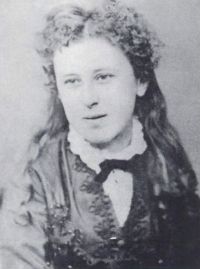 Vernon Lee,
Renaissance Fancies and Studies
“ And see, under the big deltoid, which fits round the shoulder like an epaulette and pulls the arm up, is the scapular group, things like tidily sorted skeins, thick on the shoulder-blades, diminished to a tendon string at their insertion in the arm; their business is to pull the arm back, in opposition to the big pectoral muscle which pulls it forwards. ”
Edward Johnson, United States patent 996343 (1911)
“ In a shoulder brace, a back support comprising a plurality of symmetrically dis- posed non-elastic back stays flaring up- wardly and separating at the top to embrace the shoulder blades, means for spacing and holding the stays in fixed relation, straps secured to the upper portion of the back support and adapted to pass from the rear forwardly, me over each shoulder and thence back under the armpits and thence to the front of the waist, with a loose sliding attachment for the straps to the back sup- port after passing under the armpits where- by the shoulder blades are. ”
James Grant, Oliver Ellis (1865)
“ By iron hooks, inserted under his shoulder-blades, he will be suspended alive over a slow fire, and his lower joints will be cut off one by one, with the sharp knives of the gangas, beginning with the toes, and so proceeding upward to the knees and hip-joints; but few live, with the fire playing about them, until the knives come that length. ”
“ The rest are vanish’d, none repass’d the gate, And not a man appears to tell their fate.’ “I heard, and instant o’er my shoulder flung The belt in which my weighty falchion hung (A beamy blade) : then seized the bended bow, And bade him guide the way, resolved to go. ”
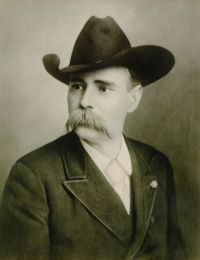 Prentiss Ingraham,
Buffalo Bill, the Border King; Or…
“ There they stood panting, foot to foot and breast to breast, their fingers locked about each other’s wrists like steel bands, the knife-blades “slithering” against each other, every muscle in their bodies as tense as steel wires. The pressure of blade against blade was all that kept the men apart. ”
William Deskitt Foot Vincent, The cutters' practical guide to the cutting of ladies' garments (1892)
“ The slashed sleeve head, the pleated topside, those arranged with sleeve capes, as well as the high puffed sleeves, all have the same result, though the extreme to which they are carried clearly indicate that the original purpose of merely providing sufficient room for the shoulder has been lost sight of, and fashion has been allowed to hold the reins of fancy. Variations in the width of the elbow should be made equally at fore and hindarms, though the preference should be given to the hindarm, to make the larger share of the increase, and the forearm to decrease. ”
Baron Rowland George Allanson-Winn Headley, Broad-Sword and Single-Stick
“ First Point.—Turn the wrist, with the edge of the sword upwards, to the right. Bring the hand upwards on a level with the eyes, elbow bent and raised, the point of the sword directed towards the centre of the target, and the left shoulder advanced. Now, by an extension of the arm, deliver the point smartly to the front, with the edge of the sword still inclined upwards to the right and the point accurately directed to the centre. The right shoulder should now be well advanced and the left drawn back—this motion of the shoulders being applicable to all the points. ”
Frederick Pollock and Hilaro W. Barlow, 1911 Encyclopædia Britannica (1911)
“ The handle of a sword provides a grip for the hand that wields it, or sometimes for two hands; it may add protection, and in most patterns does so to a greater or less extent. Still it is altogether subordinate to the blade. For want of a metal-headed lance or axe, which indeed were of later invention, a sharpened pole or a thin-edged paddle will serve the turn. But a sword-handle without a blade is naught; and no true sword-blade can be made save of metal capable of taking an edge or point. ”
W. Butt, The Theory and Practice of Archery
“ The action of the wrist should be quite free and unconstrained until the commencement of the draw, and during the draw the back of the hand should be kept as nearly as possible in the same line as the forearm.The left shoulder requires most careful attention. It must not be allowed to rise too high when the bow is drawn, nor to shrink inwards, as it will sometimes do with beginners when using bows that are too strong. ”
John Malcolm Mitchell, Oswald Barron, and Charles Francis Atkinson, 1911 Encyclopedia Britannica (1911)
“ Arms and legs and feet become cased in plate of steel or studded leather, and before the mid-century the shoulder-plates, like the steel shoes, are of overlapping pieces and the elbow also moves easily under the same defence. (See fig. 7.) Such harness, ever growing more beautiful in its rich details, serves our champions until the beginning of the 15th century, when the fashion begins to turn. The scanty surcoat tends to disappear. ”
“ The left shoulder, which, as I had previously noticed, the old man could make little use of, was shrunk and thin to the elbow, like a mere bone covered with skin, and those veins and muscles which were unscathed, wound round the bone close to the surface. ”
Baron Rowland George Allanson-Winn Headley, Broad-Sword and Single-Stick
“ The point when used is given by a simple straightening of the arm on the lunge, the knuckles being kept upwards, and, in ordinary play, the grip on the stick loosened, in order that it may run freely through the hilt, and thus save your opponent from an ugly bruise, a torn jacket, or possibly a broken rib. When the knuckles are kept up in giving point, the sword hand should be opposite the right shoulder. But the point may also be delivered with the knuckles down, in which case the hand should be opposite to the left shoulder. ”
The Cricket of Abel, Hirst, and Shrewsbury
“ But for some strokes, as for certain late cuts, the shifted grip is often preferable; one should be able to slip the right hand down the handle towards the blade, near to which so many of the stone-wallers love to keep it. ”
 Edgar Rice Burroughs,
The People That Time Forgot — Chapter II
(1918)
“ About her waist was a loose leather belt, to the center of which was attached the scabbard belonging to her knife. There was a single armlet between her right shoulder and elbow, and a series of them covered her left forearm from elbow to wrist. These, I learned later, answered the purpose of a shield against knife attack when the left arm is raised in guard across the breast or face. ”
Thomas Baines, Shifts and Expedients of Camp Life…
“ The secret by which this complicated set of requirements is fulfilled consists in properly describing an arc from the shoulder, with a stiff elbow, giving the jerk to the whip handle from the hand and wrist alone. The lash trails behind as you travel, and when thrown forward is allowed to extend itself, without an effort to bring it back. ”
Günther F. Hertzer, Garment cutting in the twentieth century (1892)
“ A shoulder that appears flat on the top, and breaks behind or in front, will always set better when the sleeves are out, because the sleeve-head is too short, pulling the shoulder downward, and it must make a break either in front or back of the arm; and it is for this reason that whenever they try on coats the journeyman is required to baste in one or both sleeves. ”
Günther F. Hertzer, Garment cutting in the twentieth century (1892)
“ The armhole must be larger than the body all around, and no coat feels agreeable or looks well if the armhole is tight-fitting on the top of the arm or at the shoulder seam.The shoulders should fit at the neck, but not tight. They should hang and balance themselves between the arm and the neck, where neither the movement of the neck nor that of the arms interferes with the coat. At the arm, the shoulders of a well-fitting coat should be loose, and as long as the sleeve fits so that it will not drag the armhole out of place such looseness will remain there, forming a square shoulder. ”
Edwin Tenney Brewster, Natural Wonders
“ The upper arm, between the shoulder and elbow is short, and is buried in muscle so that one doesn’t notice it. So the first joint that shows, where the fore-leg joins the body, is not the shoulder but the elbow. ”
J. G. Wood, The uncivilized races of men in all countries of the world… (1875)
“ One of these, who is armed with a double edged knife, purposely blunted and notched, pinches up an inch or so of flesh of the shoulder or breast, and pushes the knife through it, between his finger and thumb and the body of the candidate. ”
N.Y.) George R. Fuller Co. (Rochester, The Making of a Man: Being a Description of Artificial Limbs and How They May Be Adopted by Those…
“ In other positions desired the hand may be placed at the degree of flexion most convenient and helpful and that giving the most natural appearance. No. 332, on page 72, gives an illustration of the details of the joint. The forearm and attachment above the elbow are leather, supported with steel framework same as No. 321. Wooden hand with movable thumb is furnished with or without traction rod for opening thumb with shoulder movement, but no provision is made for the use of a hook or other implement in place of the hand. ”
Sir Richard Francis Burton,
A New System of Sword Exercise for Infantry
“ When practising the Reverse Cuts (Revers or Rovescio) , the handle is held loosely with the thumb and the two first fingers, and the wrist and fore-arm should bring the blade up with a jerk, the grip being at the same time sharply tightened. Practice will soon enable the swordsman to deliver a strong “drawing” cut, equal to the Thrust-cut of the so-called “Damascus” blades. ”
maître d'armes Labat, The Art of Fencing; Or, The Use of the Small Sword
“ Some Men chuse strait Blades, others will have them bending a little upwards or downwards; some like them to bend a little in the Fort, and others in the Feeble, which is commonly called le Tour de Breteur, or the Bullie's Blade. The Shell should be proportionable in Bigness to the Blade, and of a Metal that will resist a Point, and the Handle fitted to the Hand. ”
“ It was what is termed a “jack-knife,” with a buckhorn handle, and but one blade—a sort in common use among sailors, who usually carry them on a string passed around the neck, and to which the knife is attached by a hole drilled in the haft. The blade was a square one, drawn to an angular point, and shaped somewhat like the blade of a razor. Like the latter, too, the back was thick and strong, as I could tell by the “feel.” I was gratified at perceiving this, for I knew that it would require a strong blade to hew a hole through the tough staves of oak. ”
 William Henry Holmes,
Art in Shell of the Ancient Americans
“ At the same time this doughty warrior seems to be receiving a blow in the face from the right hand of the other combatant, in which is clutched a savage-looking blade, with a curved point. The hands are vigorously drawn, the joints are correctly placed, and the thumb presses down upon the outside of the forefinger in its natural effort to tighten and secure the grasp. ”
Sir Richard Francis BurtonW. D. F. VincentAnonymousEdgar Rice BurroughsAnthony Florian Madinger WillichDuke of Saxe-Weimar-Eisenach BernhardAlbert F. BlaisdellVernon LeeJames Grant HomerPrentiss IngrahamJames A. Moss