Slide valve

Definition and stakes

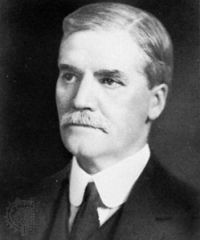
Portrait of A. Frederick Collins A. Frederick Collins,  Handicraft for boys (1918)

“ The slide valve rod is a piece of wood 1⁄4 inch in diameter and 111⁄2 inches long. Whittle or plane one end flat and drill a 1⁄8 inch hole through it. This done, set the slide valve in the steam chest; slip the slide valve rod through the head and glue it to the slide valve.
Now make four tubes or pipes of cardboard or tin 1⁄2 an inch in diameter, and have two of them 11⁄4 inches long and the other two 3 inches long; when you have formed all of them cut a strip 1⁄2 inch wide out of each one lengthwise; the purpose of which is to show that they are hollow.
”
Source: Gutenberg

William Cawthorne Unwin,  1911 Encyclopædia Britannica (1911)

“ As the water is incompressible, slide valves must have neither lap nor lead, and piston valves are preferable to ordinary slide valves. To prevent injurious compression from exhaust valves closing too soon in rotative engines with a fixed stroke, small self-acting relief valves are fitted to the cylinder ends, opening outwards against the pressure into the valve chest. Imprisoned water can then escape without over-straining the machines. ”
Source: Wikisource

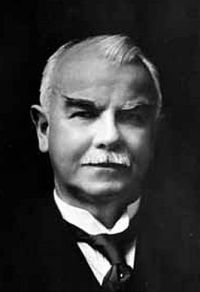
Portrait of Joshua Rose Joshua Rose,  Modern Machine-Shop Practice, Volumes I and II

“ The friction of a slide valve is caused by the steam pressing it to its seat, the amount of this pressure varying with the fit of the valve to its seat, and its position over the ports, or, in other words, upon how much of the valve area has steam pressing on one side only.
The travel of the eccentric rod is the distance it moves measured on a straight line. It is equal to twice the throw of the eccentric.
The throw of an eccentric is the distance between the axis of its bore and the centre or axis from which its circumference was turned in the lathe.
”
Source: Gutenberg

Get perspective with Kwize: daily news enlightened by great literature