Solar time

Definition and stakes

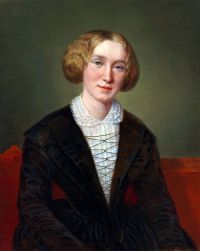
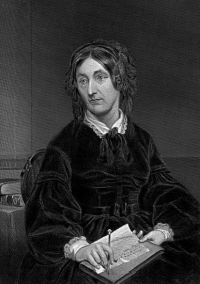
Portrait of Mary Fairfax Somerville Mary Fairfax Somerville,  A Preliminary Dissertation on the Mechanisms of the Heavens (1831)

“ If the sun moved uniformly in the equator at the rate of 59′ 8′′.3 every day, the solar days would be all equal; the time therefore, which is reckoned by the arrival of an imaginary sun at the meridian, or of one which is supposed to move in the equator, is denominated mean solar time, such as is given by clocks and watches in common life: when it is reckoned by the arrival of the real sun at the meridian, it is apparent time, such as is given by dials. ”

Source: Wikisource

George C. Comstock,  A Text-Book of Astronomy

“ With the general introduction of clocks and watches into use about a century ago this kind of solar time went out of common use, since no well-regulated clock could keep the time correctly. The earth in its orbital motion around the sun goes faster in some parts of its orbit than in others, and in consequence the sun appears to move more rapidly among the stars in winter than in summer ”
Source: Gutenberg

George F. Chambers,  The Story of the Solar System

“ As soon as the Sun has disappeared below the horizon all the clouds overhead continue for a few minutes so highly illuminated as to reflect scarcely less light than the direct light of the Sun. As, however, the Sun gradually sinks lower and lower, less and less of the visible atmosphere receives any portion of its light, and consequently less and less is reflected minute by minute to the Earth at the observer’s station until at length the time comes when there is no sunlight to be reflected—and it is night. ”
Source: Gutenberg

Get perspective with Kwize: daily news enlightened by great literature