Spherical shape

Definition and stakes

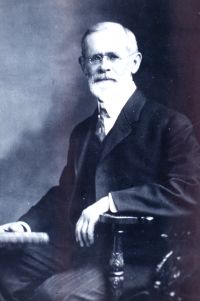
Portrait of James McBride James McBride,  Symmes's Theory of Concentric Spheres

“ Many hollow cylinders and spherical figures, we know do exist on the surface of the earth; and notwithstanding their own gravity, which the different parts exert on each other, as well as the gravity of the earth, they retain their shape and position; and had the matter in the earth originally been thrown by a centrifugal force into the form of a hollow sphere, or had the first creating power originally given it that shape,—I can discover no good reason for a change; neither should I entertain any apprehensions of the particles of matter coalescing at the centre. ”
Source: Gutenberg

Portrait of Aristotle Aristotle,  On the Heavens (350 BCE)

“ But the spherical shape, necessitated by this argument, follows also from the fact that the motions of heavy bodies always make equal angles, and are not parallel. This would be the natural form of movement towards what is naturally spherical. Either then the earth is spherical or it is at least naturally spherical. And it is right to call anything that which nature intends it to be, and which belongs to it, rather than that which it is by constraint and contrary to nature. ”
Source: Wikisource

Portrait of Albert Einstein Albert Einstein,  Sidelights on Relativity

“ For this purpose we will first give our attention once more to the geometry of two-dimensional spherical surfaces. In the adjoining figure let K be the spherical surface, touched at S by a plane, E, which, for facility of presentation, is shown in the drawing as a bounded surface. Let L be a disc on the spherical surface. Now let us imagine that at the point N of the spherical surface, diametrically opposite to S, there is a luminous point, throwing a shadow L′ of the disc L upon the plane E. Every point on the sphere has its shadow on the plane. ”
Source: Gutenberg

Get perspective with Kwize: daily news enlightened by great literature