“ What is to be the "unit" (i.e. "standard to measure by") in each subject? (2) Are these units to be of equal, or unequal value? The usual "unit" is the knowledge shown by answering the whole paper correctly ”
Standard (unit)
Definition and stakes
The theme of “standard (unit)” has been addressed by authors such as Arthur S. C. Wurtele, Lillian Moller Gilbreth, Charles De Lano Hine, John E. Young and Sir James Steuart. It is often associated with terms like measurement, law, system, standardization and management.
Quotes about “standard (unit)”
 David Hume,
Treatise of Human Nature — Appendix
(1739)
“ If they judge of equality, or any other proportion, by the accurate and exact standard, viz. the enumeration of the minute indivisible parts, they both employ a standard, which is useless in practice, and actually establish the indivisibility of extension, which they endeavour to explode. ”
 Lillian Moller Gilbreth,
The Psychology of Management
“ A standard remains fixed only until a more perfect standard displaces it. The data from which the standard was derived may be reviewed because of some error, because a further subdivision of the elements studied may prove possible, or because improvements in some factor of the work, i.e., the worker, material, tools, equipment, etc., may make a new standard desirable. ”
Lillian Moller Gilbreth,
The Psychology of Management
“ It is also surprising that, even when some standardization has been done, its importance is seldom realized. The new standard becomes a matter of course, and the management fails to be impressed enough with its benefits to apply the principle of standardization to other fields. ”
Various, Popular Science Monthly (1903)
“ Standards of weight and measure are thus the products of the people. The fundamental condition to be fulfilled is that a standard shall be definite and invariable. The function of legislation is not to create standards, but to adopt and protect them. ”
John E. Young, Yale Law Journal (1917)
“ If this view is sound, there are as many standards and sources of justice as systems of law; for in this view of the matter, each community evolves its own ideals and makes laws to effectuate them. As each community evolves its own ideals, each must have its own standard of right and wrong; for that standard, in so far as any particular community is concerned, is equal to the sum of its ideals. If, however, the standard were objective, every community would have the same standard of right and wrong ”
“ A uniformity in the weights and measures of the country is among the important objects submitted to you by the Constitution, and if it can be derived from a standard at once invariable and universal, it must be no less honorable to the public council than conducive to the public convenience. ”
Henry Hallam, Introduction to the Literature of Europe in the Fifteenth…
“ But if it is meant that any systematic science, whether by the name of jurisprudence or legislation, can be laid down as to the principles which ought to determine the institutions of all nations, or that, in other words, the laws of each separate community ought to be regulated by any universal standard, in matters not depending upon eternal justice, we must demur to receiving so very disputable a proposition. ”
 William Burnham Woods,
Rowell v. Lindsay — Opinion of the Court
“ The advantages of the invention are thus stated: 'By the form given to the standard we obtain not only the gripe on the pivoted end, but also a gripe against the sides of the standard, so that from its form it must be moved in the direction of its length. A much less restraining force will then hold the standard with requisite tenacity. ”
 Charles Sumner,
Charles Sumner: his complete works…
“ First, the new system must have in itself the assurance of unvarying stability, and, to this end, it should be derived from some standard in Nature by which to correct errors creeping into the weights and measures from time or imperfect manufacture. Secondly, the parts should be divided decimally, as nearly as practice will warrant, in conformity with our arithmetic. Thirdly, it should be such as to disturb national prejudices as little as possible.To a common observer the difficulties of finding an unvarying standard are not readily apparent. ”
William J. Brennan, Jr., Commissioner of Internal Revenue v…
“ The nontechnical nature of the statutory standard, the close relationship of it to the date of practical human experience, and the multiplicity of relevant factual elements, with their various combinations, creating the necessity of ascribing the proper force to each, confirm us in our conclusion that primary weight in this area must be given to the conclusions of the trier of fact. ”
D. B. McLachlan, Reformed Logic
“ Standards can only mediate comparisons between abstract properties, for if they contained all the concrete properties of the compared objects they would, by supposition, be as unmanageable as the latter. We have standards for length in rules, scales, tapes, chains; the balance is a standard for weight. There are also scales for pitch of sound, varieties of colour, degree of light, heat, atmospheric pressure, and probably some others for special purposes.Indirect comparison is not in itself inference; or if inference it is subordinate and preparatory to some [pg 103] more important conclusion. ”
Public Law 108-237 — Title I—Standards Development Organization Advancement Act of 2004
“ The term ``standards development activity ́ ́ means any action taken by a standards development organization for the purpose of developing, promulgating, revising, amending, reissuing, interpreting, or otherwise maintaining a voluntary consensus standard, or using such standard in conformity assessment activities, including actions relating to the intellectual property policies of the standards development organization. ”
Owen J. Roberts, United States v. Dubilier Condenser Corporation…
“ The Bureau of Standards is a subdivision of the Department of Commerce. [3] Its functions consist in the custody of standards; the comparison of standards used in scientific investigations, engineering, manufacturing, commerce, and educational institutions with those adopted or recognized by the government; the construction of standards, their multiples or subdivisions; the testing and calibration of standard measuring apparatus; the solution of problems which arise in connection with standards; and the physical properties of materials. ”
 A. E. Taylor,
Elements of metaphysics
(1903)
“ But, apart from the impossibility of constructing a classification which shall be more than relatively artificial, such a mere aggregate or collection is not a real system. In a true system, as distinct from a mere collection, the principle of unity has always some sort of significance for the members of the system themselves. ”
 William Taplin,
The Sporting Dictionary and Rural Repository…
“ Considering this remissness in the operator, and shoeing too short at the heels, to constitute the prevalent and principal errors requiring rectification, it is anxiously to be hoped, that those whose minds are open to conviction, will contribute their assistance to inculcate the necessity of adopting one invariable standard as a leading step to general reformation. ”
 David Ricardo,
On The Principles of Political Economy…
“ To this standard we must conform till the law is changed, and till some other commodity is discovered, by the use of which we shall obtain a more perfect standard, than that which we have established. ”
 Irving Fisher,
Harper's Pictorial Library of the World War…
“ A standard ceases to be a standard if one nation can arbitrarily alter it, but surely there can be no argument against the creation of a new standard sanctioned by the whole civilized world for their mutual advantage. If Great Britain and the United States were to proclaim their desire to adopt my scheme it is hardly likely that any country other than the Central Powers would fail to welcome it. ”
Lillian Moller Gilbreth,
The Psychology of Management
“ It is obvious, therefore, that a standard must be the result of definite mathematical and other measured proof, and not of an opinion, and that the standard must be in such physical shape that the subject-matter will always be clearly defined, otherwise the ultimate losses resulting from dependent sequences of the standard schedule and time-tables would be enormous. ”
 Edmund Burke,
The Works of the Right Honourable Edmund Burke…
“ You must find a fixed standard of some kind or other; for if there is no standard but the immediate momentary purpose of the day, guided and governed by the man who uses it, fixed not only for the disposition of all the wealth and strength of the state, but for the life, fortune, and property of every individual, your Lordships are left without a principle to direct your judgment. ”
Josephine Linker Hart, Philip Morris Companies, Inc. v… (2015)
“ It is axiomatic that in order for a class action to be certified, a class must exist. The definition of the class to be certified must first meet a standard that is not explicit in the text of Rule 23, that the class be susceptible to precise definition. ”
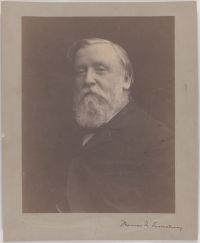 Thomas Raynesford Lounsbury,
English spelling and spelling reform
(1909)
“ It would represent a norm sufficiently narrow of limit to make understood what is said, and sufficiently broad to offer within justifiable bounds ample opportunity for the play of individual or territorial peculiarities. Its principal effect would be to set up a standard which would be ever before the eyes of men. ”
 H. P. Lovecraft,
Writings in the United Amateur…
“ To adopt a lower standard would, indeed, be affronting a more influential element than that which may at present be dissatisfied; an element which has possibly gained higher claims to consideration through the continuous nature of its services to the Association during trying times when others were silent and inactive. ”
Hector Denis, Social Comptabilism
“ What is important to remark is that in proceeding, as we have just pointed out, in all estimates of value and in consequence in the registration of all transactions, the variation in the value of the material support, corn, metal, etc. of the unity adopted does not intervene in any way.It will be further seen and we would insist on this point, that the common denominator of the value of things takes in this system, by the fact of its invariability, the character of a common measure; that it can in consequence be taken as unity, and considered in an abstract way. ”
R. H. Tawney, Religion and the rise of capitalism (1926)
“ Agreement as to ends implies the acceptance of a standard of values, by which the position to be assigned to different objects may be determined. In a world of limited resources, where nature yields a return only to prolonged and systematic effort, such a standard must obviously take account of economic possibilities. ”
P. Coffey, Ontology, or the Theory of Being
“ Units, one of which is not the other, constitute multitude or plurality. If unity is the negation of actual division in being, multitude results from a second negation, that, namely, by which the undivided being or unit is marked off or divided from other units.139 We have defined unity by the negation of actual intrinsic dividedness ”
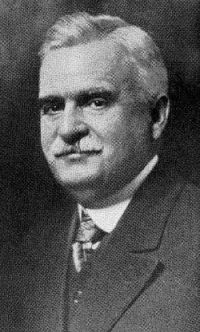 Charles De Lano Hine,
Letters from an Old Railway Official…
“ Because the unit system leaves so much to the thinking capacity of the men below, some people have found it difficult to understand. Many codes of organization attempt to cover in advance all the various cases that may come up. The unit system enunciates principles and prescribes methods, but leaves independence of action to the man on the ground. He is for the time being the judge as to what principle to apply. When men are carefully trained their first impulse is to do the right thing. ”
 Rudolf Hermann Lotze,
Outlines of Metaphysic — First Principal DivisionOntology
(1883)
“ We are obviously obliged to require a certain ‘unity’ of the nature of ‘Thing.’ Just such unity, however, never appertains to what is simple, but in all cases only to that kind of multiplicity which, by a law of the combination of its parts, is so connected as to resist every unregulated increase, diminution, or change of its consistence, and to permit only such change as invariably leaves the new state subjected to the same law of its composition. ”
by the United States Department of Defense, Ironman language requirements (1977)
“ Membership and constructor operations shall be defined automatically for each type defined as a power set. Intersection, union, symmetric difference, equality, and inequality shall be automatically defined between elements of each set type. ”
 William Whewell,
Novum organon renovatum
(1858)
“ It is 150 very desirable that, if possible, some permanent standard, founded in nature, should be adopted; for the conventional measures are lost in the course of ages; and thus, dimensions expressed by means of them become unintelligible. ”
Arthur S. C. Wurtele, Standard Measures of United States…
“ We find, also, that comparisons of one standard with another differ, as given by reductions carried to great apparent exactness.Every author appears to assume the right of using his own judgment as to what reduction is to be considered the most exact, and the result is a very confusing difference in apparently exact figures, with nothing to show how these differences arise. ”
Herbert Feis, The Settlement of Wage Disputes
“ That level of standardization should be chosen, which it is believed will produce more good and less harm than any other level that might be chosen. Or in other words, the level of standardization should be determined by a balance of the interests involved—that point being chosen at which, it is judged, the most favorable balance is established. ”
 Bertrand Russell,
Our Knowledge of the External World…
(1914)
“ The unity which philosophers rightly feel to be necessary for the assertion of a number is the unity of the general term, and it is the general term which is the proper subject of number. And this applies equally when there is one object or none which falls under the general term. ”
 Johann Gottlieb Fichte,
The Science of Rights — Book First Concerning State Organization
(1889)
“ A true union has not been comprehended until the uniting tie has been shown up outside of the conception—as we say, from the empirical standpoint—or until that which compels us in thinking to make this union, as we say, from the transcendental standpoint, has been shown up. We have shown up this uniting tie of the state as a whole in the conception of the individual who is to be protected. That individual being necessarily undetermined, because any one of all individuals may need the protection, this very undeterminedness unites all individuals into one. ”
H. A. Prichard, Kant's Theory of Knowledge
“ It may be noticed that possession of the unity of a system does not really distinguish 'an object' from any other whole of parts, nor in particular from 'a representation'. Any whole of parts must be a systematic unity. ”
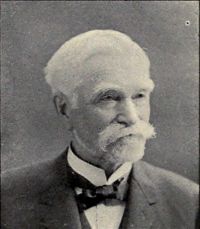 Albert Benjamin Prescott,
Popular Science Monthly
(1877)
“ From the provision of the first class of materials, it results that, in certain great essentials of organization, all individuals are placed on a footing of equality with their fellows. It results from the provision of the second class of materials, that unequal qualities and quantities of organization are derived by different individuals of the same species. Through our redundant resources we are taught the common brotherhood of the created. Through our adequate resources come the assurances of our responsibility—our commissions as stewards of the earth. ”
 Frederic Jesup Stimson,
Popular Law-making
“ It is needless to say that the whole value and object of the whole movement for uniformity is to have actual uniformity. That is to say, unless the lawyer or citizen reading the statute can be sure that it is uniform with the laws of all other States without taking the trouble to consult them, the reform has no value. ”
John Austin, Centralization (1847)
“ If the organization of the system be crude and confused, the number, naturally, is comparatively large; if the organization be regular or systematic, the number, naturally, is comparatively small; for the more orderly the distribution of the various functions, the more easy is it, without damaging the efficiency of the system, to combine or cumulate functions in one and the same functionary. It is, therefore, the tendency of centralization, which supposes a regular administration, to reduce the functionaries required by the public wants to the lowest possible number. ”
Johann Gottlieb Fichte,
The Science of Rights — Book First Concerning State Organization
(1889)
“ Hence, that which was to be illustrated by the conception of a product of nature, and which is equally taken from empirical observation, must be modified. The state, as an organization, is either the totality of mankind, or every two individuals may form a state. There is no ground why a state should be limited by another number than the totality of rational beings on earth, just as we found no ground why the conception of organized products of nature should be limited by only quantitative lines. ”
Herbert Feis, The Settlement of Wage Disputes
“ That is whether the principle of standardization, as put forward up to this point, should be limited or varied in any way because it would have to apply, as a matter of fact, to an area so great and so diversified in economic character as the United States, and to an industrial situation which is the product of a great number of separate impulses, and which is made up of a vast number of separate interests. ”
Related terms
Authors who wrote about “standard (unit)”
Arthur S. C. WurteleLillian Moller GilbrethCharles De Lano HineJohn E. YoungSir James SteuartDavid HumeVarious Lewis CarrollWilliam Burnham WoodsCharles SumnerHenry HallamUnknownD. B. McLachlanWilliam J. Brennan, Jr.Owen J. RobertsWilliam TaplinEdmund BurkeJosephine Linker HartIrving FisherDavid Ricardo
Lillian Moller GilbrethCharles De Lano HineJohn E. YoungSir James SteuartDavid HumeVariousLewis CarrollWilliam Burnham WoodsCharles SumnerHenry HallamUnknownD. B. McLachlanWilliam J. Brennan, Jr.Owen J. RobertsWilliam TaplinEdmund BurkeJosephine Linker HartIrving FisherDavid Ricardo