Steam cylinder

Definition and stakes

George Sutherland,  Twentieth Century Inventions: A Forecast

“ The chance of the steam-engine being largely adopted for automobile work and for road traffic generally depends principally on the prospects of inventing a form of cylinder—or its equivalent—which will enable the driver to couple up fresh effective working parts of his machinery at will, just as may be done with storage batteries. A new form of steam cylinder designed to provide for this need will outwardly resemble a long pipe—one being fixed on each lower side of the vehicle—but inwardly it will be divided into compartments each of which will have its own separate piston. ”

Source: Gutenberg

Various,  Scientific American Supplement…

“ During the early part of the stroke, the energy of the steam piston must be stored up in the moving parts, to be given out when the steam pressure has been reduced through an early cut-off. With a short stroke and a large diameter of steam cylinder we are able to get steam economy or early cut-off and expansion without the complications of compounding. ”
Source: Gutenberg

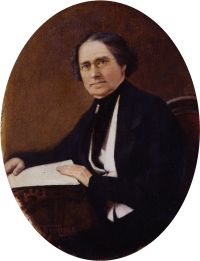
Portrait of Nicolas Léonard Sadi Carnot Nicolas Léonard Sadi Carnot,  Reflections on the Motive Power of Heat (1897)

“ It would be necessary that the steam-cylinder should be both sufficiently strong to sustain the highest pressure, and with a large enough capacity to contain the steam after its expansion of volume, while in using two successive cylinders it is only necessary to have the first sufficiently strong and of medium capacity,—which is not at all difficult,—and to have the second of ample dimensions, with moderate strength.
Double-cylinder engines, although founded on correct principles, often fail to secure the advantages expected from them.
”
Source: Wikisource

Get perspective with Kwize: daily news enlightened by great literature