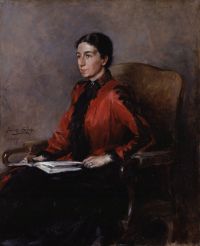
“ To give property, and therewith the fuller human opportunity, to those that have none, was the inmost desire of his life. And not merely common property—though like all true soldiers of the human cause he believed that common property will be in the future enormously extended—but in the first place, and above all, to distribute the discipline and the trust of personal and private possession among an infinitely greater number of hands than possess them already. ”
Tangible personal property
Definition and stakes
The theme of “tangible personal property” has been addressed by authors such as Pierre-Joseph Proudhon, P.-J. Proudhon, Max Stirner, Fustel de Coulanges and Josephus Nelson Larned. It is often associated with terms like ownership, law, private, possession and rights.
Quotes about “tangible personal property”
James Williams, 1911 Encyclopædia Britannica, Volume 21… (1911)
“ In real property there can be nothing more than limited ownership, there can be no estate properly so called in personal property, and it may be held in complete ownership. There is nothing corresponding to an estate-tail in personal property; words which in real property would create an estate-tail will give an absolute interest in personalty. A life-interest may, however, be given in personalty, except in articles quae ipsa usu consumuntur. Limitations of personal property, equally with those of real property, fall within the rule against perpetuities. ”
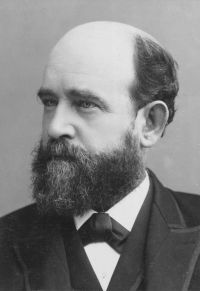 Henry George,
Progress and Poverty, Volumes I and II
“ The very distinction made in legal terminology between real and personal property is but the survival of a primitive distinction between what was originally looked upon as common property and what from its nature was always considered the peculiar property of the individual. And the greater care and ceremony which are yet required for the transfer of land is but a survival, now meaningless and useless, of the more general and ceremonious consent once required for the transfer of rights which were looked upon, not as belonging to any one member, but to every member of a family or tribe. ”
Henry George,
Progress and Poverty (George)…
(1879)
“ Confusions as to property What most prevents the realization of the injustice of private property in land is the habit of including all the things that are made the subject of ownership in one category as property or, if any distinction is made, drawing the line according to the unphilosophical distinction of the lawyers between personal property and real estate, or things movable and things immovable. The real and natural distinction is between things that are the produce of labour and things that are the gratuitous offerings of nature ”
R. H. Tawney, The Acquisitive Society
“ For property which can be regarded as a condition of the performance of function, like the tools of the craftsman, or the holding of the peasant, or the personal possessions which contribute to a life of health and efficiency, forms an insignificant proportion, as far as its value is concerned, of the property rights existing at present. ”
James Williams, 1911 Encyclopædia Britannica, Volume 21… (1911)
“ This identification of things personal with movables, though logical in theory, does not, as will be seen, perfectly express the English law, owing to the somewhat anomalous position of chattels real. In England real property is supposed to be superior in dignity to personal property, which was originally of little importance from a legal point of view. ”
Portal:Anonymous texts, The Urantia Book (1955)
“ No government can long endure if it fails to provide for the right to enjoy personal property in some form. Man craves the right to use, control, bestow, sell, lease, and bequeath his personal property. ”
R. H. Tawney, The Acquisitive Society
“ But they will refuse to submit to the naïve philosophy which would treat all proprietary rights as equal in sanctity merely because they are identical in name. They will distinguish sharply between property which is used by its owner for the conduct of his profession or the upkeep of his household, and property which is merely a claim on wealth produced by another's labor. They will insist that {83} property is moral and healthy only when it is used as a condition not of idleness but of activity, and when it involves the discharge of definite personal obligations. ”
Albert Ernest Jenks, The Bontoc Igorot
“ Again, since the American heard the reclamos of all classes of people, the poor who, according to Igorot custom, forfeited sementeras to those richer as a penalty for stealing palay, have come to dispute the ownership of certain real property. Personal property of individual Most articles of personal property are individual. Such property consists of clothing, ornaments, implements, and utensils of out-of-door labor, the weapons of warfare, and such chickens, dogs, hogs, carabaos, food stuffs, and money as the person may have at the time of marriage or may inherit later. ”
 Thomas Paine,
The Writings of Thomas Paine, Complete
“ Separate an individual from society, and give him an island or a continent to possess, and he cannot acquire personal property. He cannot be rich. So inseparably are the means connected with the end, in all cases, that where the former do not exist the latter cannot be obtained. All accumulation, therefore, of personal property, beyond what a man's own hands produce, is derived to him by living in society; and he owes on every principle of justice, of gratitude, and of civilization, a part of that accumulation back again to society from whence the whole came. ”
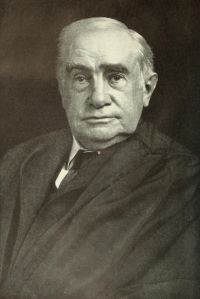 Henry Billings Brown,
Eidman v. Martinez — Opinion of the Court
“ While the enormous increase in the amount and variety of personal property during the past century has necessitated certain limitations of the maxim, particularly in matters of taxation, it is by no means obsolete. It is still the law that personal property is sold, transmitted, bequeathed by will, and is descendible by inheritance according to the law of the domicil ”
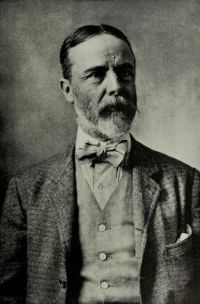 Frederic Jesup Stimson,
Popular Law-making
“ Now the earliest direct legislation about personal property in a statute is as late as 1100; but this early Saxon law was a recognition of personal property, because a man cannot steal a thing unless there is property. This section, therefore, implies property in personalty; because a man cannot steal land ”
 Walter Rauschenbusch,
The Social Principles of Jesus
“ We have to harmonize the two facts, that wealth is good and necessary, and that wealth is a danger to its possessor and to society. On the one hand property is indispensable to personal freedom, to all higher individuality, and to self-realization; the right to property is a corollary of the right to life; without property men are at the mercy of nature and in bondage to those who have property. ”
Frederic Jesup Stimson,
Popular Law-making
“ Now that may seem commonplace enough; but it is interesting to note, as in the law, personal property did not come first; property in land was many centuries earlier. And this suggests the legal basis and present tendency of the law of property. "Property exists only by the law"; and extreme socialists say that all private property is robbery. No law, no property; this is true. Property is an artificial thing. It is a creation of law. In other words, where there is now no law except statute, it is the creation of statute. ”
Various, The inter ocean curiosity shop for the year 1883 (1891)
“ It would not entirely abolish individual rights of property and personal self-control, but seeks to force a more equitable distribution of property, and level the present extreme distinctions between men of various classes. ”
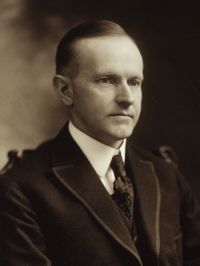 Calvin Coolidge,
Have faith in Massachusetts; 2d ed
“ Ultimately, property rights and personal rights are the same thing. ”
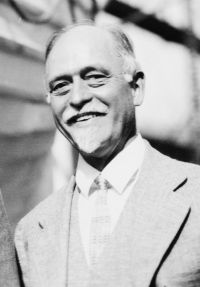 Irving Fisher,
The Purchasing Power of Money…
“ The man who owns a house has the right to benefit by enjoying its shelter, by selling it, or by renting it. This right, the right to or in the benefits of wealth—or more briefly, the right to or in the wealth itself—is called a "property right" or simply "property." ”
 Pierre-Joseph Proudhon,
What is Property?
(1876)
“ How is it that justice and isolation always accompany each other? Destutt de Tracy shall reply:— “Needs and means, rights and duties, are products of the will. If man willed nothing, these would not exist. But to have needs and means, rights and duties, is to have, to possess, something. They are so many kinds of property, using the word in its most general sense: they are things which belong to us.” ”
Pierre-Joseph Proudhon,
What is Property? — Second Memoir
“ It is that which constitutes the proprietor; it is that which you fail to justify. In reasoning from the human personality and individuality to the right of property, you unconsciously construct a syllogism in which the conclusion includes more than the premises, contrary to the rules laid down by Aristotle. The individuality of the human person proves individual possession, originally called proprietas, in opposition to collective possession, communio. It gives birth to the distinction between thine and mine, true signs of equality, not, by any means, of subordination. ”
Pierre-Joseph Proudhon,
What is Property?
(1876)
“ The sole basis of the idea of property is the idea of personality. As soon as property is born at all, it is born, of necessity, in all its fulness. As soon as an individual knows himself,—his moral personality, his capacities of enjoyment, suffering, and action,—he necessarily sees also that this self is exclusive proprietor of the body in which it dwells, its organs, their powers, faculties, &c.... ”
John Trenchard, Cato's Letter No. 58 — Letter from a Lady… (1721)
“ Why should men of fortune and understanding bring themselves, without any motive from reason or interest, into these unhappy circumstances? Why should any man, without any consideration, at least any valuable consideration, divest himself of the greatest part of the property of his own estate? ”
Paul Janet, Elements of Morals
“ Philosophically, it may be said, that it is the right each man has to make something his own, that is to say, to attribute to himself the exclusive right to enjoy something outside of himself.We must distinguish between possession and property. Possession is nothing else than actual custody: I may have in my hands an object that is not mine, which has either been loaned to me, or which I may have found; this does not make me its proprietor. Property is the right I have to exclude all others from the use of a thing, even if I should not be in actual possession of it. ”
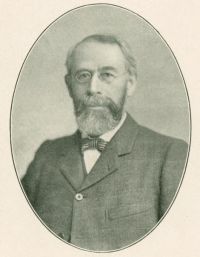 Josephus Nelson Larned,
Popular Science Monthly
(1877)
“ This strange defect in the primitive idea of the right of property, lingering so obstinately and so long, illustrates the difficulty which men have always experienced in carrying that idea from a simpler to a more complicated set of circumstances, and the easiness with which their perception of the relations to which it attaches becomes confused by any separation, whether real or apparent, of the thing from the person. But, in the evolution of our civilized social state, more complex forms of property have been coming all the time into existence. ”
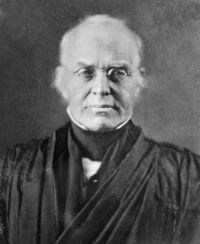 Joseph Story,
Commentaries on the Constitution of the United States
(1833)
“ And it is no less true, that personal security and private property rest entirely upon the wisdom, the stability, and the integrity of the courts of justice. ”
Josephus Nelson Larned,
Popular Science Monthly
(1877)
“ In some of these, the person and the thing have been pushed apart to a wide remove from one another; in others, the association of ownership between them is subtilely conditioned by various circumstances and contingencies; in others, several persons are associated with the same thing, in common ownership, or with a succession of rights in it, or with rights that are various in degree; in still others, the thing which is the subject of property is a pure figment of the brain—the mere idea of a property-right which has itself become property by a convenient fiction. ”

“ The possession of property of any kind gives a curious consciousness of dignity to the human being who is its owner, due very likely to the traditional estimate of the importance of all possessions, and to the mystical but generally erroneous belief that property is in some way an outward and visible proof of the worth or the ability of its possessor—or his forbears. ”
P.-J. Proudhon, What is Property? An Inquiry into the Principle of Right and of Government
“ What sophisms, indeed, what prejudices (however obstinate) can stand before the simplicity of the following propositions:— I. Individual POSSESSION 35 is the condition of social life; five thousand years of property demonstrate it. PROPERTY is the suicide of society. Possession is a right; property is against right. Suppress property while maintaining possession, and, by this simple modification of the principle, you will revolutionize law, government, economy, and institutions; you will drive evil from the face of the earth. ”
Robert Folkestone Williams, Lady Eureka; or, The Mystery: A Prophecy of the Future…
“ An author was allowed to possess his property, the product of his own labour, only for a certain time. Any man might leave to his heir the land he had received from his father—any man was allowed to bestow on his child the wealth that he possessed; but the children of the man of genius could not inherit any right in the acknowledged property of their parent. ”
P.-J. Proudhon, What is Property? An Inquiry into the Principle of Right and of Government
“ If property is a natural, absolute, imprescriptible, and inalienable right, why, in all ages, has there been so much speculation as to its origin?—for this is one of its distinguishing characteristics. The origin of a natural right! Good God! who ever inquired into the origin of the rights of liberty, security, or equality? They exist by the same right that we exist; they are born with us, they live and die with us. With property it is very different, indeed. By law, property can exist without a proprietor, like a quality without a subject. ”
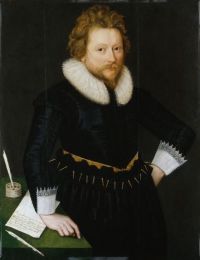 John Fletcher,
Studies on Slavery, in Easy Lessons
“ If a man is the property of himself, suppose he shall choose to sell himself to another, and deliver himself in full possession to the purchaser, as he had before been in the full possession of himself—whose property will he be then? See a case in point in Deut. ”
 Thomas Hill Green,
Lectures on the Principles of Political Obligation
“ In that case it may truly be said that 'property is theft.' The rationale of property, in short, requires that everyone who will conform to the positive condition of possessing it, viz. labour, and the negative condition, viz. respect for it as possessed by others, should, so far as social arrangements can make him so, be a possessor of property himself, and of such property as will at least enable him to develope a sense of responsibility, as distinct from mere property in the immediate necessaries of life. ”
 Richard Le Gallienne,
Vanishing Roads and Other Essays
“ Now, a proprietor's right to have his property managed according to his own ideas needs no emphasizing. The sad thing is that such proprietors should get hold of such property. It all comes, of course, of the modern vulgarization of wealth. Time was when even mere wealth was aristocratic, and its possession, more or less implied in its possessors the possession, too, of refinement and culture. ”
Edward Douglass White, Geer v. Connecticut — Opinion of the Court
“ The human race having multiplied, men partitioned among themselves the earth and the greater part of those things which were on its surface. That which fell to each one among them commenced to belong to him in private ownership, and this process is the origin of the right of property. ”
 Herbert Spencer,
The Data of Ethics
“ He thinks only of the money and the means of getting it, and he experiences incidentally the pleasure that comes from possession. Owning property is that which he revels in imagining, and not the feeling which owning property will cause. ”
 John Taylor of Caroline,
An Inquiry into the Principles and Policy of the Government of the United States
(1814)
“ Mankind have suffered nearly as much from confounding natural with fictitious property, as from confounding legitimate with spurious power. If the acquisitions of useful qualities are genuine private property, can the crafty pilferings from useful qualities under fraudulent laws, to gratify bad qualities, be genuine private property also? ”
 William Graham Sumner,
Earth-Hunger and Other Essays
(1913)
“ Any assertion that wealth ought to have social or civil privileges sends a shiver of horror through modern society, which asserts that all men are equal; but how can two men be equal, one of whom is pecuniarily responsible for his contracts and his torts and the other is not? It has been said above that if the man of property escapes the first anxieties about the possession of property, it must be because he lives in an orderly, civilized state, in which his neighbors concur to guarantee his security of possession. ”
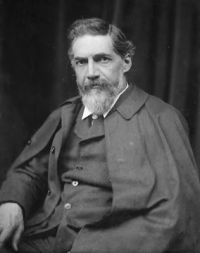 W. M. Flinders Petrie,
Janus in Modern Life
“ Not only is this a great social change, with far-reaching consequences in the management of property, but it will also act in other lines. When a man deals with his property in the unchecked privacy of a will, he can neglect the pressure of personality of his children in favour of the sentiment of leaving a powerful family name in perpetuity. ”
Related terms
Authors who wrote about “tangible personal property”
Pierre-Joseph ProudhonP.-J. Proudhon Max Stirner
 Fustel de CoulangesJosephus Nelson LarnedSamuel D. WarrenThomas Hill Green
 Roscoe PoundFrederic Jesup StimsonWalter Rauschenbusch
 Stephen Johnson FieldRichard D. CurrierHenry Billings BrownPaul JanetSir John W. Salmond
 Jeremy BenthamAlbert Ernest JenksJohn Fletcher
 Johann Gottlieb FichteJohn Rae
