Tin ore

Definition and stakes

C. Beringer,  A Text-book of Assaying: For the Use of Those Connected with Mines

“ Cornish Method.—Tin Ore Assay.—The ore to be smelted or assayed should be concentrated to say not less than 50 per cent. of metallic tin; though to obtain satisfactory results it should be brought nearer 70 per cent., as with ore containing less than 40 to 50 per cent. of metal there will be a considerable loss both in the assaying and in the smelting. If the ore to be operated on does not contain this quantity of metal, then the sample (if coarse) must be reduced to a fine state, the gangue being removed by vanning, and the ore saved for the fire assay. ”
Source: Gutenberg

William Bingley,  Useful Knowledge: Volume 1. Minerals

“ This species of metal was used in the time of Moses, and is mentioned in the writings of Homer.
Tin is found in veins, or beds, but chiefly in veins, running through granite and other rocks. In some of the valleys and low grounds of Cornwall, the tin ore is found in rounded grains and masses. In these situations, small grains of gold are sometimes found with it. To separate the tin from earthy and other matters with which it is intermixed, streams of water are passed over them
”
Source: Gutenberg

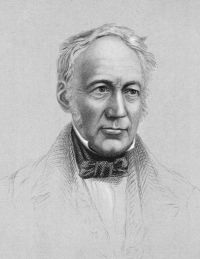
Portrait of Andrew Ure Andrew Ure,  A Dictionary of Arts, Manufactures and Mines

“ When the tin begins to cool, and when a more complete separation of its different qualities cannot be looked for, it is lifted out in ladles, and poured into cast-iron moulds. It is obvious, that the order in which the successive blocks are obtained, is that of their purity; those formed from the bottom of the basin being usually so impure, that they must be subjected anew to the refining process, as if they had been directly smelted from the ore. ”
Source: Gutenberg

Get perspective with Kwize: daily news enlightened by great literature