Wind pollination

Definition and stakes

Various,  Birds and Nature, Vol. 08, No. 2…

“ At first the currents of air were selected as the agents of this pollen transfer, and the flowers were adapted to what is known as wind-pollination. As the wind is an inanimate agent any transfer by it is largely a matter of chance. In order to increase the chances of successful pollination it was necessary for pollen to be developed in enormous quantities, so that it might fall like rain. ”
Source: Gutenberg

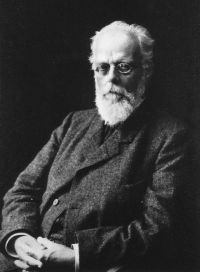
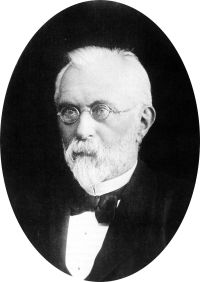
Portrait of Eugenius Warming Eugenius Warming,  A handbook of systematic botany (1895)

“ The smallness of the flowers, the absence of honey, the dryness and lightness of the pollen, the size of the stigma and the abundance of hairs found on many stigmas are all adaptations for wind-pollination. It is also an advantage that the flowers are generally pollinated before the foliage-leaves are developed, thus preventing the pollen being entangled by the leaves. ”
Source: Gutenberg

Portrait of Eugenius Warming Eugenius Warming,  A handbook of systematic botany (1895)

“ Pollination is accomplished by means of the wind. At the period of pollination the leaves are always so widely separated from one another, that the ovules can catch the pollen-grains carried to them by the wind; this is often effected by the mucilaginous drops which appear at the micropyle, and by the evaporation of which the pollen-grains are brought in contact with the nucellus. ”
Source: Gutenberg

Get perspective with Kwize: daily news enlightened by great literature