“ Lo, to Hiring we have come, all for to look for places, If the master and we can agree, and he will give good wages. The master that a servant wants, will stand now in a wonder, You all must ask ten pounds a year, and none of you go under, It’s you then, must do all the work, and what they do require, So now, stand up for wages, lads, before that you do hire. ”
Work for hire
Definition and stakes
The theme of “work for hire” has been addressed by authors such as American Anti-Slavery Society, Frederick Winslow Taylor, Henry David Thoreau, Harry Castlemon and Thurgood Marshall. It is often associated with terms like employer, employee, wage, labor and worker.
Quotes about “work for hire”
American Anti-Slavery Society, The Anti-Slavery Examiner, Omnibus
“ Why, that from the time voluntary labor began, there was no want of men to work for hire, and that there was no difficulty in getting those who as apprentices had to give the planters certain hours of work, to extend, upon emergency, their period of labor, by hiring out their services for wages to strangers. ”
Thurgood Marshall, Community for Creative Non-Violence v…
“ The structure of § 101 indicates that a work for hire can arise through one of two mutually exclusive means, one for employees and one for independent contractors, and ordinary canons of statutory interpretation indicate that the classification of a particular hired party should be made with reference to agency law. ”
Walter John Buck, Wild Spain (España agreste)
“ To go into the market-place and hire, instead of standing there to be hired, are obviously very different things. It implies, besides, permanent wages at increased rate, without manual work to do, for the capataz only orders. ”
 Harry Castlemon,
Two Ways of Becoming a Hunter
“ When he reached Main Street, he could not muster up courage enough to enter a single one of the stores at which he had determined to apply for work. Who would hire a boy that had been refused a letter of recommendation by his last employer? ”
Tamil Proverbs (1874)
“ Hire suited to the work, sharpness equal to the desires. வேலைக்கோ சம்பளம், ஆளுக்கோ சம்பளம்? Is the hire for the labour, or the labourer? வேலை செய்தாற் கூலி, வேஷம் போட்டாற் காசு If the work be completed, hire; if the character has been sustained, a fee. வேலை செய்யாத பிள்ளையைக் கையில் வை, வேலை செய்த பிள்ளையைக் காலில் வை. Carry in arms the child that does no work, and the child which works, place on your legs. வேலை மினக்கெட்ட அம்பட்டன் பெண்டாட்டி தலையைச் சிரைத்தானாம். ”
American Anti-Slavery Society, The Anti-Slavery Examiner, Omnibus
“ The meaning of the English verb to hire, is to procure for a temporary use at a certain price—to engage a person to temporary service for wages. That is also the meaning of the Hebrew word "saukar." It is not used when the procurement of permanent service is spoken of. Now, we ask, would permanent servants, those who constituted a stationary part of the family, have been designated by the same term that marks temporary servants? The every-day distinctions in this matter, are familiar as table-talk. In many families the domestics perform only the regular work. ”
James S. Heller, The Librarian's Copyright Companion (2012)
“ If the work was prepared by an employee, whether it is a work made for hire depends on (1) control by the employer over the work, such as whether the work was prepared at the employer’s location, whether the employer determined how the work was done, and whether the employer provided equipment or other means that supported the creation of the work ”
U.S.D.C., E.D.Mich., M & A Associates v. VCX
“ An “employee,” for purposes of the work made for hire doctrine, is any person who acts under an employer’s direction and supervision. See, e.g., Evans Newton, Inc. v. Chicago Systems Software, 793 F.2d 889, 894 (7th Cir.) ”
Various, Graham's Magazine, Vol. XLI, No…
“ R. and I mean to make up another party and be off to the diggings. We cannot do all the work on the farm ourselves, and hiring servants now is out of the question. Men are asking seven shillings and sixpence a-day wages, and will only hire by the week at that rate. ”
 Henry David Thoreau,
Life Without Principle
(1863)
“ The aim of the laborer should be, not to get his living, to get "a good job," but to perform well a certain work; and, even in a pecuniary sense, it would be economy for a town to pay its laborers so well that they would not feel that they were working for low ends, as for a livelihood merely, but for scientific, or even moral ends. Do not hire a man who does your work for money, but him who does it for love of it. ”
 Irvin S. Cobb,
From Place to Place
“ The Bible says the labourer is worthy of his hire. I try to be worthy of the hire I git. I certainly aim to earn it—an' I reckin I do earn it, takin' everything into consideration—the responsibility an' all. Ef there's any folks that think I earn my money easy—seventy-five dollars fur whut looks like jest a few minutes' work—I'd like fur 'em to stop an' think ef they'd consider themselves qualified to hang ez many men ez I have without never botchin' up a single job. ”
Emma Speed Sampson, Mary Louise and Josie O'Gorman… (1922)
“ I have been a servant in your establishment to further my own ends. Now I am through with my job. I'll ask you, sir, to pay me off, as I am leaving. I have served you well in the capacity of servant and the laborer is worthy of his hire. ”
 Harriet Ann Jacobs,
Incidents in the Life of a Slave Girl
(1861)
“ If he lives until the next year, perhaps the same man will hire him again, without even giving him an opportunity of going to the hiring-ground. After those for hire are disposed of, those for sale are called up. ”
 Dorothy Canfield Fisher,
Hillsboro People
“ Hired workers have been the same from the days of the Psalmist down to our own, and Hannah, putting her whole heart into her work, accomplished, so her surprised employer told her, twice as much spinning as any serving-girl she had ever hired. ”
 James Henry Mapleson,
The Mapleson Memoirs, 1848-1888…
“ Of course on general commercial principles the labourer is worthy of his hire; but in operatic matters the hire is, as a rule, so entirely out of proportion to the services rendered, and the conditions of the enterprise so unlike any other venture, that a little latitude certainly ought to be allowed. ”
W. H. Davenport Adams, Celebrated Women Travellers of the Nineteenth Century
“ The labourer is worthy of his hire. But three or four times a year, and always unexpectedly, swoop down upon them like the Last Judgment; examine every corner and recess; make a noise like thunder, and strike right and left at the fitting moment—this clears the house for many weeks! ”
 James Champlin Fernald,
English Synonyms and Antonyms
“ In this connection employ is a word of more dignity than hire; a general is employed in his country's service; a mercenary adventurer is hired to fight a tyrant's battles. It is unsuitable, according to present usage, to speak of hiring a pastor; the Scripture, indeed, says of the preacher, "The laborer is worthy of his hire;" but this sense is archaic, and hire now implies that the one hired works directly and primarily for the pay, as expressed in the noun "hireling;" ”
 Walt Mason,
"Horse Sense" in Verses Tense
“ You hire some men to do your chores, and then you cease to wonder. Alas, he is so hard to find—he takes so much pursuing—the worker who will keep his mind on what he may be doing. I hire a man to saw some sticks, to keep the fire a-going, and he discusses politics, in language smooth and flowing; the saw grows rusty while he stands, the welkin shrinks and totters, as he, with swinging jaws and hands, denounces Wall Street plotters. When I go home, as dusk grows dense, I hear his windy rages, and kick him sadly through the fence, when I have paid his wages. ”
 Ebenezer Howard,
Garden Cities of To-morrow
(1902)
“ They would find an employer—and there must be many such—who really cares for the misery of his employees. Acting with him and by his advice, they would make themselves the friends of people employed or fit to be employed in his trade; they would show them the advantages of moving, and help them to move, both with counsel and money. They would organise the sending of work backwards and forwards, the employer perhaps opening an agency in the colony. ”
 Herman Cyril McNeile,
Bull-dog Drummond
(1920)
“ The labourer, Mullings, is worthy of his hire. You have been of the very greatest assistance to me; and, incidentally, it is more than likely that I may want you again. Now; where can I get hold of you? ”
 A. Hamilton Gibbs,
Rowlandson's Oxford
“ That the Labourer is worthy of his Hire; that some Hire is both a better Encouragement to a Tutor, and a greater obligation upon him to take a due care, than no Hire; that the greatest Hire, of which any tutor in the University is, at this day thought worthy, compar’d with the Expence he hath been at, and the Pains he hath taken, and the Years he hath spent in order to Qualifie himself for this trust, and also, with the further Labour and Time he must employ in discharging it faithfully, [Pg 158] is very small. ”
 Lorenzo Snow,
Journal of Discourses — Volume 19…
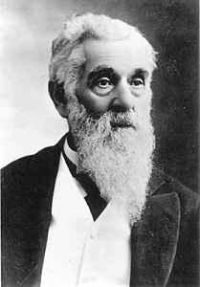
“ Some twelve or fifteen work in this establishment, and the people sustain them in their operations. Those engaged in the various branches of labor feel confident that the people will patronize them, and carry out what they have agreed in this particular, and they do not trouble themselves about any other employment, or business. ”

“ Another job! Why, I knew men in that employ who had held their jobs for forty years. [Pg 126] "I said nothing about it at home. My brother, with his three hundred a year and his French argot, made home unbearable and I thought of clearing out of it. But where could I go? You see, if you work for some specialist for a number of years, the only job you can move to is a position with another specialist of the same line. ”
American Anti-Slavery Society, The Anti-Slavery Examiner, Omnibus
“ The familiar distinction between the two classes, is "servants," and "hired help," (not paid help.) Both classes are paid. One is permanent, the other occasional and temporary, and therefore in this case called "hiredA." A: To suppose a servant robbed of his earnings because he is not called a hired servant is profound induction! If I employ a man at twelve dollars a month to work my farm, he is my "hired" man, but if I give him such a portion of the crop, or in other words, if he works my farm "on shares," every farmer knows that he is no longer called my "hired" man. ”
Sinclair Lewis, The Job : Man and Woman — Chapter 21 (1917)
“ Truax doesn’t, but you do know—that the whole office system makes pale, timid, nervous people out of all the clerks—”“But, good heavens! child, the employers have just as hard a time. Talk about being nervous! Take it in our game. The salesman does the missionary work, but the employer is the one who has to worry. Take some big deal that seems just about to get across—and then falls through just when you reach for the contract and draw a breath of relief. ”
 Alice Henry,
The Trade Union Woman
“ The rank and, file, too, get the splendid training that is conferred when persons actually and not merely nominally work together for a common end. Their introduction to the great problems of labor is through their practical understanding and handling of those problems as they encounter them in the everyday difficulties of the shop and the factory and as dealt with when they come up before the union meeting or have to be settled in bargaining with an employer. ”
 Talbot Baines Reed,
A Dog with a Bad Name
“ The work promised was what of all others he coveted; the salary, with the casually-thrown in addition of board and lodging, seemed like affluence; his employer was a gentleman, and the opportunities of study and self-improvement were such as fall to the lot of few. ”
 Edward Potts Cheyney,
An Introduction to the Industrial and Social History of England
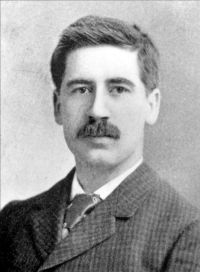
“ For instance, more than one such association, after going through a period of struggle and sacrifice, and emerging into a period of prosperity, has yielded to the temptation to hire additional employees just as any other employer might, at regular wages, without admitting them to any share in the profits, interest, or control of the business. ”
 Katherine M. H. Blackford,
Analyzing Character
“ The ideal for every employee, therefore, is that he should be employed in that position which he is best fitted to fill, doing work which by natural aptitudes, training, and experience he is best qualified to do, and working under conditions of material environment—tools, rates of pay, hours of labor, and periods of rest, superintendence and management, future prospects, and education—which will develop and make useful to himself and his employer his best and finest latent abilities and capacities. ”
 Eugene V. Debs,
Debs: His Life, Writings and Speeches…
“ So that, after you join the Industrial Workers, when you go to your work in the morning, you will not be tied to your task blindly; you will have a thought about your relation to your fellow-workingmen in all other departments. You will understand your part in the enterprise, and your connection with and relation to the whole. You will help to fit your fellows for the new function, so that when the hour strikes you will be perfectly trained and ready to take control of industry and operate the productive enterprises in the interests of the people. ”
Consumers' League of New York City, Behind the Scenes in a Hotel
“ Even where there are employment managers the actual hiring is done by the heads of departments whose attitude is only too often, “These girls won’t stay long anyway, so it doesn’t much matter who is hired.” ”
Weird Tales/Volume 36/Issue 1 (1941)
“ But just as an ordinary industrial worker can, through LaSalle Home Study, become a foreman, so a foreman, a cost clerk, a cost accountant, a mechanical engineer, a department manager, an inspector, an assistant superintendent, and all the other minor executives of any industrial organization—can fit themselves for that desirable job ahead—with its tremendously desirable rewards! ”
Consumers' League of New York City, Behind the Scenes in a Hotel
“ It is suggested that employees be interviewed and hired by a person understanding the technique of the selection of workers and the requirements of the various jobs in the hotel, with the purpose of securing an efficient force of workers and reducing the turnover of labor. An experienced person, preferably a woman, should be responsible for the introduction of the new employee to her job, her training, her transfer or promotion. ”

“ And there is another class of servants, who are intellectually hardly on the level of companionship; still they have plenty of bodily strength for labour, which accordingly they sell, and are called, if I do not mistake, hirelings, hire being the name which is given to the price of their labour. ”
 Alice Morse Earle,
Customs and Fashions in Old New England
“ All hired workers in the house, hired laborers in the field, those contracting to work under a master at any trade for a period of time, apprentices, and many whom we should now term agents or stewards, were then called servants, and signed contracts as servants, and did not appear at all insulted by being termed servants. ”
Chambers's Twentieth Century Dictionary…
“ Hire′ling, a hired servant: a mercenary: a prostitute (also adj.) ; Hir′er; Hire′-sys′tem, a system by which a hired article becomes the property of the hirer after a stipulated number of payments; Hir′ing, the contract of hiring—bailment for hire (in Scotland, location) : a fair or market where servants are engaged.—On hire, for hiring. [A.S. hýr, wages, hýrian, to hire; Ger. heuer, Dut. huur.] Hirmos, hir′mos, n. in the usage of the Greek Church, a standard troparion, forming the first stanza of a canon of odes, and serving as a model for the other stanzas:—pl. ”
 Charles DeLano Hine,
Letters from an old railway official…
(1904)
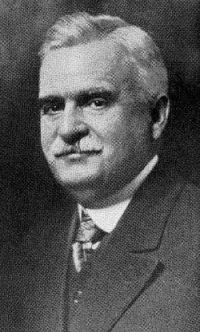
“ Talk with your employes about this and you will be astonished to find how many will fall in with this idea of leaving open a door of hope by filling just so many vacancies with outside men. Your official or your employe seeking a transfer or hunting a job will be impressed with the fact that all assistance rendered will be with a view to favoring him because he is a good, worthy fellow. He will not hear it put on the ground that any company is fortunate to have his services, that his future employers are being especially considered. ”
Philip Curtiss, The "Gum-Shoe" (1921)
“ The job I'm going to give you is like a lot of work you'll get in this business, and you can take it or leave it.' "Then he told him about the job, which really is of a sort that you get all the time in some agencies. The client was a nice old gentleman. ”
 Edwin A. Pratt,
A History of Inland Transport and Communication in England…
(1912)
“ The company accordingly offer six positions annually to members of the existing staff, under twenty-five years of age, who display the highest standard of knowledge and ability in a competitive examination, the successful candidates in each year being promoted to an advanced scale of pay, and taking a "higher grade course of training," which, it is thought, should fit them to hold positions of responsibility in the future. ”
Related terms
Authors who wrote about “work for hire”
American Anti-Slavery Society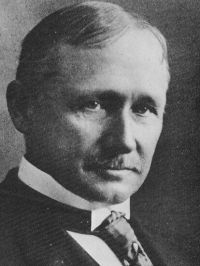 Frederick Winslow TaylorHenry David ThoreauHarry CastlemonThurgood MarshallJames S. HellerU.S.D.C., E.D.Mich.VariousIrvin S. CobbEmma Speed SampsonHarriet Ann JacobsDorothy Canfield FisherJames Henry MaplesonW. H. Davenport AdamsJames Champlin FernaldWalt MasonEbenezer HowardHerman Cyril McNeileA. Hamilton GibbsLorenzo Snow