“ The Akkadian is called Turanian, as showing undoubted resemblances to the Turki and Mongol languages of the lands lying north and east of Persia, which were named by the Persians Turan, as distinguished from Iran. The place of the Khemi in philology is not so easily defined. It does not seem that any other language than that of Egypt was ever written in the Egyptian script. The case is somewhat different with the Chaldee characters. They were adopted in varying modes for writing Semitic and Aryan languages, as well as the native Akkadian. ”
Akkadian language
Definition and stakes
The theme of “Akkadian language” has been addressed by authors such as F. Max Müller, Bijay Chandra Majumdar, Otto Jespersen, Edward Sapir and A. H. Sayce. It is often associated with terms like Babylonia, grammar, Aryans, Sanskrit and Akkadians.
Quotes about “Akkadian language”
“ Examples of both hieroglyphic and demotic writing are given in the plates accompanying this sketch.The Akkadian Chaldee language (to be distinguished from the later Semitic Syro-Chaldee) has, like the Egyptian Khemi, no immediate affinities with any other important form of speech. They are both of an older type and stock than the oldest known members of the Aryan and Semitic families. ”
Various, Encyclopaedia Britannica, 11th Edition…
“ It is generally agreed that this civilization can be traced back to an earlier race, the Sumero-Akkadians, whose language seems allied to the agglutinative idioms of central Asia. If this ancient civilized race was really allied to the ancestors of the Turks and Huns, it is a remarkable instance of how civilization thrives best by being transplanted at a certain period of growth. ”
“ If, in spite of the Orientalists and the conjecture of M.F. Lenormant— who invented a name for a people whose shadowy outline he dimly perceived in the faraway Past as preceding the Babylonians—we say that this Aryan race that came from Central Asia, the cradle of the 5th race Humanity, belonged to the "Akkadian" tribes, there will be a new historico-ethnological difficulty created. Yet it is maintained that these "Akkads" were no more a "Turanian" race than any of the modern British people are the mythical ten tribes of Israel, so conspicuously present in the Bible, and absent from history. ”
An Old Babylonian Version of the Gilgamesh Epic (1920)
“ The form with dú is clearly a phonetic writing of the Sumerian name, the sign dú being chosen to indicate the pronunciation (not the ideograph) of the third element dúg. This is confirmed by the writing En-gi-dú in the syllabary CT XVIII, 30, 10. The phonetic writing is, therefore, a warning against any endeavor to read the name by an Akkadian transliteration of the signs. This would not of itself prove that Enkidu is of Sumerian origin, for it might well be that the writing En-ki-dú is an endeavor to give a Sumerian aspect to a name that may have been foreign. ”
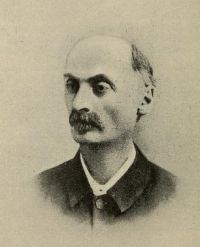 Archibald Henry Sayce,
The Folk-Lore Journal
(1883)
“ The mutilation of the tablet prevents our knowing whether the story was continued. Its preservation at all is due to a curious accident. It is found in an Accadian reading-book, intended to teach the elements of the extinct Accadian language of primitive Chaldea to Babylonian boys of a later date. Easy passages in Accadian have been selected for the purpose, and provided with Assyrian translations, while the text is interspersed with exercises upon the principal words occuring in them. ”
L. W. King, A History of Sumer and Akkad
“ But the occurrence of the Semitic word in Entemena's inscription proves that external contact with some Semitic people had already taken place. Moreover, it is possible to press the argument from the purely linguistic side too far. A date-formula of Samsu-iluna's reign has proved that the Semitic speech of Babylonia was known as "Akkadian," [53] and it has [Pg 53] therefore been argued that the first appearance of Semitic speech in the country must date from the establishment of Shar-Gani-sharri's empire with its capital at Akkad. ”
Chautauqua Institution, The Chautauquan, Vol. 05, October 1884…
“ Language changes rapidly among people in a low state of civilization, without literature, without letters which are the landmarks and conservators of speech. But this point of time and of place is that of a great division in the speech of the Aryan people. Of the language of those who moved westward into Europe there are no remains which date within many centuries of this period; but of the language of those who moved south into Hindostan, we have in the existing Sanskrit a representative which is of almost indefinable antiquity, and the perfect preservation of which is marvelous. ”
E. T. C. Werner, Myths and Legends of China
“ The second hypothesis may relate only to a sojourn of longer or shorter duration on the way from Akkadia to the ultimate settlement in China, especially since the Khotan civilization has been shown to have been imported from the Punjab in the third century B.C. The fact that serious mistakes have been made regarding the identifications of early Chinese rulers with Babylonian kings, and of the Chinese po-hsing (Cantonese bak-sing) ‘people’ with the Bak Sing or Bak tribes, does not exclude the possibility of an Akkadian origin. ”
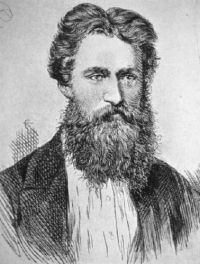 George Smith,
The Chaldean Account of Genesis
“ The extinction of the Accadian language and the translation of Accadian works into Semitic Babylonian are important facts for settling the chronology of a document or inscription. Wherever we can show that a Babylonian or Assyrian text is translated from an Accadian original, or wherever we have a copy of that original itself, we may feel pretty sure that we are dealing with something older than the eighteenth century before the Christian era. ”
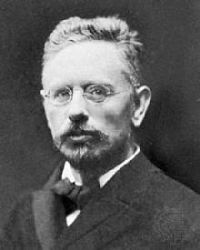 Otto Jespersen,
Language: Its Nature, Development and Origin
“ In India we witness a constant simplification of grammar from Sanskrit through Prakrit and Pali to the modern languages, Hindi, Hindostani (Urdu) , Bengali, etc. Outside the Aryan world we see the same movement: Hebrew is simpler and more regular than Assyrian, and spoken Arabic than the old classical language, Koptic than Old Egyptian. Of most of the other languages we are not in possession of written records from very early times; still, we may affirm that in Turkish there has been an evolution, though rather a slow one, of a similar kind ”
 F. Max Müller,
The Silesian Horseherd - Questions of the Hour
“ The immeasurable cannot be measured, but this much stands immovable in the mind of every linguist, that there is nothing older in the entire Aryan world than the complete primitive Aryan language and grammar, in which nearly all the categories of thought, and consequently the whole scaffold of our thinking, have found their expression. ”
J. N. Larned, History for ready reference, Volumes 1 to 5 (1895)
“ Since Sumir, the Shinar of the Bible, was the first part of the country occupied by the invading Semites, while Accad long continued to be regarded as the seat of an alien race, the language and population of primitive Chaldea have been named Accadian by the majority of Assyrian scholars. The part played by these Accadians in the intellectual history of mankind is highly important. ”
F. Max Müller,
Lectures on the Science of Language
“ The Mongolic dialects excel the Tungusic, but in their grammar can hardly distinguish between the different parts of speech. The spoken idioms of the Mongolians, as of the Tungusians, are evidently struggling towards a more organic life, and Castrén has brought home evidence of incipient verbal growth in the language of the Buriäts and a Tungusic dialect spoken near Nyertchinsk. ”
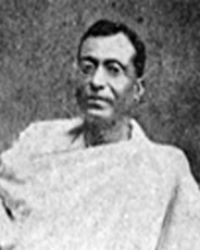 Bijay Chandra Majumdar,
The History of the Bengali Language
(1920)
“ Never can a living people change radically or discontinuously, nor can its natural and organised mode of thinking, which expresses itself in the form or structure of its speech, be radically changed. (iii) My next proposition is that what is called a patois or a rude or vulgar speech, is never a separate language. Isolation and want of culture bring about deformities, and these deformities characterise a language as a rude dialect. The language of the Māl Pāhāḍis is as much Bengali as the language of the peasants of Northern Yorkshire is English. ”
F. Max Müller,
Lectures on the Science of Language
“ There is, however, a distinction between the language as spoken by the Eastern, Western, and Northern tribes, and incipient traces of grammatical life have lately been discovered by Castrén, the great Swedish traveller and Turanian philologist, in the spoken dialect of the Buriäts. In it the persons of the verb are distinguished by affixes, while, according to the rules of Mongolic grammar, no other dialect distinguishes in the verb between amo, amas, amat. The Mongols who live in Europe have fixed their tents on each side of the Volga and along the coast of the Caspian Sea near Astrachan. ”
Bijay Chandra Majumdar,
The History of the Bengali Language
(1920)
“ The method of reasoning is wholly unscientific. All the dialects are admitted to be Aryan in origin, but as they differ from one another, their origin has been presumed to be different. The very fact that they are so many dialects, shows that they must not be one and the same, and they must have marked points of difference, even though they might have been derived from one and the same language. Dialectic variations always take place because of distance from a centre and because of contact with other tribes or races. ”
Bijay Chandra Majumdar,
The History of the Bengali Language
(1920)
“ Consequently the new structure which becomes wholly separate and independent cannot be said to be mixed as a language in the individuated form. No language of this world can coincide with another, for every language has its own separate grammar or structure; but it can be shown that in their growth many languages in India incorporated many foreign elements and had adopted foreign methods of expression. We can only say that no two languages are identical, but as in the case of human races, so in the case of human speeches, absolute purity cannot be thought of. ”
F. Max Müller,
Lectures on the Science of Language
“ Turanian languages cannot afford such words as âge in their dictionaries. It is an indispensable requirement in a nomadic language that it should be intelligible to many, though their intercourse be but scanty. It requires tradition, society, and literature, to maintain words and forms which can no longer be analyzed at once. Such words would seldom spring up in nomadic languages, [pg 293] or if they did, they would die away with each generation. The Aryan verb contains many forms in which the personal pronoun is no longer felt distinctly. ”
Bijay Chandra Majumdar,
The History of the Bengali Language
(1920)
“ Let me repeat explicitly what I have suggested above just now: that a language is mainly, if not wholly, determined by its grammar or structure and not by its vocabulary which may always swell by the process of word-borrowing. I should also add here that the accent system is a great factor in a language, and should be considered as an essential element of it; different forms of "apabhramśa" in different dialects of one common original speech are partly due to different accent systems. ”
F. Max Müller,
Lectures on the Science of Language
“ No Aryan or Semitic language has preserved a similar freedom in the harmonic arrangement of its vowels, while traces of it have been found among the most distant members of the Turanian family, as in Hungarian, Mongolian, Turkish, the Yakut, spoken in the north of Siberia, and in dialects spoken on the eastern frontiers of India. ”
Portal:Anonymous texts, The Urantia Book (1955)
“ The civilization of Turkestan was constantly being revived and refreshed by the newcomers from Mesopotamia, especially by the later Andite cavalrymen. The so-called Aryan mother tongue was in process of formation in the highlands of Turkestan; it was a blend of the Andonic dialect of that region with the language of the Adamsonites and later Andites. Many modern languages are derived from this early speech of these central Asian tribes who conquered Europe, India, and the upper stretches of the Mesopotamian plains. ”
J. D. Anderson, The Peoples of India
“ The Tibeto-Burman languages of the north-eastern frontier are the simple and primitive speech of semi-savage men. For such languages, contact with the Aryan languages means rapid decay and dissolution.Hindu civilisation and Hindu religion find easy converts in the rude and simple Mongoloid people of the north-east, and acceptance of Hindu manners and customs almost always results in a rapid change of language. So again, the Iranian languages represent the final stage in the advance of Islam and its languages as a conquering religion. ”
Bijay Chandra Majumdar,
The History of the Bengali Language
(1920)
“ It must be a familiar experience, that from the sound alone from a good distance, a Bengali can know whether an Oriya poem or some Hindi দোঁহা's are being recited. Even where there is no musical chanting, the character of the metres will indicate the characteristic difference. All this is due wholly to different accent systems. As the style of a language is the expression of the thought of the speakers, so is the metrical system in a language, due to the special accent system of the people. ”
Various, Notes and Queries, Number 42, August 17…
“ Lord Byron was taking lessons in Armenian, and a few of his exercises were introduced into Aucher's Grammar, which was written for Armenians to learn English, with which language Aucher was quite familiar, having resided four years in London. But a new Armenian and English Grammar has recently been published. There is one, very rare, in Armenian and Latin, and another in Armenian, modern Greek, and Italian. ”
 Edward Sapir,
Language: An Introduction to the Study of Speech
“ As with race, so with culture. Particularly in more primitive levels, where the secondarily unifying power of the “national” [186] ideal does not arise to disturb the flow of what we might call natural distributions, is it easy to show that language and culture are not intrinsically associated. Totally unrelated languages share in one culture, closely related languages—even a single language—belong to distinct culture spheres. There are many excellent examples in aboriginal America. The Athabaskan languages form as clearly unified, as structurally specialized, a group as any that I know of. ”
Theophilus G. Pinches, The Old Testament in the Light of the Historical Records and Legends of Assyria and Babylonia
“ These identifications must be to a large extent due to the fact that all the tribes or nationalities referred to were mountaineers, and, as we have seen (p. 122) , the Akkadian character for a mountainous region or nationality, stood not only for Armenia, and the land of the Amorites, but also for the land of Akkad, because the Akkadians came from a mountainous country, perhaps somewhere in the neighbourhood of the mountains of Elam. ”
 Suniti Kumar Chatterji,
The Origin and Development of the Bengali Language
(1926)
“ Added to this initial difficulty, Indo-Aryan linguistics both of the classical and modern periods has formed the favourite haunt of mere amateurs who seek to compensate for their want of knowledge of the principles of historical grammar and of the modern science of language by professing utter contempt of it; and the professed student of literature who knows the language but not its history shares in this contempt. To make confusion worse confounded, the spirit of scholasticism is not yet dead ”
Gurajada Apparao, Minute of Dissent (2012)
“ They seem to think that the only condition which a literary language need fulfil is intelligibility. They think that intelligible prose can be written in the Kavya dialect if it is divested of learned Sanskrit and very obsolete Telugu. They forget that it is not easy, to reproduce an archaic dialect in composition, and that few writers have succeeded in writing fairly intelligible prose in the Kavya dialect with correctness or with elegance. ”
 F. W. Farrar,
An essay on the origin of language…
“ It must then be allowed, that the Indo-European and Semitic families are in their grammatical system (which affords the truest, if not the only test of affinity) radically distinct, and can in no way be derived from each other. The motto of the old school, that “all languages are dialects of a single one,” must be abandoned for ever.But even if it could be shown that there is an affinity between Hebrew and Sanskrit, a far more difficult task would remain for those who endeavour to prove from philology the original unity of the human race ”
Lawrence Waddell, Thomas Holdich, Albert de Lacouperie, and Osbert Howarth, 1911 Encyclopædia Britannica (1911)
“ An active or causal verb requires before it the instrumental instead of the nominative case, which goes only before a neuter or intransitive verb. The chief differences between the classical language of the Tibetan translators of the 9th century and the vernacular, as well as the language of native words, existed in vocabulary, phraseology and grammatical structure, and arose from the influence of the translated texts. ”
Related terms
Authors who wrote about “Akkadian language”
F. Max MüllerBijay Chandra MajumdarOtto JespersenEdward Sapir A. H. SayceGeorge Abraham GriersonGurajada Apparao
 George Borrow
 Frances Delavan Page Jermain
 Helen KellerSuniti Kumar ChatterjiJ. D. Anderson
 Madison GrantBenjamin Moore Norman
 Robert G. IngersollTheophilus G. Pinches
 Albert Tobias Clay
 John Dryden
 Bernard Quaritch
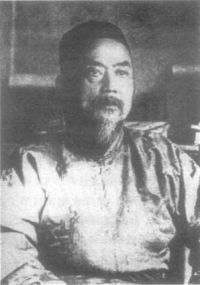 Gu Hongming
